
India's latest national climate plan scores just 2 out of 32 for how well it builds health into climate policy, putting it joint-bottom with Japan and New Zealand, according to the third Healthy NDC Scorecard from the Global Climate and Health Alliance, a consortium of more than 300 health professionals' and civil society organisations, Down To Earth reports.
The scorecard assessed the Nationally Determined Contributions (NDCs), the climate plans countries submit under the Paris Agreement, of the 132 countries that filed 2035 targets with the UN climate secretariat. It uses eight indicators, each worth up to four points: health impacts, air pollution, action in the health sector, health co-benefits, a just transition, integrated governance, economics and finance, and monitoring and evaluation. India, whose latest NDC was submitted in April, scored zero on six and one each on health-sector action and integrated governance.
Colombia topped the ranking with 29 points, followed by Nigeria with 25 and Cambodia with 24, with Paraguay and Timor-Leste on 22. Nineteen of the 20 highest scorers are low- and middle-income countries. The EU, China, Brazil and Britain mention health in their plans but have not matched it with the emission cuts needed to protect it, the report says, and only Cambodia, Chile, Colombia, Costa Rica and Paraguay have set targets to cut black carbon, a pollutant that both warms the climate and harms health.
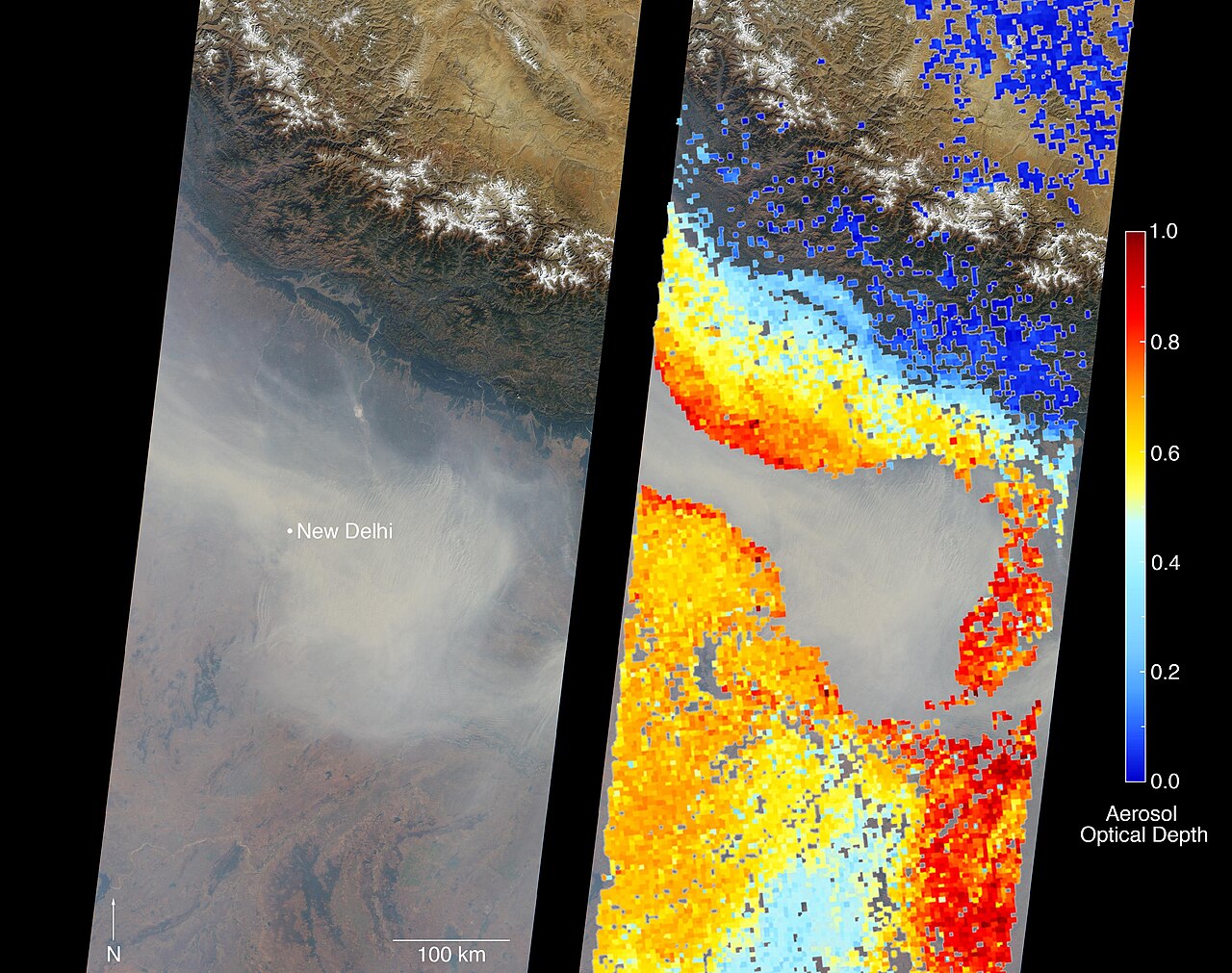
The report estimates India's air pollution death rate at 186.2 per 100,000 people, notes that India's plan makes no reference to air pollution, and warns that the country is on course for warming of more than 2C above pre-industrial levels. India ranked ninth in the Climate Risk Index 2026, covering 1995 to 2024.
"It is inexplicable that, while air pollution claims roughly 2m lives annually in India, the country's NDC makes no mention of air pollution or the health benefits of climate action," Anumita Roychowdhury, executive director of research and advocacy at the Centre for Science and Environment, told Down To Earth. She noted that India endorsed the COP28 Declaration on Climate and Health. Anjal Prakash, professor of public policy at FLAME University in Pune and an IPCC author, said India's next NDC should include health indicators, assess climate impacts on vulnerable people, strengthen health infrastructure and tackle worsening air quality.
Health is expected to feature prominently at COP31 in Antalya, Turkey, in November 2026.
The report is by Jayanta Basu for Down To Earth.
Photo: NASA/GSFC/LaRC/JPL, MISR Team / Wikimedia Commons (Public domain)
Source: Down To Earth



Comments
(0)