
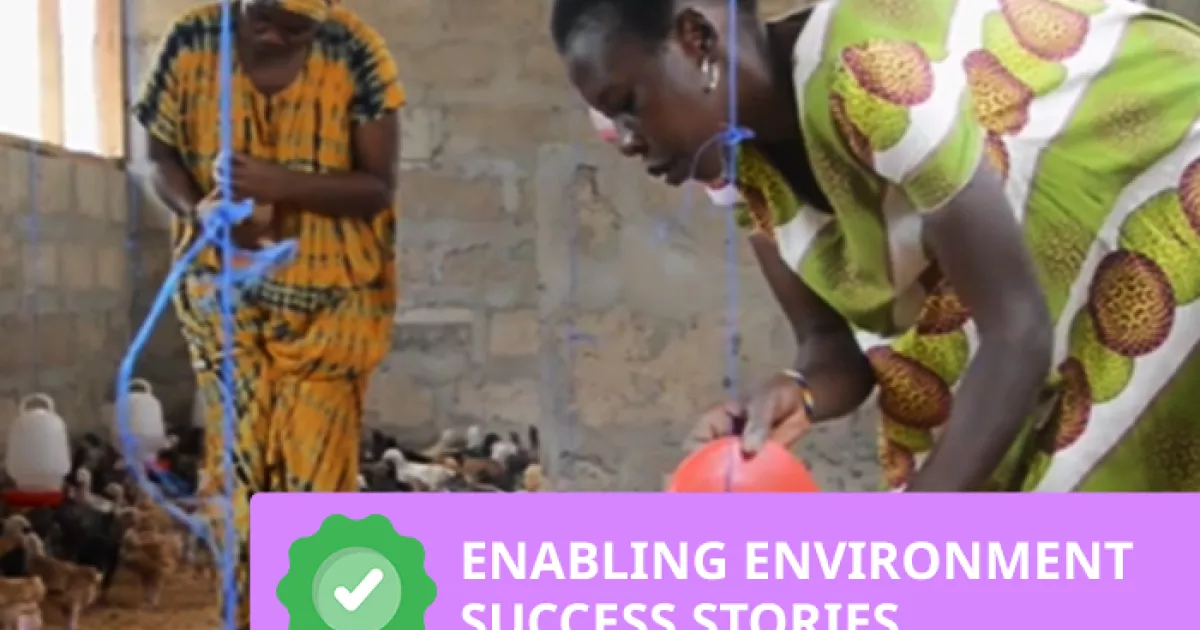
In the coastal villages of Lindi and the highland communities of Kilimanjaro, smallholder poultry keeping had settled into a poor equilibrium: low-yielding local birds, heavy disease losses and no reliable route to a town market. Cultural expectations kept most women out of commercial livestock altogether.
The International Livestock Research Institute (ILRI) approached it as a business problem rather than a breeding one. Its Women in Business project trained 20 young women with veterinary skills to work as local poultry vendors across four districts. Working with the Tanzania Livestock Research Institute and the company AKM Glitters, the vendors supply dual-purpose Kuroiler chicks, give the vaccinations, advise on brooding and housing, and connect the farms they serve to urban buyers.
Anande Munisi, one of the vendors, inspects coops, watches flock health and checks that chicks are being brooded properly. That routine visit is what turns a handful of birds in a yard into a business with predictable output.
Money was the other bottleneck. District councils arranged low-interest loans from local women's funds so farmers could build proper housing and buy quality feed rather than scraping by on kitchen scraps.
The social side was tackled directly. With Shujaaz Inc., the project ran the #BintiShujaaz campaign across social media, radio and community meetings, reaching 4.4 million young people with the argument that a woman running a poultry business is unremarkable.
Seventeen vendors are still active. Between them they have delivered more than 21,600 Kuroiler chicks to over 4,200 farms, nearly 2,900 of them run by women. Participating households reported higher incomes, used to pay school fees and to buy more livestock, and measures of female empowerment in the project areas came out 15 per cent above comparable districts that were not covered.
The district councils in Siha and Mtama have put vendor support into their own municipal budgets, which is the test a pilot usually fails. ILRI is now extending the model to dairy, goat and sheep value chains elsewhere in Sub-Saharan Africa.
Source: CGIAR

Comments
(0)