
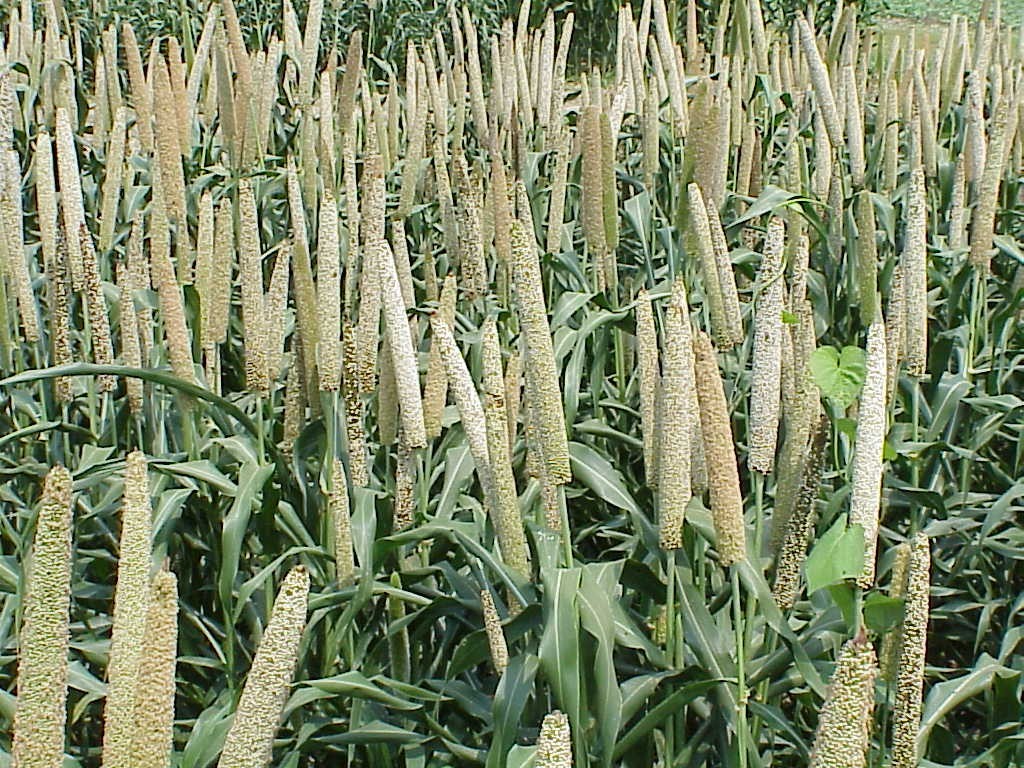
Researchers have identified five sorghum and pearl millet candidates that could let farmers in Saudi Arabia's dry, water-scarce regions harvest both grain for food and green fodder for livestock from a single crop. The study, published in Frontiers in Plant Science, comes from a partnership between the International Crops Research Institute for the Semi-Arid Tropics (ICRISAT), the Food and Agriculture Organization of the United Nations (FAO) and the Sustainable Agricultural Rural Development Programme (Saudi REEF) of Saudi Arabia's Ministry of Environment, Water and Agriculture, ICRISAT said on 29 October.
The team evaluated 27 sorghum and 15 pearl millet entries in contrasting lowland and highland environments, across four site-seasons at the Jazan Agricultural Research Center and the Seed Multiplication Station in Abha, looking for lines that combine good grain yield with high fresh biomass.
Three sorghum candidates performed well on both counts. The best of them beat the best check variety by 9.3 percent in grain yield and 41.3 percent in fresh biomass. Two pearl millet candidates also combined grain and fodder well; the best pearl millet entry beat the best check by 33.9 percent in grain yield, although its fresh biomass was 37.1 percent lower.
According to Dr Ephrem Habyarimana, the project's principal investigator and principal scientist for sorghum breeding at ICRISAT, and Dr SK Gupta, principal scientist for pearl millet breeding, the selected lines are a basis for further testing of dual-purpose crops suited to Saudi conditions. Dr Raman Babu, ICRISAT's global research programme director for accelerated crop improvement, said producing both grain and fodder could raise the productive value of farmland while supporting local feed supplies.
The next phase, the researchers say, should move to farmer-managed trials, tests of fodder quality and water productivity, seed multiplication and national registration, with farmers and livestock keepers judging performance, feeding value and practicality under everyday conditions. ICRISAT Director General Dr Himanshu Pathak and Dr Kakoli Ghosh, chief technical adviser of the FAO programme in Saudi Arabia, both stressed the value of research tailored to local conditions.
If the candidates hold up, they would give farmers in Jazan, the Asir highlands and similar drylands a way to grow more of the country's grain and fodder at home and to make crop-livestock farms more resilient.
Photo: Pearl millet at early grain fill, Tifton, Georgia / Wikimedia Commons (public domain)
Source: ICRISAT
Comments
(0)