
El Niño is strengthening fast, and the World Meteorological Organization's latest assessment puts the chance that it persists through February 2027 at close to 100 percent, possibly making it one of the strongest events since at least 1950. In a column for Down To Earth, Ranjan Panda argues that in India the damage will show up less in cyclones and floods than in a village well running dry, wheat exposed to heat, a rainfed paddy field short of moisture, shrinking grazing land and farm labourers unable to work safely. The views are the writer's own.
On water, Panda credits the Jal Jeevan Mission with raising rural tap connections from about 17 percent of households in August 2019 to more than 81 percent by December 2025, but notes that the government's 2024 assessment of over 237,000 households found only 76 percent receiving water of the prescribed quality. With 730 of India's 6,762 assessed groundwater units over-exploited, he calls for a shift from counting connections to securing sources, restoring ponds, tanks and johads and judging rural employment spending on water by its hydrological results.
On crops, he cites a study in Natural Hazards and Earth System Sciences that found the share of India hit by combined drought and heatwave events grew from 10 percent to 35 percent between 1951 and 2016, spreading into Odisha, West Bengal and Assam, with severe years linked to a 12.1 percent fall in national rice yields. Research cited by the Indian Council of Agricultural Research puts wheat losses at 3 to 4 percent for every 1 degree Celsius rise during grain filling, so a hot late winter could hurt the crop where sowing is late and irrigation short.
The human cost is the starkest warning. A Climate Impact Lab analysis projects about 15,800 additional heat-related deaths in India between September 2026 and February 2027 compared with a normal year, and the 2025 Lancet Countdown India data sheet estimates that heat cost 247 billion potential labour hours in 2024, two thirds of them in agriculture, worth an estimated US$194 billion in lost income. A labourer in a paddy field, Panda writes, cannot switch on an air conditioner or give up a day's wage.
His prescriptions for the 2026-27 rabi season and beyond: tailored advice on sowing windows, heat-tolerant varieties, irrigation and soil moisture; contingency crops and short-duration varieties for rainfed farmers in kharif 2027; crop insurance that recognises heat and compound climate risks and pays out on time; early warnings that combine heat, rainfall and soil-moisture data at district and panchayat level; and village heat action plans with shaded worksites, drinking water, rest breaks and adjusted working hours.
"A potentially historic El Niño is a warning, not a verdict," he writes, arguing that whether it turns into a farm and humanitarian crisis depends on how well rural India prepares.
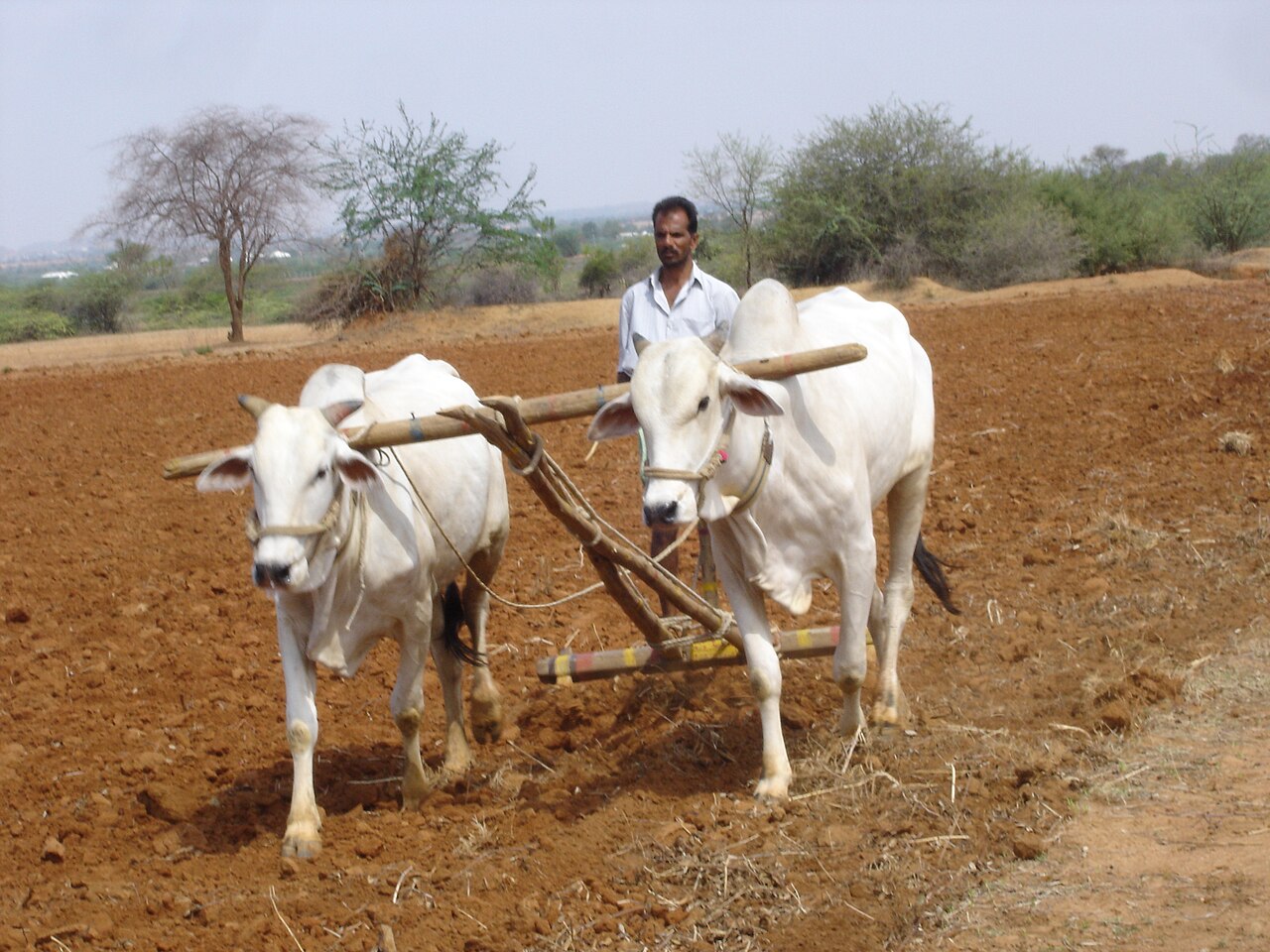
Photo: A farmer in drought-prone Mahabubnagar district, India, prepares his field for the rains, Saibhaskar / Wikimedia Commons (public domain)
Source: Down To Earth


Comments
(0)