
Bangladesh scores 19.2 in the 2026 Global Hunger Index (GHI), published last week, a level classed as moderate. India scores 24.1 and Pakistan 25.5, both classed as serious. In South Asia only Sri Lanka and Nepal do better than Bangladesh. Dainik Bangla set out the report's findings and analysts' views.
The report is published jointly by Bonn-based Welthungerhilfe, the Zurich-based aid agency Helvetas and the Institute for International Law of Peace and Armed Conflict at Ruhr University in Germany. It says India, Bangladesh and Nepal have improved steadily since 2000, while Pakistan's progress has stalled; its score has worsened from 24.0 in 2018 to 25.5, and it ranks 106th of 122 countries.
The index combines four indicators: undernourishment and child mortality, each weighted 33.3 percent, and child stunting and child wasting, each weighted 16.7 percent. On a scale of 0 to 100, a score below 10 is low, 10 to 19.9 moderate, 20 to 34.9 serious, 35 to 49.9 alarming and 50 or more extremely alarming.
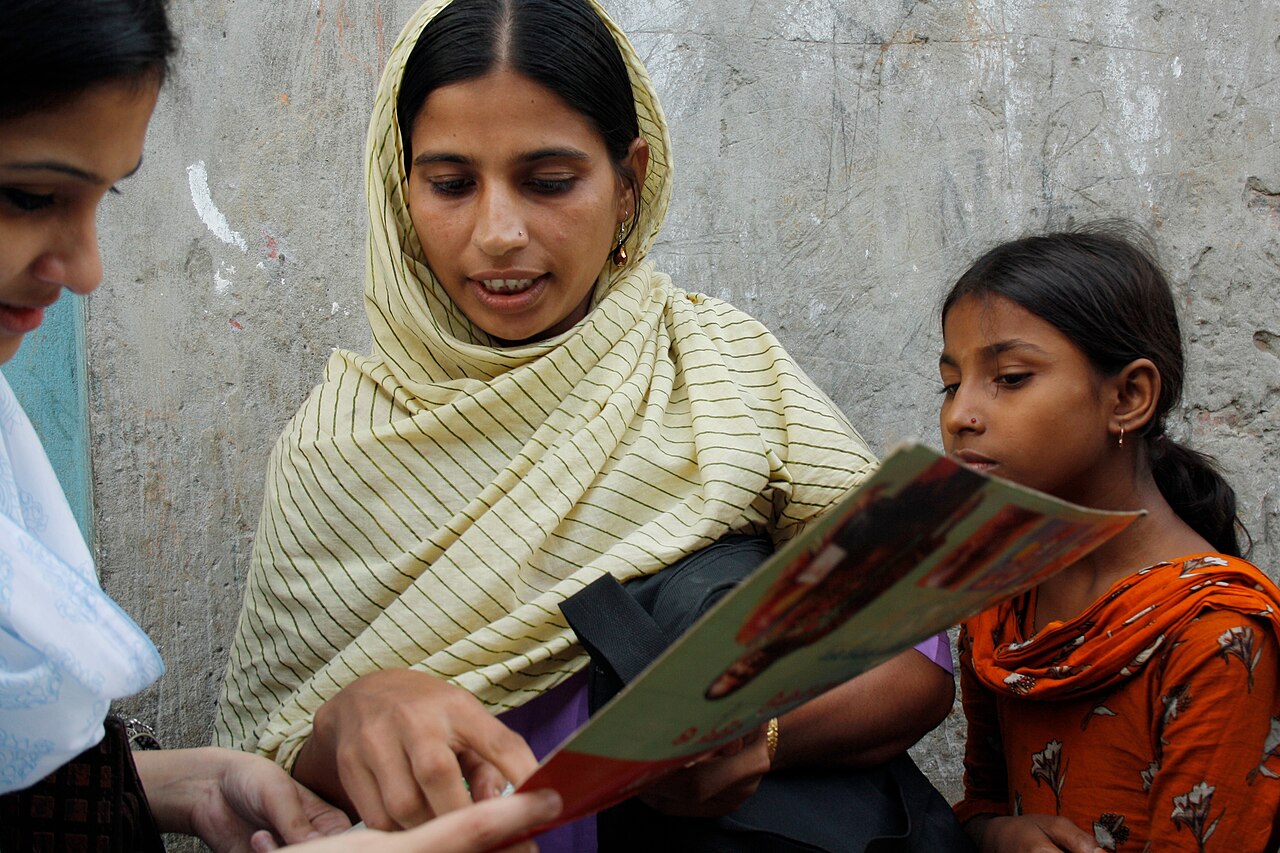
Experts credit Bangladesh's progress to women's employment, community-based health care, better sanitation and girls' education. London-based financial analyst Javed Hassan told Japan's Nikkei Asia that the garment export industry had created jobs for women and community health workers had taken care to people's doors. Islamabad-based independent economist Niaz Murtaza also sees the steady rise in women's employment as a reason for Bangladesh's gains.
In Pakistan, analysts say, rising food prices, child malnutrition, limited jobs for women, under-investment in health and education, and climate disasters are deepening the hunger crisis. About a dozen countries score worse than Pakistan, among them Afghanistan, Sierra Leone and Syria.
Photo: A community health worker in Dhaka's Korail slum, DFID / Wikimedia Commons (CC BY 2.0)
Source: Dainik Bangla
Comments
(0)