
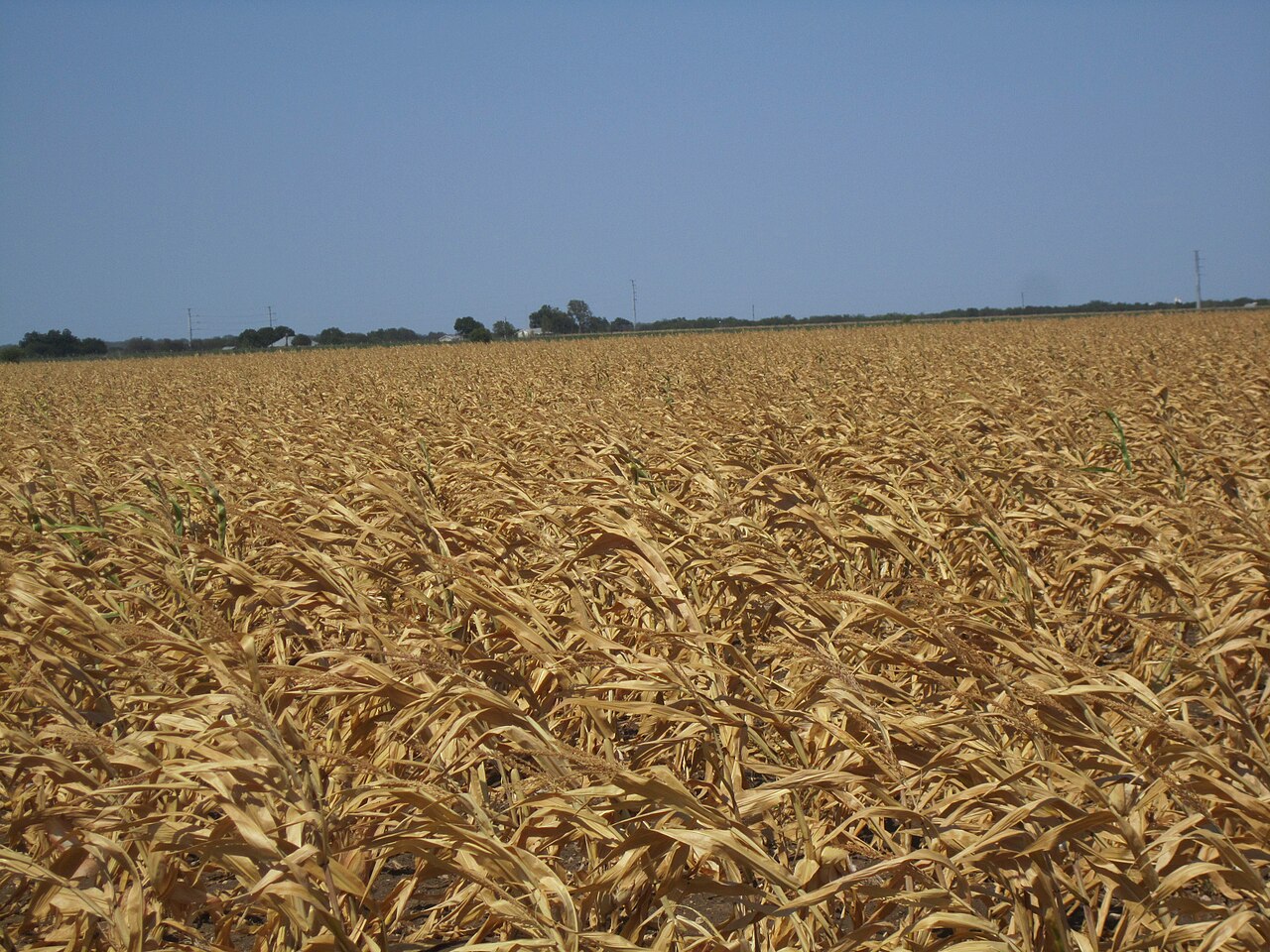
Corn seedlings hit by heat and drought at the same time suffer more, and longer-lasting, damage than those facing either stress alone, according to research from the Donald Danforth Plant Science Center in St. Louis and the University of Minnesota. The study was published this month in The Plant Journal and announced by the Danforth Center on 14 October.
The team grew 47 genetically diverse, publicly available corn varieties for 13 days after the seedlings emerged, under four conditions: normal, drought, heat, and heat and drought together, mimicking the early-summer stress corn faces across much of the US Midwest. Instead of measuring plants once at the end, they photographed every plant daily at the centre's Bellwether Phenotyping Facility and analysed the images with PlantCV, free image-analysis software that tracks plant size, height, water use and leaf colour over time.
The daily images showed that how a variety coped with drought alone did not reliably predict how it would cope once heat was added. Each stress reduced plant size on its own, and drought also slowed development and left plants with fewer, less green leaves; for most varieties, the combination shrank plants more than either stress. How a plant looked a few days into the stress did not reliably predict the final damage, so early visual screening alone could lead breeders to misjudge which lines are resilient.
In a follow-up, two varieties were returned to normal water and temperature after about two weeks of stress and tracked until 61 days after planting. Plants that had faced both stresses early on stayed significantly smaller than unstressed plants weeks later. Early drought delayed flowering and early heat sped it up, and the combined effect on flowering differed from variety to variety.
"A corn plant that performs well under drought may respond very differently when heat is added," said Dr Malia Gehan, the Danforth Center's director of research for innovation, who co-led the study with Dr Cory Hirsch of the University of Minnesota. Funding came from USDA's National Institute of Food and Agriculture, the National Science Foundation, the Wells Fargo IN2 programme, the Taylor Geospatial Institute and the University of Minnesota's Experimental Station.
The study does not introduce a new gene, trait or hybrid. Its contribution is a high-throughput way to screen many lines under combined rather than single stresses, which the authors say could help breeders and seed companies choose parent lines for the hotter, drier conditions farmers increasingly face, instead of relying on heat and drought tolerance tested separately.
Photo: Billy Hathorn / Wikimedia Commons (CC BY 3.0)
Source: Global Agriculture

Comments
(0)