
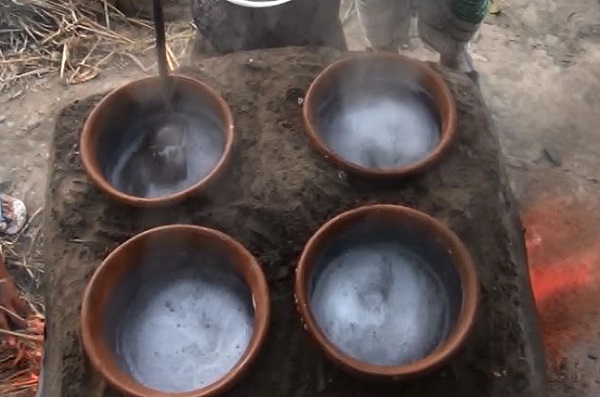
Manikganj's Hazari gur has survived with a hundred years of tradition. Several families have been involved in making this jaggery, prized for its taste and aroma, for generations, but they are unsure how long the tradition can last.
Date palm sap, an old method
It might seem that Hazari gur comes from some unusual natural source, but it too is made from date palm sap. From the tapper bringing down the sap to making the jaggery, it follows an ancient process that has not changed, though much else has over the years.
A royal name
Local people say Queen Elizabeth herself spread the name of Hazari gur. At that time several Hazari families made the jaggery; now only a few remain.
Five to ten times the price
At Manikganj's jaggery market, date palm jaggery is sold in huge quantities, but Hazari gur stands apart, selling for five to ten times the price of ordinary patali.
Source: Shykh Seraj, Hridoye Mati O Manush. First published in Bengali on The Agro News.
Comments
(0)