
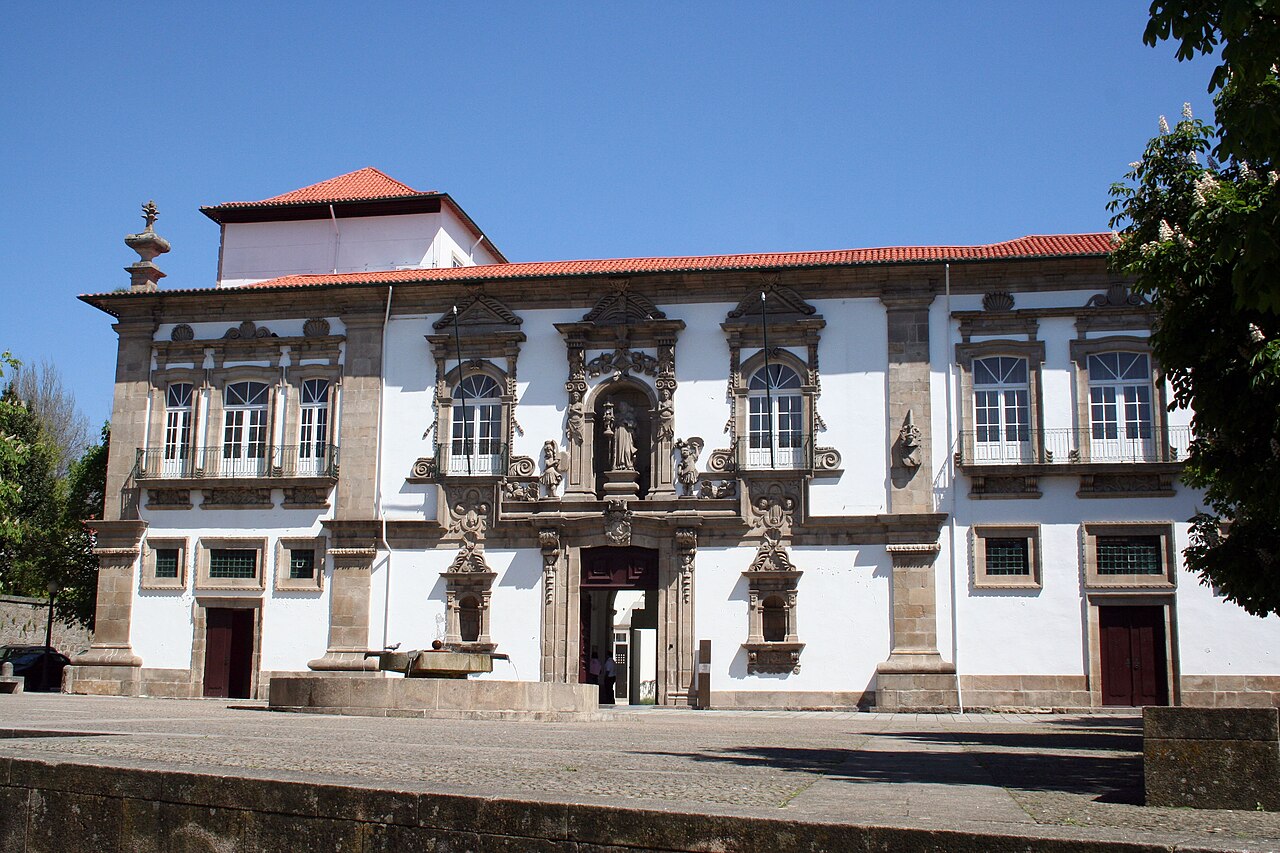
Guimarães, a city of about 166,000 people in Portugal's Minho region where summer temperatures now reach 40 C, has become European Green Capital for 2026, beating Heilbronn in Germany and Klagenfurt in Austria, Euronews reports. The European Commission judges candidates on air quality, noise, water, biodiversity and green space, waste and the circular economy, and climate mitigation and adaptation.
Behind the title is more than a decade of work on green corridors, restored waterways and less waste. The city's green infrastructure plan follows a radial model: corridors running out from the historic centre, a UNESCO World Heritage Site since 2001, to link parks, rivers, farmland and forests, with the aims of more green cover, more biodiversity and smaller urban heat islands.
Water is central. The Ave and Vizela rivers are used for leisure and for cooling, and low-impact footpaths now run along their banks. The work is coordinated from the Landscape Laboratory, set up in 2014 by the municipal council with the University of Minho and the University of Trás-os-Montes and Alto Douro.
"We are seeing an increase in diseases linked to heatwaves. So we need to transform our cities," said Carlos Ribeiro, head of the Landscape Laboratory, who sees city design as a public health issue: green areas must be connected and, above all, used by people. "We have managed to reduce temperatures by two degrees," he said.
That figure comes from research. Scientists from the Landscape Laboratory and the University of Minho, working with universities in Texas and Colombia, used a decade of satellite images to measure the effect of the city's green measures. Their study, published in September 2025, found land surface temperatures fell by up to 2.49 C where green roofs and urban gardens were introduced, though the authors warn that stronger environmental policies will be needed to hold on to the gains.
Photo: Ramón from Llanera / Wikimedia Commons (CC BY-SA 2.0)
Source: Euronews

Comments
(0)