
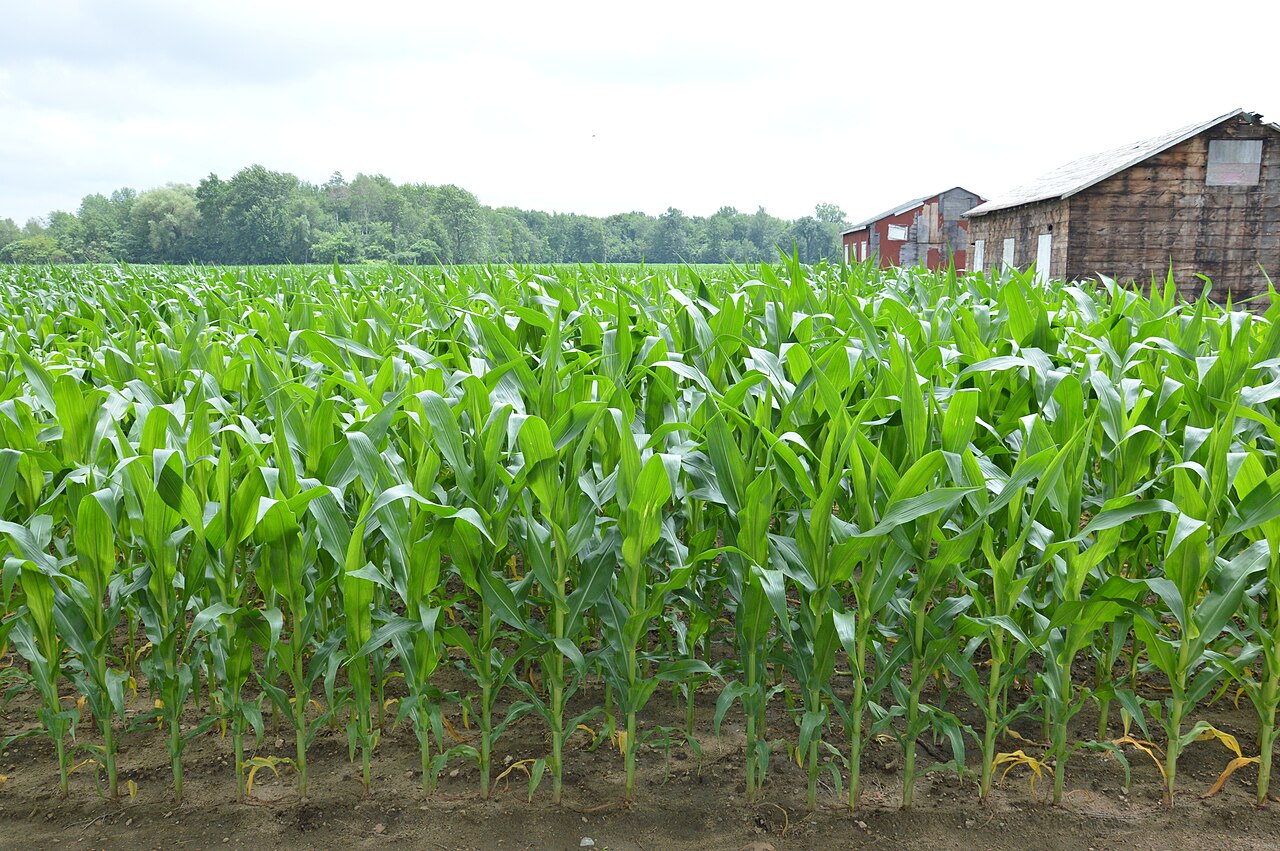
Potassium needs closer attention as farmers chase higher yields in more variable weather, agronomist Greg Stewart, formerly of the Ontario Ministry of Agriculture, Food and Agribusiness (OMAFA) and Syngenta, told growers at the 2026 Great Ontario Yield Tour, Farms.com reports.
Deficiency can appear even where soil tests show adequate potassium, because dry conditions restrict its movement from soil into plants. Some fields showed symptoms during a dry spell in early July despite reasonably good soil levels, especially on lighter soils that dry quickly. Where nitrogen is applied at high rates and crops hit a sudden dry period, potassium symptoms may show more than nitrogen deficiency, so moisture and nutrient interactions matter when diagnosing a problem.
Stewart compared Ontario recommendations with crop removal. High-yield corn of about 240 to 280 bushels an acre removes roughly 60 to 70 pounds of potassium oxide (K2O) an acre, he said, yet under the guidelines he reviewed, applications to replace removal may not be recommended until soil-test potassium falls to about 75 parts per million, and none may be needed above 120 ppm.
He called this a longstanding concern, since soil levels are allowed to fall before replacement is advised, and said it may support short-term profitability while leaving questions about long-term fertility under consistently high yields. But he also cautioned that matching removal is not always the right strategy: decisions should weigh soil tests, yield potential, nutrient availability and economic return.
Photo: Illustratedjc / Wikimedia Commons (CC BY-SA 3.0)
Source: Farms.com
Comments
(0)