
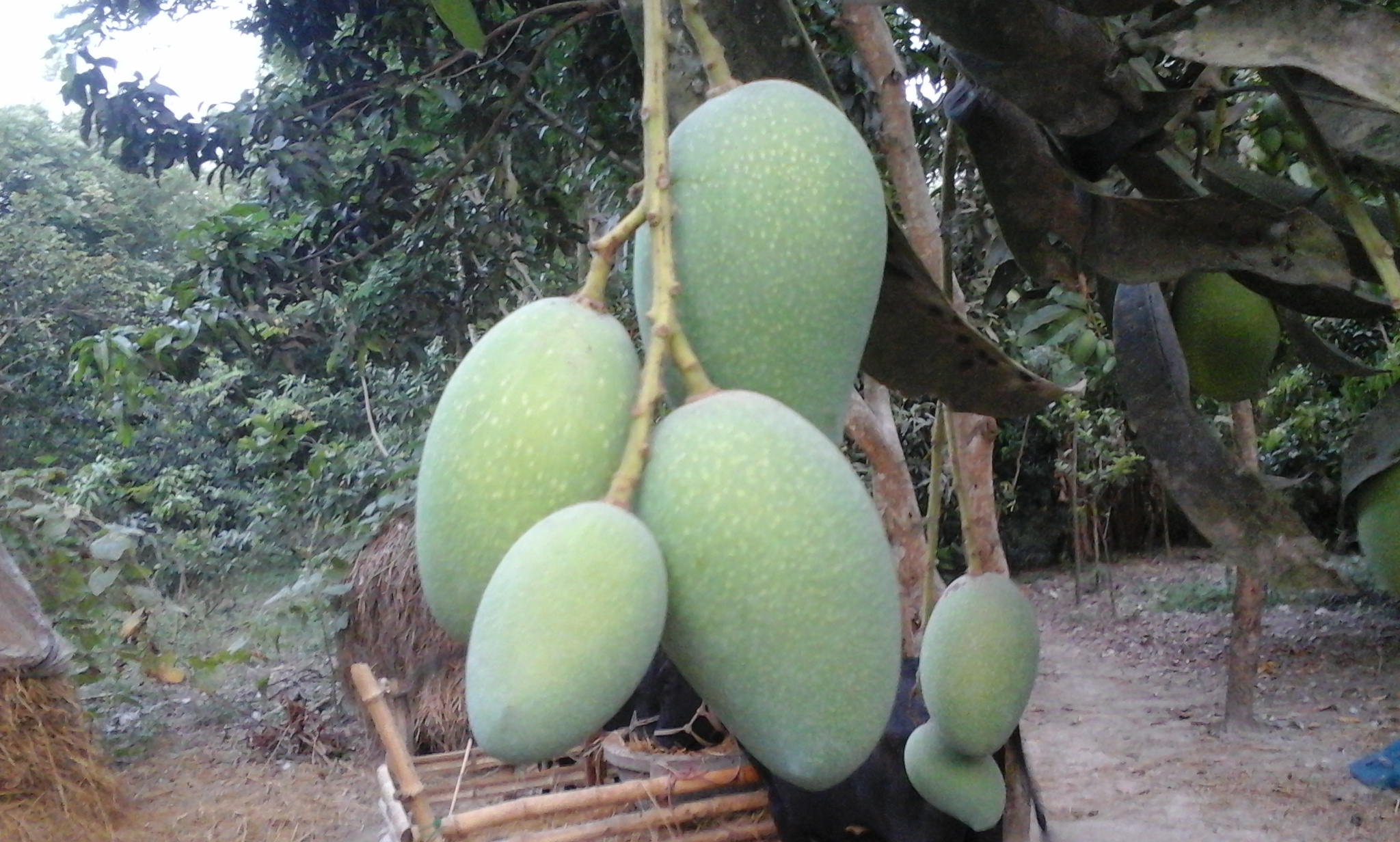
Green mangoes, sour and crisp, are in Bangladeshi markets by mid-April, and on 18 April 2026 the lifestyle desk of the news site Jagonews24 published a short home recipe for turning them into a sweet and sour green mango jelly. Beyond the usual mashes (bharta) and sherbets, the recipe said, green mango can be made into a jelly at home with a few ingredients and a little care, and the jelly can be stored and eaten over a long period. The method is simple: the mangoes are peeled, steamed soft, blended to a paste and cooked slowly with sugar, a pinch of salt and lemon juice until thick.
This report sets out that recipe as published and adds the background a home cook needs: what a jelly is and how it differs from a jam, why green fruit, acid and sugar make a mixture set, how to tell when it is done, how to sterilise jars and store the result, what international health guidance says about the sugar in sweet spreads, and where the green mango itself comes from in Bangladesh, the country whose national tree is the mango.
The recipe as Jagonews24 published it
The ingredients listed by Jagonews24's lifestyle desk were few. The quantities of sugar and salt were left to the cook's taste; only the lemon juice was measured.
- Green mangoes: 4 to 5
- Sugar: to taste
- Salt: to taste (the method uses a pinch)
- Lemon juice: 2 teaspoons
- Food colouring: optional
The method, in the order the recipe gave it:
- Peel the green mangoes and wash them well in clean water.
- Remove the stones and cut the mangoes into small pieces.
- Steam the pieces for a while until soft, then blend them into a smooth paste.
- Pour the paste into a pan and add sugar as needed, a pinch of salt and 2 teaspoons of lemon juice.
- Cook on a medium flame, stirring slowly and continuously so that the mixture does not stick to the bottom. A little green food colouring can be added at this stage if wanted.
- When the mixture has slowly thickened, take it off the heat and let it cool.
- When it has cooled completely, fill a clean, airtight glass jar and store it.
The recipe was illustrated on Jagonews24 with a symbolic picture which the site labelled as made with artificial intelligence; this report uses photographs of green mangoes, mango trees and home-made preserves instead.
Recipes of this kind have appeared in Bangladeshi newspapers for years, usually at the start of the mango season. Bangla Tribune published a ripe mango jelly on 24 June 2020 that used 3 cups of mango purée, 1 tablespoon of lemon juice and sugar to taste, boiled for 15 minutes on a medium flame and then for another ten minutes after the lemon juice was added. On 18 April 2020 the same paper, noting that green mangoes had reached the market, published a green mango chutney made with three mangoes, coriander and mint leaves, green chillies, garlic, cumin, salt and sugar, which it said would keep for up to 10 days. Its recipe for a jelly of amra (hog plum), published on 4 September 2019, also used optional green food colouring together with lemon juice and vinegar.
Jelly, jam or fruit butter: what the names mean
The National Center for Home Food Preservation (NCHFP), hosted by the University of Georgia in the United States and working from the US Department of Agriculture's Complete Guide to Home Canning, describes jelly, jam, preserves, conserves and marmalades as fruit products that are jellied or thickened, most of them preserved by sugar. Their character depends on the fruit, how it is prepared, the proportions of the ingredients and the method of cooking.
In the centre's definitions, a jelly is usually made by cooking fruit juice with sugar, and a good one is clear and firm enough to hold its shape when turned out of its container, yet quivers when the container is moved. A jam is a thick, sweet spread made by cooking crushed or chopped fruit with sugar; it holds its shape but is generally less firm than jelly. Fruit butters are sweet spreads made by cooking fruit pulp with sugar to a thick consistency. Marmalades are soft jellies with small pieces of fruit or peel suspended in them.
By those definitions, a spread cooked from blended mango paste rather than strained juice is closer to what the American guidance calls a jam or a fruit butter. In everyday Bengali usage, however, the word jelly is commonly used for such home-made sweet mango and hog plum spreads, and Jagonews24's recipe follows that usage.
Why green fruit, acid and sugar make it set
According to the NCHFP, a successful jellied product needs the right ratio of four things: fruit, pectin, acid and sugar. The fruit supplies colour and flavour, provides the water in which the other ingredients dissolve, and furnishes some or all of the pectin and acid.
Pectin is the substance that makes fruit gel. It is a structural carbohydrate in the cell walls of land plants, a heteropolysaccharide whose main chemical component is galacturonic acid. During ripening, enzymes break pectin down, which is why fruit softens as it ripens. The NCHFP notes that fully ripened fruit has less pectin, and for jellies made without added pectin it recommends that about one quarter of the fruit be slightly under-ripe. It also cautions that pectin from fruit that is too under-ripe or over-ripe will not form a gel, and that the highest quality pectin is found in just-ripe fruit. Commercial pectins, which are made from apples or citrus fruit and sold as powder or liquid, can be used with any fruit.
For unripe mango in particular, the encyclopedic entry on aam panna, the green mango drink of western India, states that unripe mango is a rich source of pectin which gradually diminishes after the stone forms, and that its sourness comes from oxalic, citric and malic acids.
Acid is needed both for gel formation and for flavour. The NCHFP says acid content varies among fruits and is higher in under-ripe fruit, and that lemon juice or citric acid can be added when a fruit is low in acid. The balance matters: with too little acid the gel will never set, and with too much it will lose liquid, a fault the centre calls weeping. The lemon juice in the Jagonews24 recipe plays this part.
Sugar, the centre says, must be present in the proper proportion with pectin and acid to make a good gel. It is the preservative in the product, preventing the growth of microorganisms, and it adds taste. The guidance is firm that the sugar in a traditional recipe should not be cut: too little sugar prevents gelling and may allow yeasts and moulds to grow. Granulated white sugar is the usual choice; brown sugar and molasses are not recommended because their flavour overpowers the fruit. Artificial sweeteners cannot replace sugar in regular recipes because the sugar is needed to form the gel.
Green fruit has one more effect the centre lists among common faults: cloudiness, which it attributes to starch in green fruit. For a spread made from blended green mango, which is opaque in any case, this is a matter of appearance rather than safety.
How to tell when it is done
The Jagonews24 recipe tells the cook to stop when the mixture has slowly thickened. The NCHFP gives three ways of testing jellies made without added pectin, of which it calls the temperature test the most dependable:
- Temperature test: with a candy or jelly thermometer, the jelly is done at 220 degrees Fahrenheit at sea level, which is 8 degrees Fahrenheit above the boiling point of water. The bulb must be fully covered by the mixture without touching the bottom of the pan.
- Spoon or sheet test: a cool metal spoon is dipped in the boiling mixture and lifted out of the steam. At first the drops are light and syrupy; when two drops form together and slide off the spoon as a sheet, the jellying point has been reached.
- Refrigerator or freezer test: a little of the boiling mixture is poured on a plate and put in the freezing compartment for a few minutes, with the pan taken off the heat meanwhile. If it gels, the batch is done.
The same guidance warns that jams and jellies thicken further as they cool. It advises stirring constantly to prevent burning, which matches the recipe's instruction to keep stirring so the paste does not stick. It recommends making one batch at a time according to the recipe, because increasing the quantities often gives soft gels, and it notes that overcooking can break down pectin and prevent gelling, while long boiling darkens the colour. Finished jellied products should not be moved for at least 12 hours, and some take up to two weeks to set completely.
Clean jars, storage and signs of spoilage
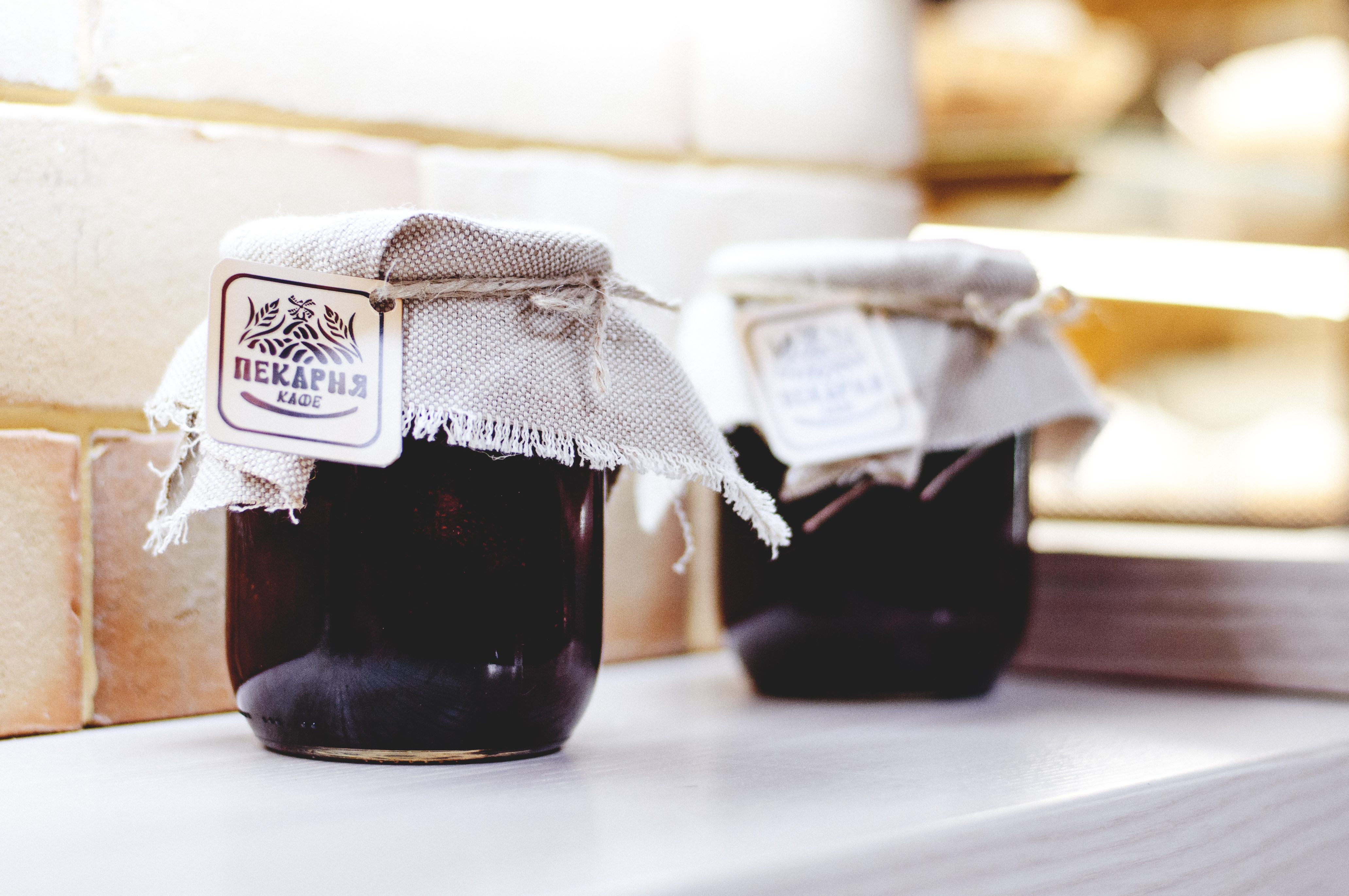
The recipe ends with a cooled jelly packed into a clean, airtight glass jar. The NCHFP's advice on jars is more specific. Jams and jellies that are processed in a boiling-water canner for less than 10 minutes should be filled into sterile jars. To sterilise empty jars, the centre says to stand them upright on a rack in a canner, fill the canner and the jars with hot (not boiling) water to 1 inch above the tops, and boil for 10 minutes at elevations below 1,000 feet, then drain them one at a time.
For long storage at room temperature the centre's tested method is to fill the hot product into sterile jars, leaving a quarter of an inch of headspace, seal with self-sealing lids and process for 5 minutes in a boiling-water canner. It no longer recommends paraffin or wax seals for any sweet spread because of the risk of mould. Products made this way to a tested recipe keep their best quality for up to a year when stored in a cool, dark, dry place.
These shelf times apply to tested recipes processed in a canner. Jagonews24's recipe gives the sugar only as a matter of taste and has no processing step, so its claim that the jelly keeps for a long time cannot be measured against them. For any opened jar, the NCHFP's advice is to keep it in the refrigerator at 40 degrees Fahrenheit or lower, where a regular full-sugar cooked jam or jelly is best used within about a month, and to spoon out what is needed into a bowl rather than leave the jar open or out of the refrigerator for long periods. Lower-sugar spreads keep for less time.
Mould is a reason to throw the whole jar away, not to scrape the surface. The centre says research indicates that the mould people usually scrape off jelly may not be as harmless as it seems: mycotoxins have been found in some jars of jelly with surface mould growth. It advises examining jars regularly and discarding the entire contents if there is mould, yeast growth, moving bubbles or an off smell such as a fermented, yeasty or alcoholic odour.
Sugar in sweet spreads and the WHO guideline
Because sugar is what preserves and sets a jelly, a sweet spread is mostly sugar and fruit. In March 2015 the World Health Organization issued a guideline recommending that adults and children reduce their daily intake of free sugars to less than 10 per cent of their total energy intake, with a further reduction to below 5 per cent, or roughly 25 grams (6 teaspoons) a day, bringing additional health benefits.
Free sugars, in the WHO's definition, are sugars added to foods and drinks by the manufacturer, cook or consumer, as well as sugars naturally present in honey, syrups, fruit juices and fruit juice concentrates. The sugar stirred into a home-made jelly therefore counts as free sugar. The guideline does not apply to the sugars in fresh fruit and vegetables or those naturally present in milk. The WHO said the evidence showed that keeping free sugars below 10 per cent of energy reduces the risk of overweight, obesity and tooth decay, and it pointed out how much sugar is hidden in everyday products: a tablespoon of ketchup contains about 4 grams, and a single can of sugar-sweetened soda up to 40 grams.
For most households this means a jelly is something to spread thinly rather than eat by the bowl. Anyone with diabetes or who has been advised to limit sugar should ask a doctor or a registered dietitian how such a spread fits into their diet.
The food colouring in the recipe is listed as optional. In the NCHFP's account the fruit itself provides the characteristic colour of a jellied product, so the jelly can be made without it.
The green mango season in Bangladesh
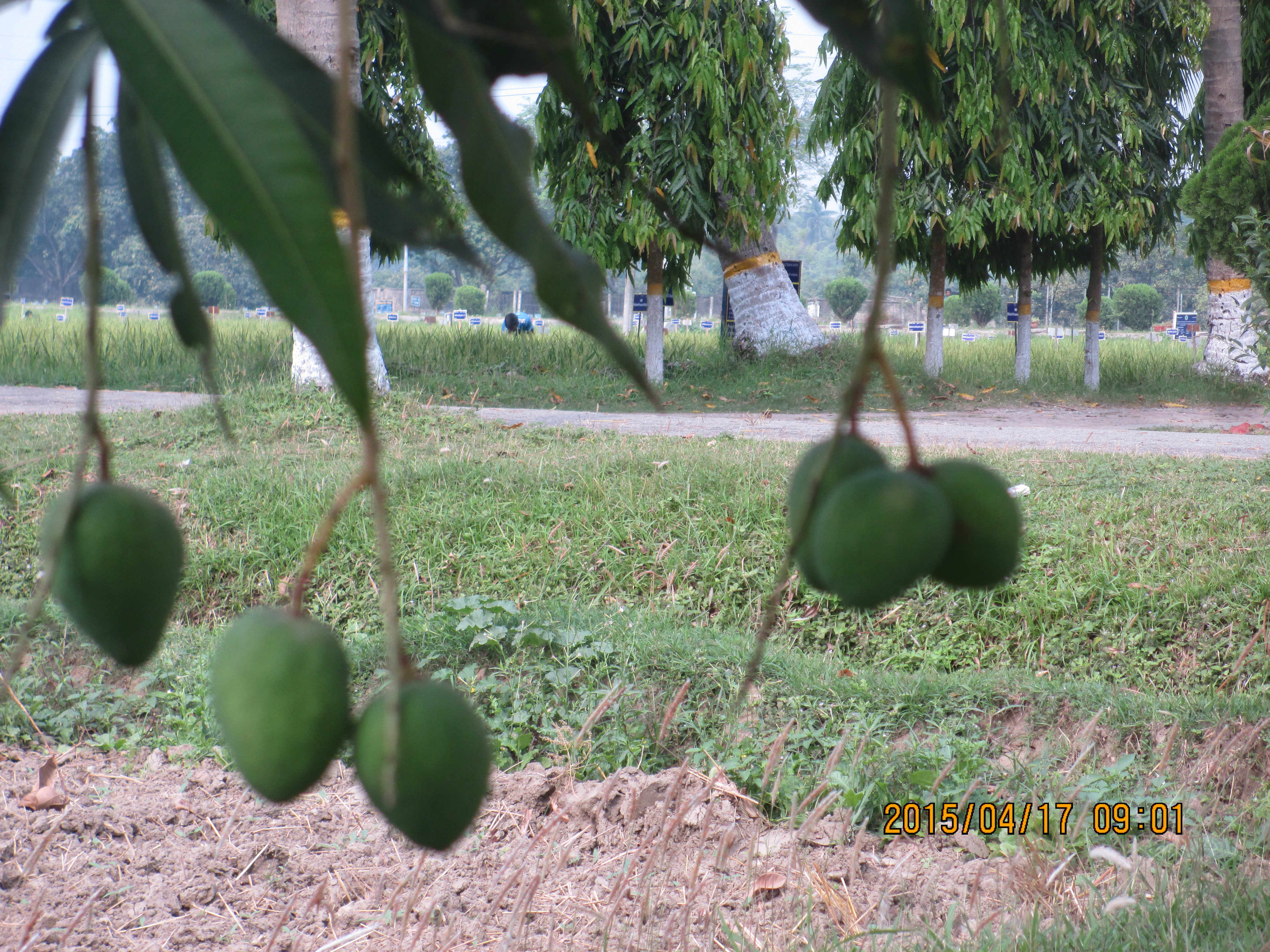
Banglapedia, the national encyclopedia of Bangladesh, explains the rhythm of the mango year. Mango trees flower from January to March, and fog, rain or cloudy weather in that period harms fruit setting. Mild showers while the fruit develops and enlarges are beneficial, but storms, and hailstorms in particular, damage the crop and often cause immature fruit to drop. Of roughly a thousand flowers, only one or two may become a mature fruit, and two or three fruits on a panicle are considered a satisfactory crop.
Young mangoes are usually green; when ripe they may turn greenish yellow, yellow, orange or red, or may even stay green. The encyclopedia lists the uses of the unripe fruit: green mangoes are often put into curries or dal for extra taste, and considerable quantities of both ripe and green fruit are used to make jam, jelly, squash, chutney and pickles (achar). Across South Asia, sour unripe mangoes also go into side dishes such as mango chutney and pickles, and into the summer drink aam panna. The Fazli, a large late variety grown in Rajshahi Division, is commonly used in jams and pickles.
The mango in Bangladesh: national tree, varieties and research
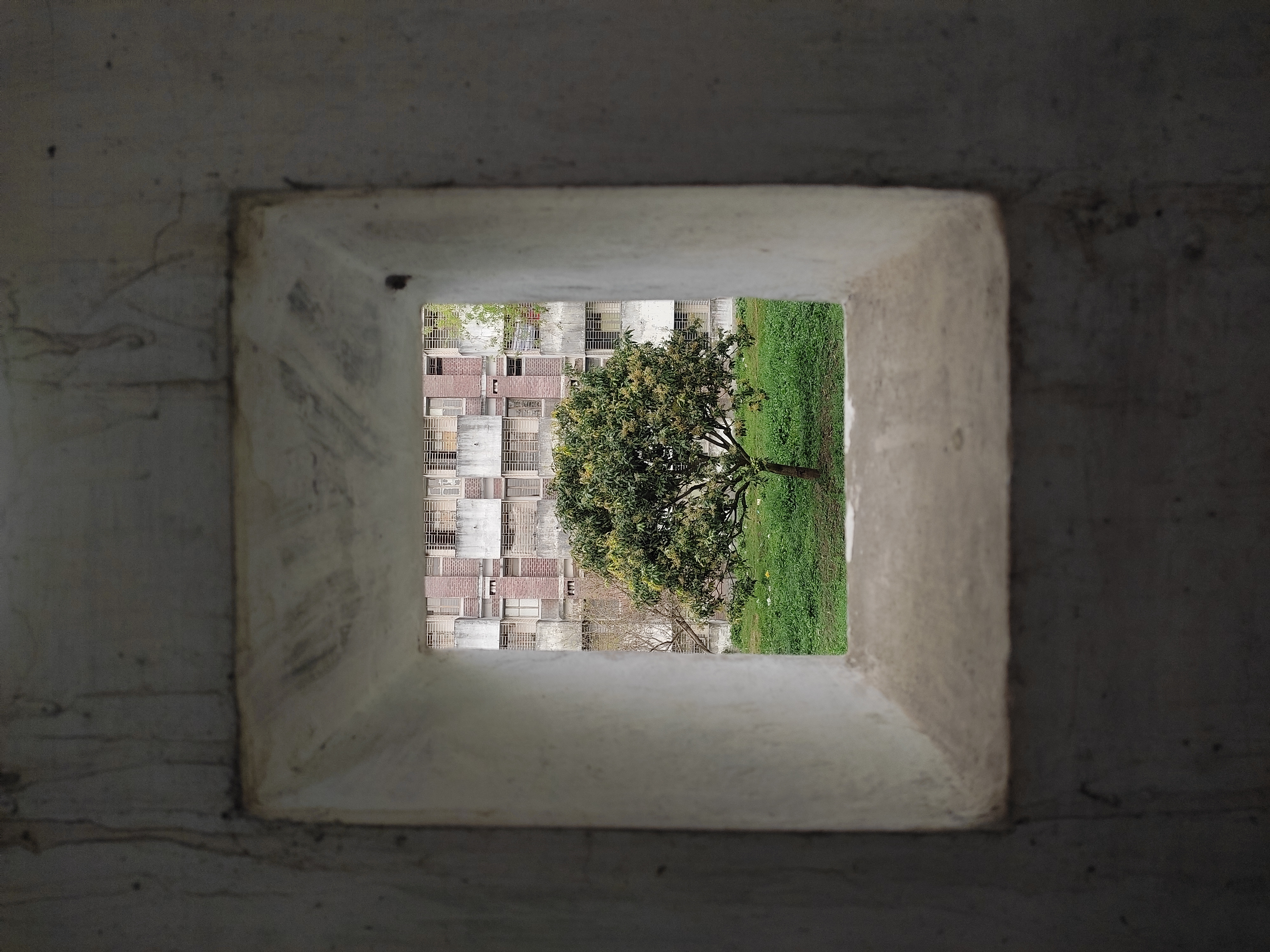
The mango, Mangifera indica of the family Anacardiaceae, is considered by some authorities to be indigenous to the eastern part of the Indian subcontinent, including Bangladesh, Assam and Myanmar. Banglapedia notes that one of its Sanskrit names, am, means stored food or provisions. On 15 November 2010 the Bangladesh cabinet decided to declare the mango tree the national tree, bdnews24.com reported at the time.
Mango trees grow throughout Bangladesh, mostly as homestead plantings. Banglapedia divides the country's mangoes into two groups: superior varieties propagated by grafting, and local seedling mangoes, popularly called deshi or guti am, which have no recognised names and whose taste is not assured. There are nearly 100 cultivars in the country. The superior varieties are grown mostly in Rajshahi, Chapainawabganj and Dinajpur, and include Fazli, Langra, Gopalbhog, Himsagar, Khirsapat, Ashwina, Kishanbhog, Kuapahari, Lata Bombai, Foria, Bombai, Kohitoor, Lakshmanbhog, Mohanbhog and Misribhog.
Chapainawabganj is regarded as one of the mango districts of Bangladesh, with Shibganj, Bholahat and Gomostapur upazilas producing the main part of its crop. Two mangoes grown in the district have been registered as geographical indications (GI) by the Department of Patents, Designs and Trademarks: the Khirsapat mango of Chapainawabganj, whose certificate was issued on 27 January 2019, and the Fazli mango of Rajshahi and Chapainawabganj, whose certificate was issued on 25 April 2023.
Research on the crop is led by the Bangladesh Agricultural Research Institute (BARI). Its Mango Research Station at Chapainawabganj was established in 1985 under the Horticulture Division to research cultivation, varietal improvement and production; it covers about 12.40 hectares and holds more than 300 mango trees of about 65 cultivars. BARI also runs research stations at Rajshahi and Joydebpur, and the Department of Agricultural Extension produces and distributes grafts of elite cultivars from its orchards, horticulture centres and nurseries. Grafted trees begin to bear in about their fourth year and stay productive to about their 45th; seedling trees take several years longer to bear but may fruit for 60 years or more.
Banglapedia records that Bangladesh produced about 639,820 tonnes of mango in 2005-06 from about 641,525 acres, and notes that annual output fluctuates and is held back by old, unproductive trees, poor management, pests and diseases, seedling-grown trees and the felling of productive trees. Worldwide, according to FAOSTAT data cited by Wikipedia, production of mangoes, mangosteens and guavas was 61.1 million tonnes in 2023, led by India with 26.2 million tonnes, 43 per cent of the total, followed by Indonesia with 4.1 million and China with 3.9 million.
Photo: Niriho khoka / Wikimedia Commons (CC BY-SA 4.0)
Sources: Jagonews24, National Center for Home Food Preservation (University of Georgia; USDA Complete Guide to Home Canning), World Health Organization, Banglapedia, Bangla Tribune, bdnews24.com, Wikipedia (Mango, Pectin, Aam panna, Fazli, Chapai Nawabganj District, Geographical indications in Bangladesh)

Comments
(0)