
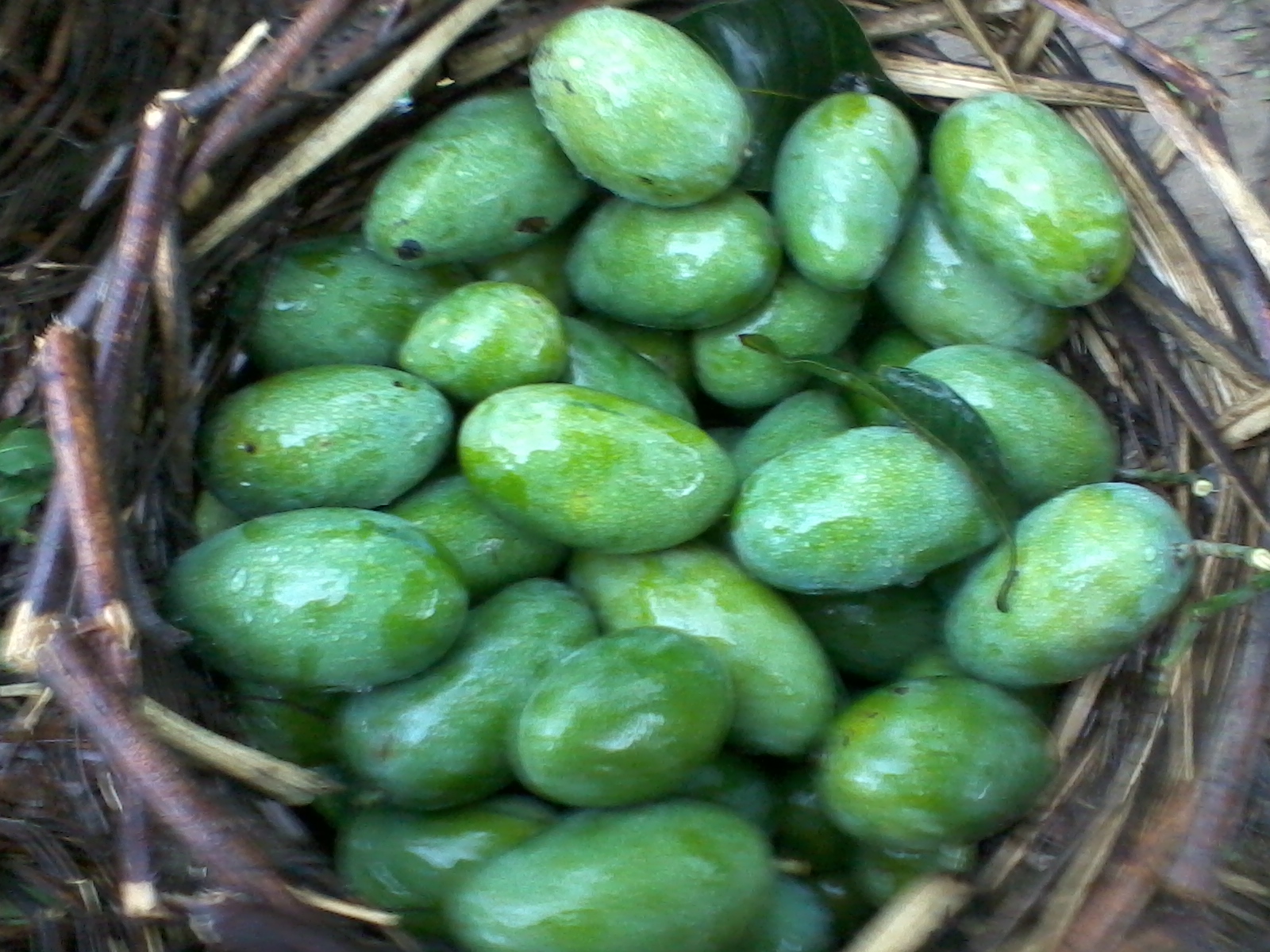
Green mango dal fry, a lentil dish soured with pieces of unripe mango and finished with a tempering of ghee, cumin and dried chillies, was the recipe the lifestyle desk of the Bengali news site Jagonews24 offered its readers on 27 May 2026, in the middle of the summer mango season. The desk suggested cooking it before the season ended, while green mangoes were still in the kitchen, and presented it as a simple home dish to be eaten with hot rice.
The recipe works with either masoor (red lentil) or mung dal. The lentils are soaked, cooked in a pressure cooker with salt, turmeric and pieces of green mango, and then mixed with a hot tempering. In the desk's words, the light sourness of the mango and the aroma of the tempering together make a dish that whets the appetite. The desk added that green mango is not only for sherbet or pickle but lifts many dishes eaten with rice, and that the finished dal can be served thin and soupy or thick and mashed, the form many people know as dal makha.
The ingredients and steps below are those of the original recipe. They are followed by background on each part of the dish: the green mango and the 2026 harvest season in the north-west, the two lentils and how Bangladesh grows them, the spices and fat of the tempering, and what food and nutrition authorities say about pulses.
Ingredients
The recipe as published lists eight ingredients:
- Lentils (masoor or mung dal): 1 cup
- Green mangoes: 2
- Turmeric powder: 1 teaspoon
- Water: 2 cups
- Ghee: 2 tablespoons
- Cumin: 1 tablespoon
- Dried chillies: 2 to 3
- Salt: to taste
The list does not say whether the mangoes are to be peeled; the method only says that the mango pieces go into the cooker together with the stone. The water in the list is a starting amount, and the method leaves the final quantity to the cook, who adds water as needed and then decides how thick the dal should be.
Method, step by step
- Wash the lentils well and soak them in water for 30 minutes.
- Put the soaked lentils into a pressure cooker with water as needed, salt, turmeric and the green mango pieces, including the stone.
- Close the lid and set the cooker on a medium flame. After three to five whistles, turn off the heat.
- Wait until the steam inside has escaped naturally, then open the lid.
- In a separate small pan, heat the ghee and add the dried chillies and cumin to make the tempering.
- Pour the tempering into the cooked dal and mix well.
- For a thicker dal, cook it uncovered on a low flame for a while longer.
- Serve hot with rice, pickle or any fried dish.
Thickness is left to taste. The desk wrote that the dal can be kept like a light, thin broth or cooked down until it is thick and mashed, and that it goes as well with pickle or fried food as with plain rice.
The soaking step has a practical reason behind it. The Food and Agriculture Organization of the United Nations (FAO), in the nutrition fact sheet it issued for the International Year of Pulses in 2016, noted that one reason pulses are underestimated is that, unless they are soaked for hours, they take a long time to cook. The same fact sheet says that traditional techniques such as soaking, sprouting, fermentation and pounding help overcome bloating, flatulence and long cooking times, and can reduce the content of anti-nutrients, the substances in pulses that lower the body's ability to absorb the minerals they contain.
Green mango in the Bengali kitchen
The mango tree, Mangifera indica, is an evergreen of the family Anacardiaceae that can grow to around 30 metres in height and spread. Banglapedia, the national encyclopaedia of Bangladesh, says the origin of the cultivated mango is lost in antiquity, but that the horticultural forms are thought to derive from M. indica, considered native to the eastern Indian subcontinent, including Bangladesh, Assam and Myanmar. The Bengali edition of the encyclopaedia notes that the trees flower from January to March.
Using the fruit before it ripens is an old habit of the region. Banglapedia records that green mangoes are added to curries and to dal for extra flavour, and that both ripe and green fruits are made into jam, jelly, squash, chutney and pickle (achar). The Jagonews24 recipe follows that tradition: the mango goes into the pot with the lentils from the start, so that it cooks down with them.
Bangladesh has nearly 100 mango cultivars, according to Banglapedia. Among the elite varieties it names Fazlee, Langda, Gopalbhog, Himsagar, Khirsapat, Ashwina, Kishanbhog, Kuapahadi, Lata Bombai, Foria, Bombai, Kohitoor, Laksmanbhog, Mohanbhog and Misribhog, while local seedling types are known as deshi or guti mangoes. The superior varieties, the encyclopaedia says, are grown mainly in the Rajshahi, Nawabganj (now Chapainawabganj) and Dinajpur areas.
Banglapedia's figure for national output dates from 2005-06, when Bangladesh produced about 639,820 tonnes of mangoes from roughly 641,525 acres. Production has grown greatly since. A Daily Star report of September 2025 said the country produced 2.4 to 2.5 million tonnes of mangoes a year, with commercial cultivation in 23 districts and 72 varieties grown across the country.
Some of those varieties carry legal protection. In January 2019 the Khirsapat mango of Chapainawabganj, popularly known as Himsagar, received geographical indication (GI) status from the Department of Patents, Designs and Trademarks, The Daily Star reported, becoming the third Bangladeshi product with that recognition after hilsa fish and jamdani. The Bangladesh Agricultural Research Institute (BARI) had applied in February 2017 on behalf of Chapainawabganj growers. The same report said Khirsapat was the second most widely grown variety after Ashwina, covering 103,000 acres in fiscal 2016-17, and that BARI had also applied for GI tags for Ashwina, Langra and Haribhanga.
The 2026 mango season in the north-west
The recipe appeared as the main harvest was getting under way in the mango districts. On 10 May 2026 the Rajshahi district administration announced its mango calendar for the year at a meeting on mango transport, marketing and harvesting in the deputy commissioner's conference room, The Business Standard reported. The calendar had been prepared with growers, traders and the agriculture department, and anyone breaking it was to face legal action.
Under the Rajshahi calendar, harvesting of the main varieties was allowed from these dates:
- All guti (local seedling) varieties: 15 May
- Gopalbhog: 22 May
- Raniposondo and Laxmanbhog: 25 May
- Himsagar or Khirsapat: 30 May
- Banana mango and Langra: 10 June
- Amrapali and Fazli: 15 June
- BARI Aam-4: 5 July
- Ashwina: 10 July
- Gourmati: 15 July
- Katimon and BARI Aam-11: all year round
Rajshahi Deputy Commissioner Kazi Shahidul Islam said the calendar had been introduced "to ensure that no one harvests and markets unripe mangoes before the stipulated dates". For 2026 the district's mango area was 19,062 hectares, with a production target of 243,993 tonnes. At an estimated Tk 32 a kilogram, the crop was expected to be worth around Tk 780 crore, the report said.
Neighbouring Naogaon sets its own dates. In May 2025 its deputy commissioner announced a calendar that opened with guti mangoes on 22 May, followed by Gopalbhog on 28 May, Khirsapat and Himsagar on 2 June, the GI-recognised Nak Fazli on 5 June, Langra and Haribhanga on 10 June and Rupali, the district's most widely grown variety, on 18 June, UNB reported. The Department of Agricultural Extension (DAE) in Naogaon then put the district's mango area at 30,300 hectares and its expected yield at 366,000 tonnes.
Only a small part of the crop leaves the country. The Daily Star reported in September 2025 that mango shipments that season had reached 2,194 tonnes, after 1,321 tonnes in 2024 and 3,100 tonnes in 2023 according to DAE figures. The United Kingdom was the largest buyer, at 686 tonnes, followed by Saudi Arabia, Italy, Kuwait and Qatar, and Bangladeshi mangoes reached 26 countries. Exporting, the paper said, starts in late May and runs until late September.
Masoor and mung: the two lentils in the recipe
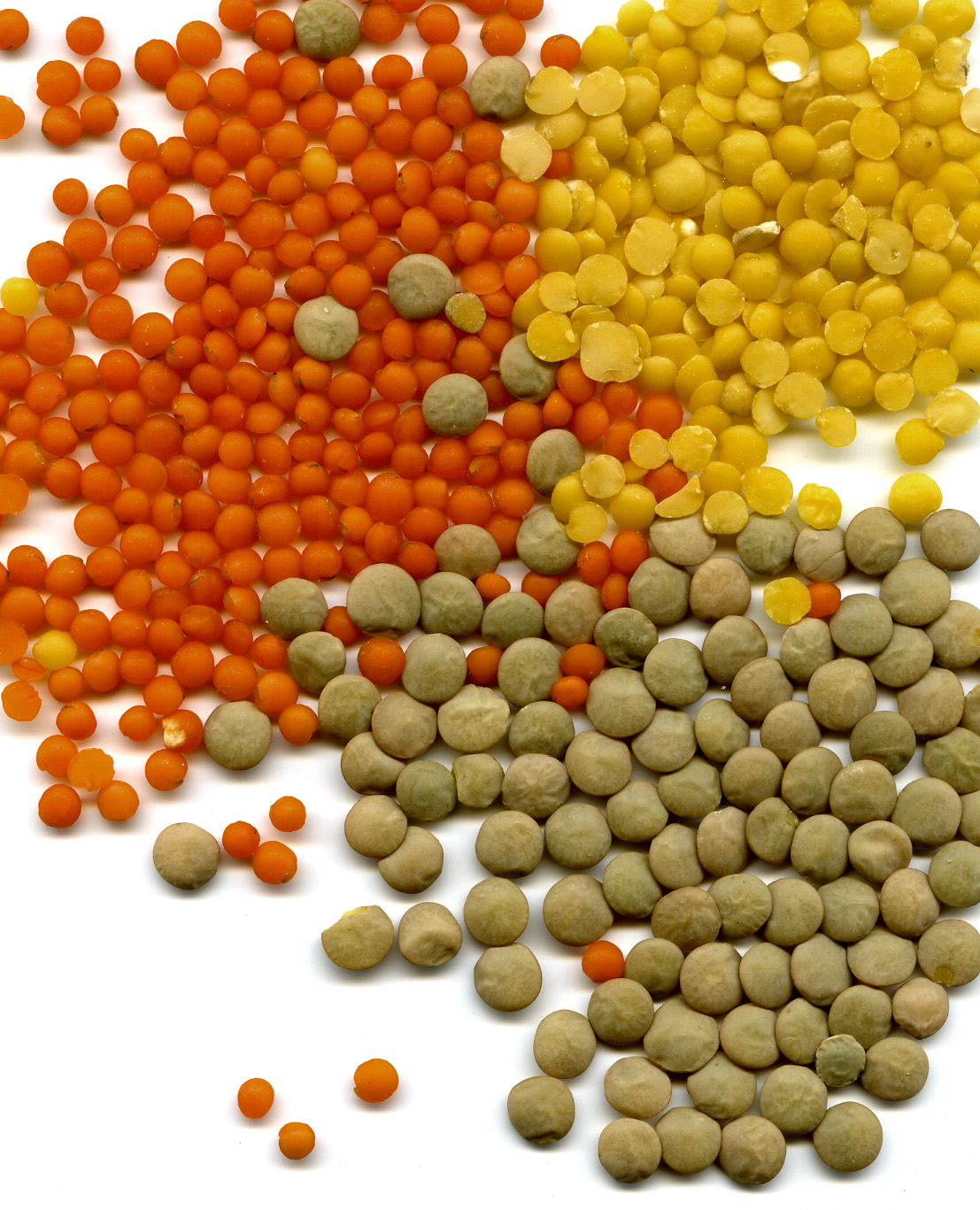
Both lentils in the recipe are pulses. FAO defines pulses as a subgroup of legumes, plants of the pea family (Leguminosae) whose dry, edible, low-fat seeds are eaten by people and animals. It does not count as pulses the legumes eaten as vegetables, such as green peas and green beans, or those grown for oil, such as soybean and groundnut. Lentils (Lens culinaris) and mung beans (Vigna radiata) are both on its list of commonly eaten pulses. In South Asia, dal means the dried, split pulses themselves as well as the dish made from them.
Banglapedia describes the lentil, masur in Bengali, as a winter crop that tolerates drought moderately but is highly susceptible to waterlogging. The whole seed contains about 25 percent protein, 1 percent fat, 55.8 percent carbohydrate, 3.7 percent fibre and 11.2 percent water. Split seeds are used as dal in soups and the flour is mixed with cereals in cakes; lentil is also given as food to invalids and infants.
Bangladesh grows six main pulses, according to Banglapedia's entry on the crop group: masur (lentil), mung (green gram), mashkalai (black gram), chhola (chickpea), kheshari (grass pea) and motor (pea). All are rabi (winter) crops, grown mainly in the western and northern regions. Pulses contain 20 to 25 percent protein, and their lysine content is high enough to bear comparison with animal protein, which is why they are called "poor man's meat". Masur, the entry says, is popular across all social classes and appears in almost every meal.
The mung bean, or green gram, originated in South and Southeast Asia. In Bangladesh it is traditionally grown in the winter months, and Barisal and Patuakhali are the major growing areas, Banglapedia says; its entry gives the area as about 54,982 hectares, producing about 34,400 tonnes of grain. Mung is eaten whole or split as dal, in sweets and in fried snacks, and its young seedlings are cooked as a vegetable, while the dried stems and pod walls are fed to cattle. The encyclopaedia distinguishes a yellow-seeded type, sonamung, from the green-seeded green gram grown mainly for grain.
How Bangladesh grows its lentils
Figures from the north-west show the scale of the crop there. In December 2025 the state news agency BSS reported that the DAE expected about 52,386 tonnes of lentils from 30,311 hectares in Rajshahi division that season: 30,671 tonnes from 18,536 hectares in the four districts of the Rajshahi agricultural zone, and 21,715 tonnes from 13,775 hectares in the four districts of the Bogura zone.
DAE Additional Director Dr Azizur Rahman told BSS that the department was supplying farmers with modern varieties, from BARI Masur-1 to BARI Masur-9. Lentils need very little irrigation, he said, and farmers need no chemical nitrogen fertiliser for the crop because it leaves nitrogen in the soil for the next season. Dr Shakhawat Hossain, a principal scientific officer at BARI, said production could rise significantly if lentils were grown on about 80,000 hectares of Barind land that typically lies fallow for more than three months after the Aman rice harvest. The report noted that Bangladesh still imports large quantities of lentils.
By harvest time, in March 2026, the Dhaka Tribune reported from the Barind tract that lentils covered 24,130 hectares in Rajshahi district alone that season, against 21,252 hectares of mustard, according to the DAE. Farmers in Tanore and Godagari upazilas described good harvests and said lentils were selling at around Tk 3,300 a maund (40 kilograms). Tanore Upazila Agriculture Officer Saifullah Ahmed said favourable weather had produced bumper yields of mustard, lentils, peas and potatoes in the Barind, and that higher lentil output was helping to reduce dependence on imports.
The variety the DAE was pushing hardest in the Barind was BARI Masur-8. A 2022 paper in the Journal of Plant Registrations by Md Shahin Uz Zaman and colleagues records that the Pulses Research Centre of BARI released it in 2015 as a high-yielding, biofortified lentil. The paper gives its yield potential as 1,973 kilograms per hectare, its seed iron content as 74 milligrams per kilogram and its zinc content as 61 milligrams per kilogram, and its time to maturity as 115 to 120 days. DAE officials described it to BSS and the Dhaka Tribune as a zinc- and iron-enriched variety containing 27.8 percent protein.
Turmeric, cumin, dried chilli and ghee
Turmeric, the only spice cooked with the lentils from the start, comes from Curcuma longa, a perennial plant of the ginger family native to the Indian subcontinent and Southeast Asia. Its rhizomes are usually boiled, dried and ground into a deep orange-yellow powder that keeps well and is used across Asia to colour and flavour curries. Its taste is warm and slightly bitter, with an earthy aroma.
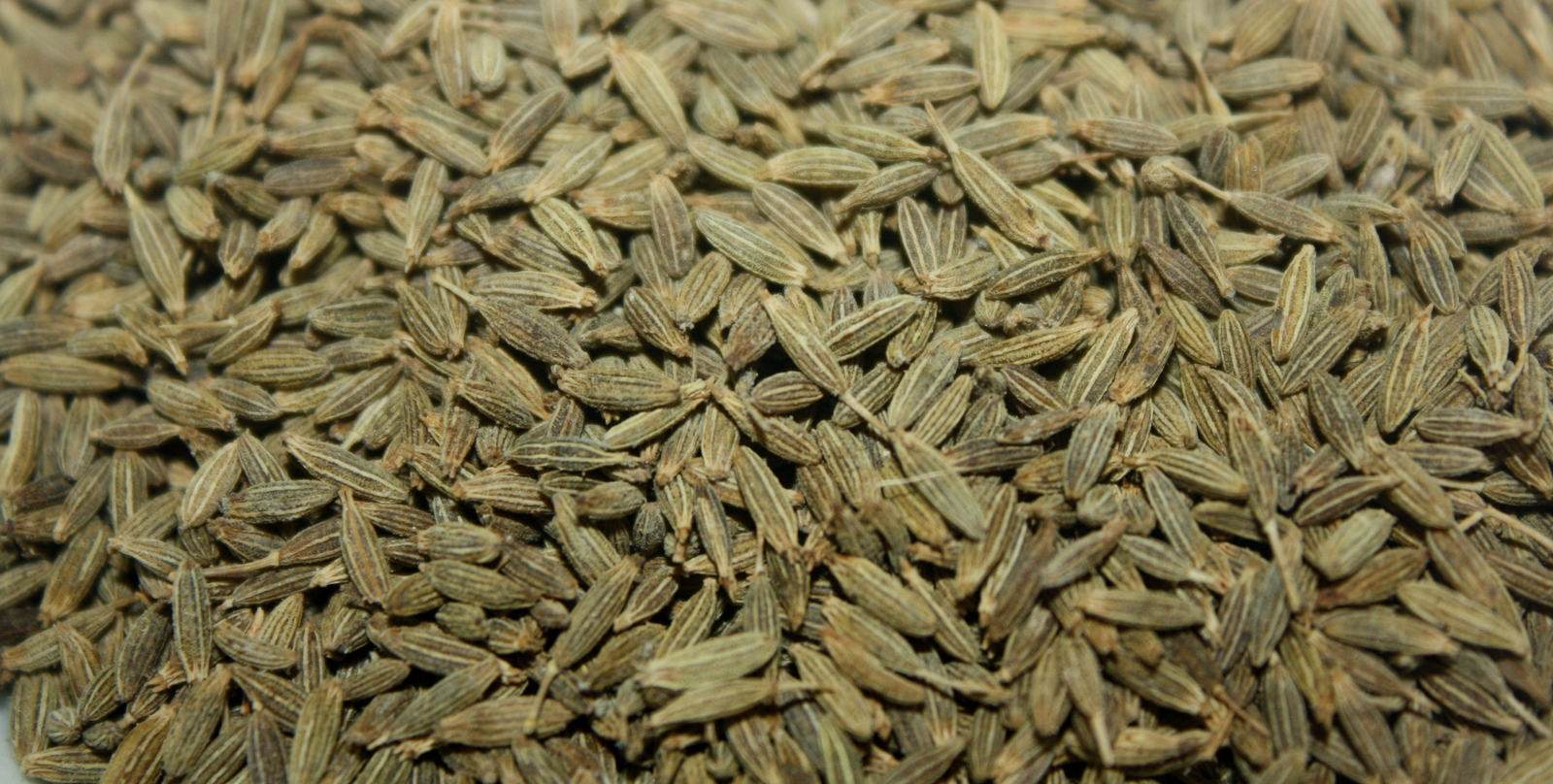
Cumin (Cuminum cyminum) is a flowering plant of the family Apiaceae, native to the Irano-Turanian region. What cooks call cumin seeds are in fact small dried fruits, each holding a seed, and they are used whole or ground in many cuisines. Banglapedia's entry on spices lists cumin among the common spices of Bangladesh and notes that a large number of spices are imported from India, Malaysia and Indonesia; it names ginger, garlic, turmeric, onion, red pepper and coriander among those commonly grown at home.
The chilli of Bangladeshi kitchens, Capsicum frutescens, belongs to the nightshade family. Banglapedia says it is grown mainly in Comilla, Noakhali, Faridpur, Barisal, Patuakhali and Bogra in the winter season, on about 66,235 hectares producing roughly 52,215 tonnes a year, and that dried chillies are ground into curry powder and used in sauces and pickles. In this recipe they are used whole, fried briefly in the ghee.
Ghee is clarified butter, a cooking fat that originated in the Indian subcontinent and is usually made from cow or buffalo butter. It is valued for its nutty flavour and for a high smoke point that allows it to be heated strongly without burning. In the recipe the ghee is heated first, the chillies and cumin go in next, and the hot mixture is poured over the dal and stirred through.
What nutrition authorities say about lentils and mango
FAO's 2016 fact sheet says pulses typically contain about twice the protein found in whole grain cereals such as wheat, and that for most people in developing countries cereals are a major source of protein. It adds that the protein quality of plant-based diets is significantly improved when pulses are eaten together with cereals, as they are when dal is eaten with rice, and that eating pulses with grains helps the body absorb the iron and other minerals they contain.
According to the same fact sheet, pulses have a low glycaemic index, are low in fat and high in fibre, are good sources of vitamins such as folate, and are gluten-free. Their high iron content, FAO says, makes them a potent food for preventing iron-deficiency anaemia in women and children, especially when combined with food containing vitamin C to improve iron absorption; its example is a sprinkle of lemon juice on a lentil curry. Drinking tea or coffee with meals, the fact sheet notes, has the opposite effect.
The United States Department of Agriculture's FoodData Central database gives, for 100 grams of mature lentils boiled without salt, 116 kilocalories, 9.02 grams of protein, 0.38 grams of fat, 7.9 grams of dietary fibre, 3.33 milligrams of iron and 181 micrograms of folate. Its entry for raw mango, which does not separate green fruit from ripe, gives 60 kilocalories, 1.6 grams of fibre and 36.4 milligrams of vitamin C per 100 grams.
These are general figures. The salt and ghee in a pot of dal and the size of a serving change what a bowl provides, and anyone with diabetes, kidney disease or another medical condition, or on a prescribed diet, should ask a doctor or a qualified dietitian before changing what they eat.
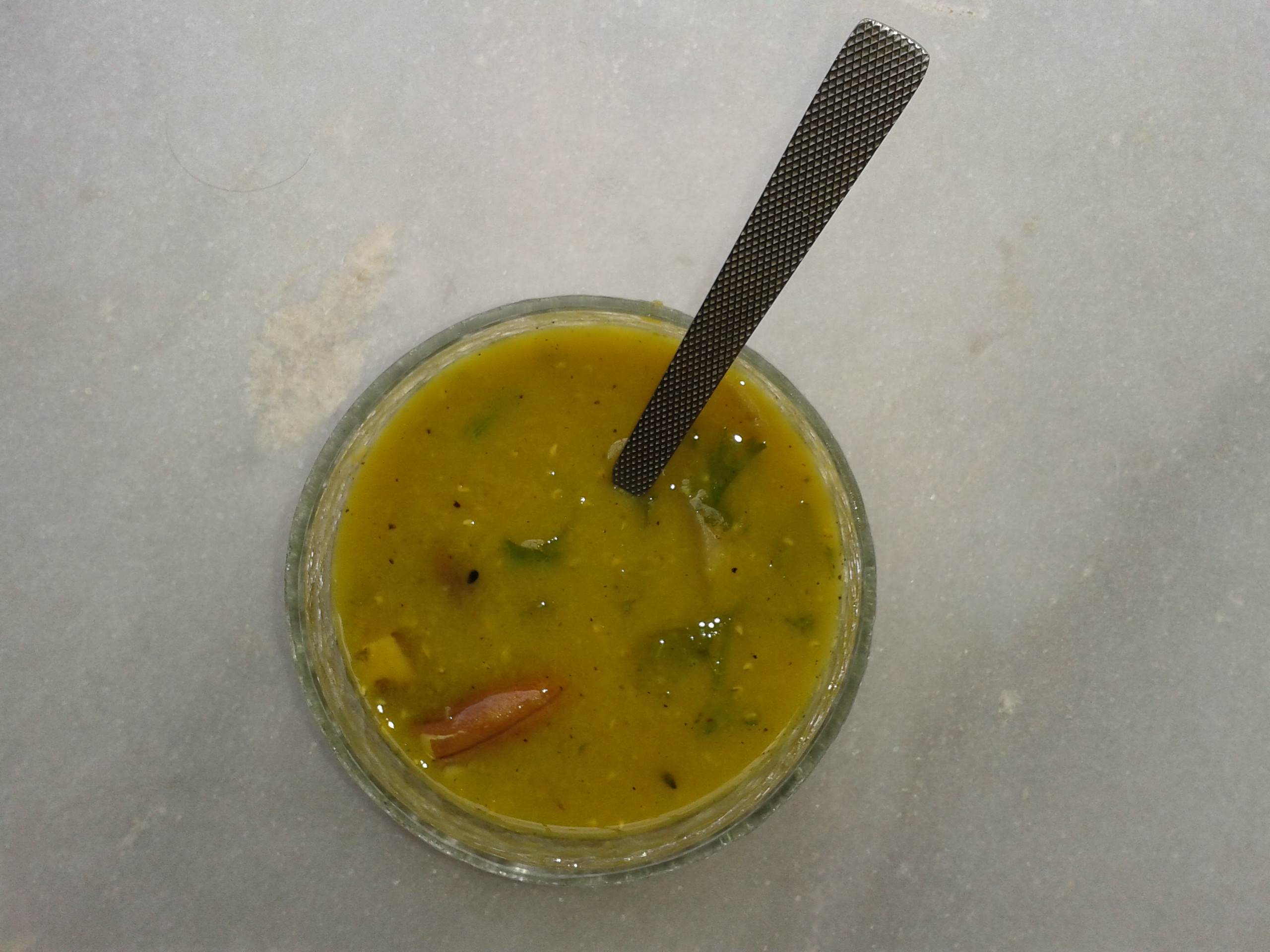
Photo: Roboture / Wikimedia Commons (CC BY-SA 3.0)
Sources: Jagonews24, Banglapedia, The Business Standard, The Daily Star, UNB, BSS, Dhaka Tribune, FAO, USDA FoodData Central, Journal of Plant Registrations


Comments
(0)