
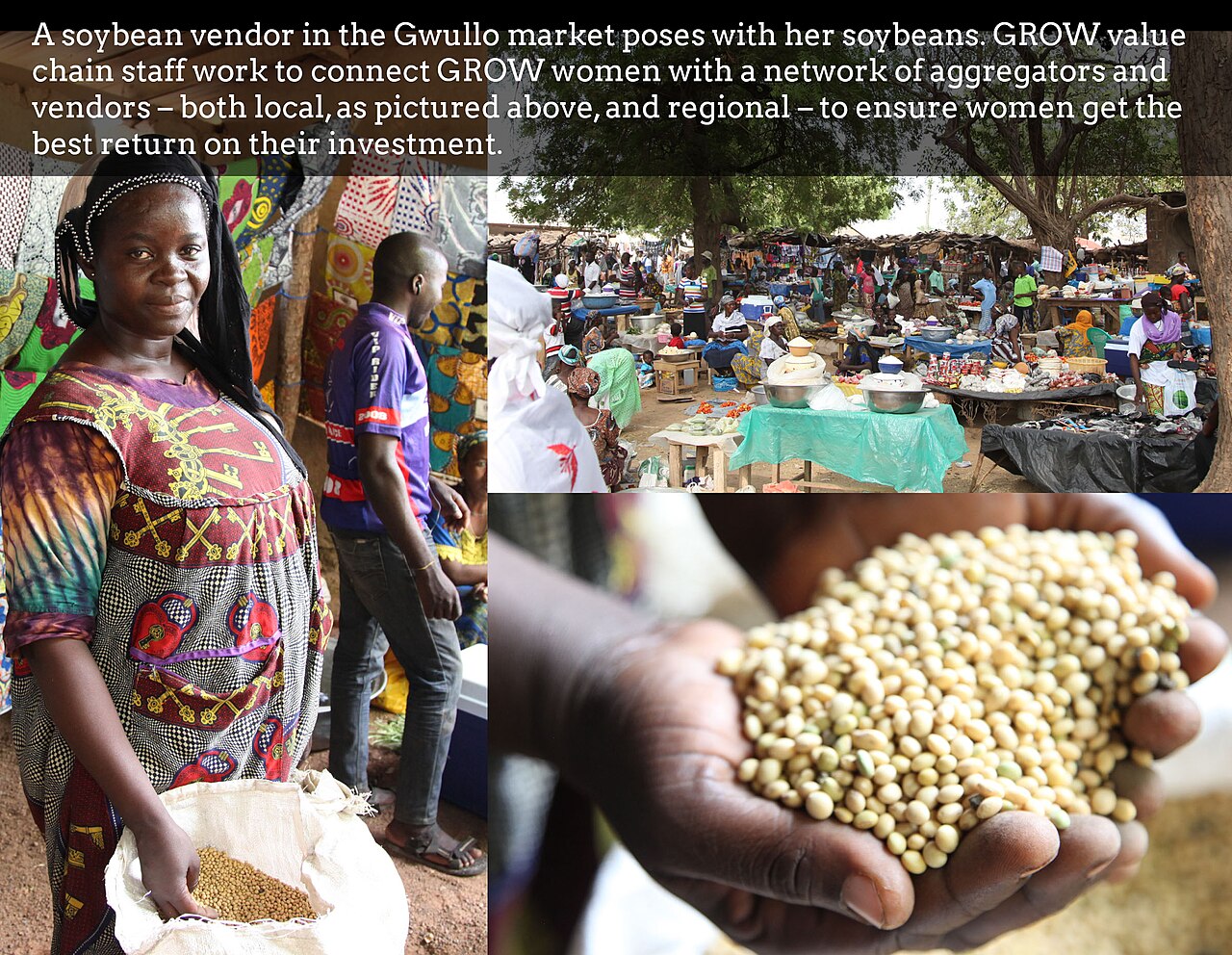
When Issah Tolhatu began processing soybeans in her university hostel room in Northern Ghana, she handled nine kilograms a day, with no facility, no machinery and no guarantee of success, AGRA reported. A food science student, she had watched young people in her community struggle for work and young women leave home in search of it, and believed soybeans could be part of the answer.
Her company, Grainwell Enterprise, makes nutritious soybean products and trains rural women in soybean value addition, food processing and running a business. Mentoring, training, business exposure and equipment from AGRA through the Kosmos Innovation Center helped turn the hostel operation into a growing firm. Grainwell now processes 80 to 100 kilograms of soybeans a day, has four permanent staff and five casual workers, and buys from six smallholder women farmers.
AGRA has also chosen Grainwell as an anchor firm to train 100 young women in soybean value addition. For employee Mohammed Hanifa, who had twice gone south to work as a kayayo, a head porter carrying goods for others, the job meant steadier income closer to home, enough to help pay for medical treatment for Hanifa's mother.
The path was not smooth. Without a processing facility, production depended on manual work, and erratic rainfall regularly disrupted supply. Issah reinvested what the business earned and used the support available to improve the operation step by step.
Over the next three to five years she wants Grainwell's products in eight countries, with 200 direct jobs and 100 indirect ones, and hopes to train more than 1,000 young people, mostly women. Reaching that scale will need more investment and grants, better machinery, stronger market links and the regulatory approvals required for export.
Photo: Alexhori1986 / Wikimedia Commons (CC BY-SA 4.0)
Source: AGRA


Comments
(0)