
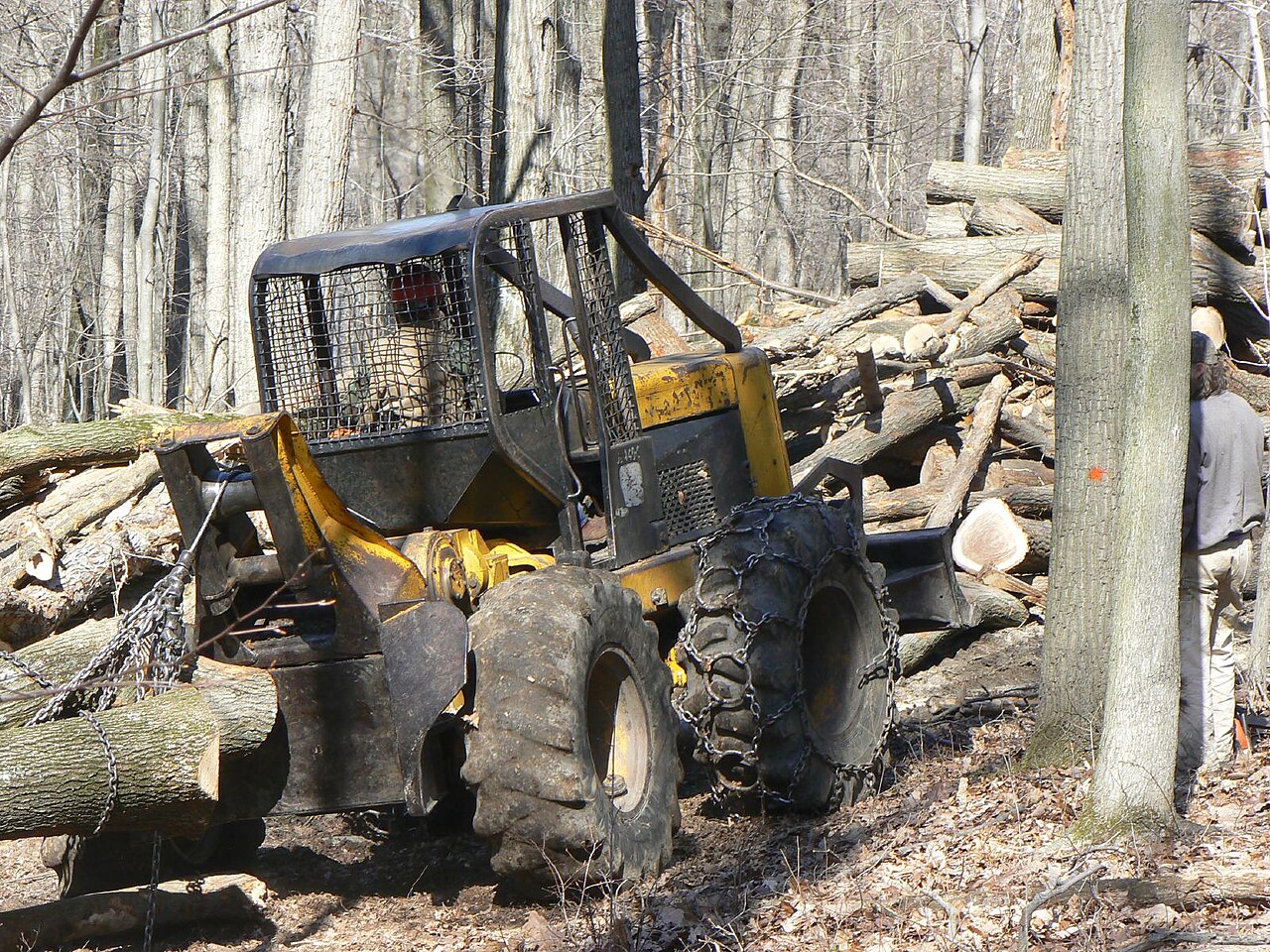
Kodama, a California startup that builds what it calls physical AI for forestry, has raised a $7 million seed round to expand after a year of commercial logging work in the US South, AgFunderNews reported. Konvoy Ventures and Breakwater Ventures co-led the round, with Blue Forest Asset Management, Breakthrough Energy Ventures, Congruent Ventures and others taking part. The company has now raised $14 million in total.
The problem it targets is labour. Logging crews are often on site by 5:30 in the morning after a drive of up to two hours, and a skidder, the heavy machine that drags felled logs out of the woods, spends the day crawling over stumps and rocks. "The number one issue is labor reliability," said chief executive Merritt Jenkins, who founded the company in 2021 with Matt Verminski. One logger Kodama works with had eight skidder operators in a single year, and when one fails to turn up, the whole sequence of work slows down.
Kodama is not starting with full autonomy. Its system combines supervised autonomy for repeatable tasks with teleoperation, so an experienced operator can handle the difficult work from a remote station, often at home. The retrofit kit uses NVIDIA computing, eight cameras, two LiDAR sensors, Starlink and GPS, and fitting it to a skidder takes one to one and a half days. Kodama says it is integrated with two of the largest forestry equipment makers.
According to Jenkins, a remotely driven machine matches the hourly output of one driven from the cab, while the employer saves on workers' compensation and travel. Machines fitted with the system have moved more than 100,000 tons of timber in the past six months, and the company is preparing to run them 20 hours a day instead of 10, including at night. Remote operators can be trained in a day or two.
The company sells its service as robotics as a service, charging logging contractors a daily or monthly rate, and reaches them through timberland owners, equipment makers and dealers. It also maps the forest under the canopy during thinning, giving landowners LiDAR data on trees per acre, trunk diameter and basal area. Jenkins said there is interest from Brazil to Australia, and that the next goal is one operator controlling several machines.
Photo: Peter Linehan / Wikimedia Commons (CC BY 2.0)
Source: AgFunderNews

Comments
(0)