
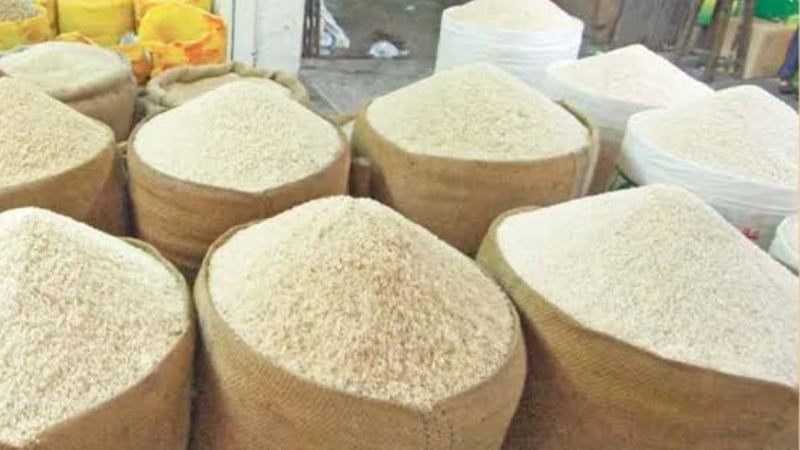
Bangladesh's government is buying an additional 200,000 tonnes of rice from rice-mill owners even though the Boro-season procurement targets have already been exceeded, an investigation by the daily Samakal reports. The Directorate General of Food has drawn up a list to issue allocation letters for 115,000 tonnes so far. Some 850 millers applied to sell the extra rice, and more than 150 of the applications came with semi-official letters of recommendation from members of parliament.
The purchase sits outside the season's plan. The government had set out to procure 500,000 tonnes of paddy, 1.2 million tonnes of parboiled rice and 100,000 tonnes of atap rice this Boro. By 16 September it had taken in 578,140 tonnes of paddy, 1,239,400 tonnes of parboiled rice and 107,647 tonnes of atap rice — every line above target. As of 13 September public granaries held 2,339,377 tonnes of food grain against an effective storage capacity of about 2,295,000 tonnes, roughly 44,000 tonnes more than they can properly hold.
The procurement price this season was Tk 49 per kilogram for parboiled rice and Tk 36 for paddy, up from Tk 45 and Tk 32 in the 2024 Boro. Because market paddy prices stayed low, millers bought cheaply from farmers and stockpiled; after delivering their contracted rice to the government they still had surplus paddy, which they are now milling and selling to the government a second time. Market sources put the margin at Tk 3 to Tk 7 per kilogram. Had that rice reached the open market instead, consumers would have seen some relief in retail prices.
Agricultural economist Jahangir Alam Khan told Samakal that the procurement policy is built so that millers, not farmers, capture the benefit: granaries turn away farmers' paddy on grounds such as moisture content, and farmers are then forced to sell to mills at lower prices. The government buys very little paddy and a great deal of rice, he said; to help farmers it would have to buy far more paddy directly from them.
The pressure has spread to the Aus crop. In Mohadevpur, Naogaon, Aus paddy is now selling for Tk 650 to Tk 750 a maund, against Tk 1,000 to Tk 1,200 at the same time last year, according to seasonal trader Mahbubur Rahman. The Department of Agricultural Extension expects this year's Aus target of about 4 million tonnes to be met.
Farmers' direct access to the scheme remains narrow. Bangladesh Bureau of Statistics and Food Directorate figures put the number of farm households at 16,881,757, yet only 1,067,603 farmers are registered to sell paddy to public granaries, alongside 6,301 registered mills. Professor A H M Saiful Islam of Bangladesh Agricultural University's agricultural economics department said moisture rules, transport, distance to collection centres and slow payment push farmers to sell locally even when the government price is higher, and called for simpler digital registration.
State Minister for Food Md Abdul Bari said this was the first year the paddy target had ever been met, and that the extra 200,000 tonnes would reduce imports and save foreign exchange. But the capacity of some contracted mills is in question: a Food Directorate official said a mill with a daily capacity of about six tonnes, which could not deliver even 1,000 tonnes in the main drive, is now seeking a 5,000-tonne allocation. In Raiganj, Sirajganj, the Anwara semi-auto mill at Chandaikona — shut for more than a decade, its yard overgrown and without power, boiler or machinery — has a contract to supply 119 tonnes this year; three other mills in the upazila face similar complaints.
Based on Samakal's investigative report. Source: samakal

Comments
(0)