
On 25 March 2026 the Bangladeshi news portal Jagonews24 published a feature in its agriculture and nature section by Samiran Biswas, whom the paper describes as an agriculture and environment specialist, about a digital soil sensor developed in Bangladesh. The device, called the GFL Soil Sensor, comes from Genius Farms Limited, the company that earlier built Dr. Chashi, a digital system that uses artificial intelligence (AI) to identify crop diseases and pests and suggest remedies. According to the writer, the new sensor uses Internet of Things (IoT) technology to analyse soil and to give location-based fertiliser recommendations in real time. He presented it as another home-grown innovation and argued that it could open a new door for farming in Bangladesh.
The writer set the device against the way farming in the country has long worked. Bangladeshi agriculture, he wrote, has relied on nature, experience and traditional knowledge, with farmers judging the state of their soil over years of work in the field and applying fertiliser and managing their crops on that basis. Modern demands have changed this: raising output, cutting costs and protecting the environment now call for farming that is based on science and data. In that setting, he argued, a digital soil sensor is a modern and practical tool that can analyse important soil components within moments, so that a farmer learns the condition of the soil and plans fertiliser and irrigation accordingly. The result, in his view, is a new possibility for the country: smart or digital farming.
What the writer says the sensor measures
The column starts from the point that soil quality is one of the main foundations of successful cultivation. If a farmer does not know which nutrients the soil holds, and in what amounts, fertiliser cannot be applied correctly. Guesswork, the writer noted, often leads to too much fertiliser and sometimes to too little; the first raises the cost of production and the second lowers the harvest. He wrote that the digital soil sensor addresses this by quickly analysing key information about the soil and reporting it to the farmer. According to the column, the device reports:
- nitrogen (N)
- phosphorus (P)
- potassium (K)
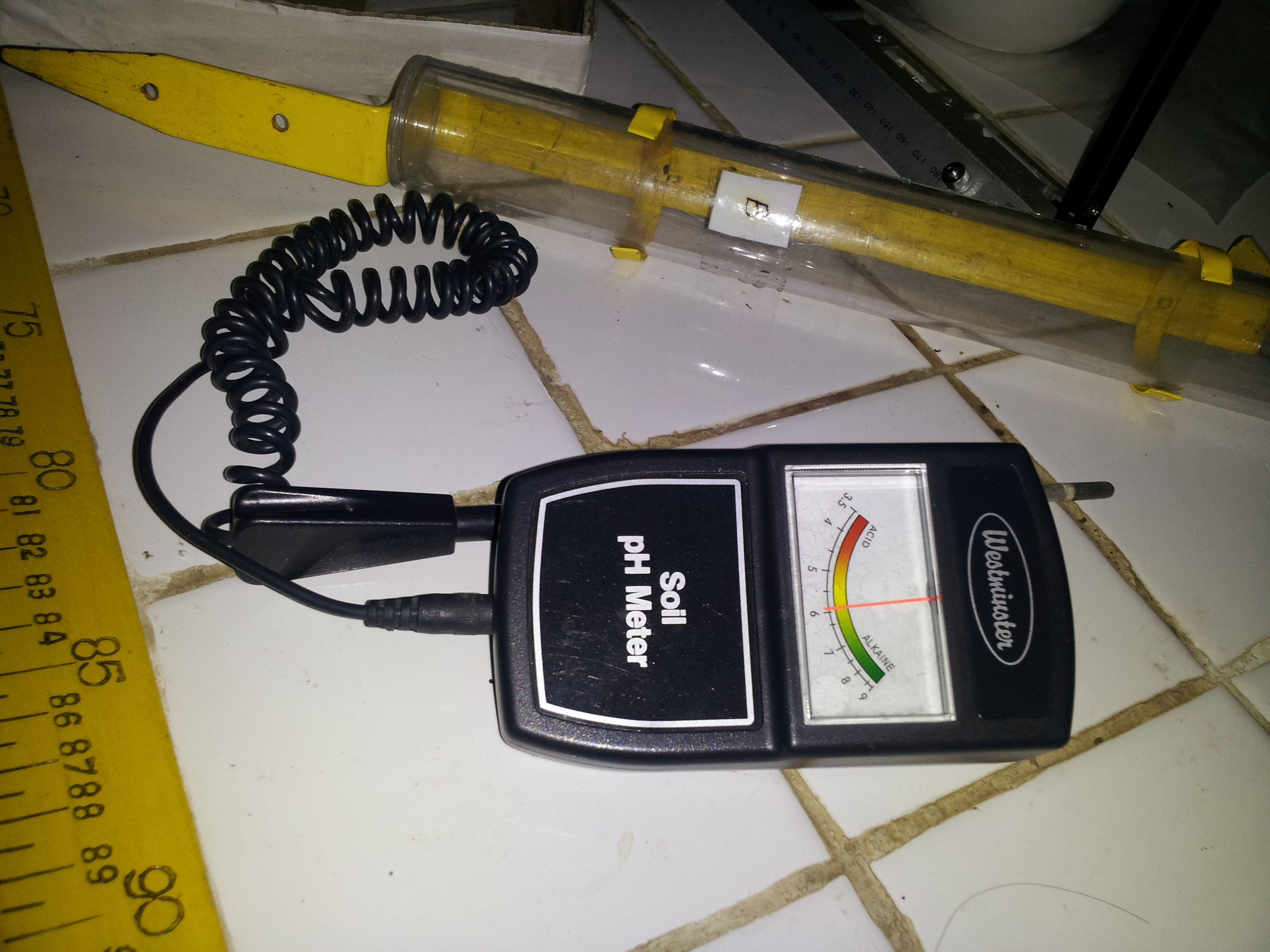
- pH, the measure of acidity or alkalinity
- soil moisture
- soil temperature
- electrical conductivity (EC)
- salinity
Once this information reaches the farmer, the writer said, it becomes easy to see what kind of fertiliser the land needs and how much. He described the device as designed for simple use, on the reasoning that however advanced a technology is, it does little for farmers if it is hard to use. When the sensor's probe is pushed into the soil, readings are available within a few minutes, after which the software analyses them and can recommend how to use fertiliser. The column did not publish field-trial results or accuracy figures for the device, and this report gives no fertiliser doses of its own: in Bangladesh those come from soil tests and official recommendations, described below, and from the upazila agriculture office.
Location-based, real-time data and the Soil Tester software
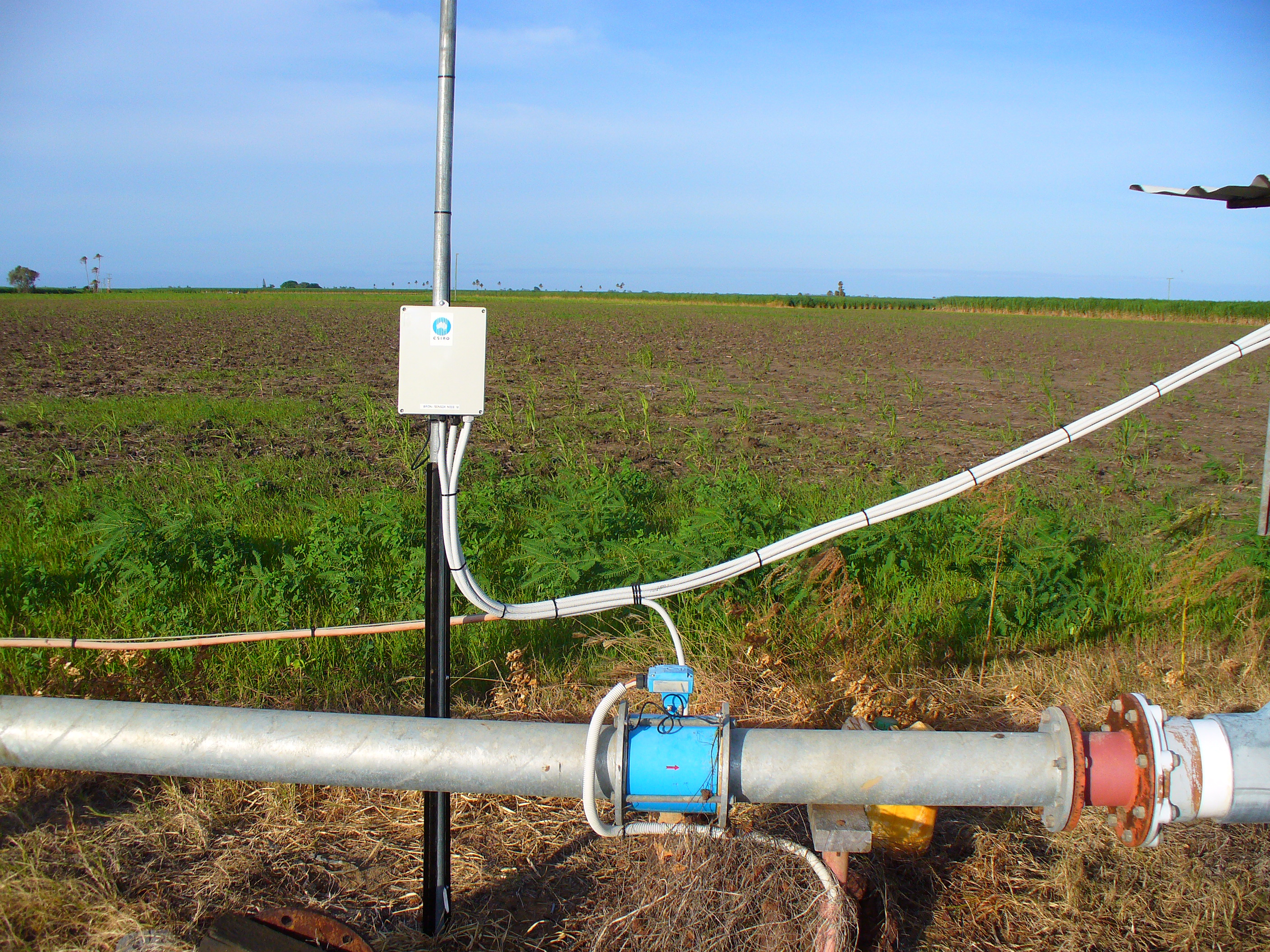
The writer named location-based, real-time operation as one of the device's main features. Data for a particular plot are collected on the spot and analysed through software, he explained, because the sensor is linked through IoT to a digital platform. Readings taken in the field can therefore be analysed quickly and delivered back to the farmer, which saves time and lets the farmer decide sooner.
Timing, he added, matters greatly in agriculture. Decisions on when to apply fertiliser, when to irrigate and when to tend the crop can cost a great deal of output if they are not taken on time. With correct soil information in hand, the column argued, a farmer can rely on data rather than estimates, which cuts fertiliser waste and production costs, raises yields and makes farming more effective and profitable.
The second feature the writer stressed is the device's own software, called Soil Tester. He wrote that it was built using information on Bangladesh's soils, fertilisers and crops, and that it works from a database prepared with the country's real conditions in mind. Many soil sensors around the world, he said, rely on universal foreign data that may not always suit Bangladeshi soils, whereas Soil Tester uses local information and so, in his account, gives comparatively more accurate results. He described this as something that could be considered an important innovation in the country's agricultural technology. These are the writer's descriptions of the developer's product; the column did not cite an independent assessment of the software or the database.
The benefits the writer describes
On soil health, the writer said that in many cases in Bangladesh excessive use of chemical fertilisers is reducing the soil's natural fertility, a trend that is harmful in the long run. Knowing the real condition of the soil makes it possible to apply fertiliser according to need and curbs unnecessary use. In his view this keeps the soil's natural fertility, reduces environmental pollution and makes farming more sustainable, so that the technology serves not only higher production but also the protection of soil health for future generations.
He also linked the sensor to safe food. Producing safe food is a major challenge, he wrote, and heavy use of chemical fertilisers and pesticides sometimes calls the safety of food into question. When farmers know exactly how much of each nutrient their land holds, they will apply fertiliser according to need and will not have to use more, and the crops they grow will, in the writer's words, be comparatively safe and free of toxins.
Placing the device in a wider trend, the column noted that digital technology is spreading quickly in farming worldwide, with drones, sensors, satellite data and artificial intelligence making agricultural systems more modern, and that this change has slowly begun in Bangladesh as well. The writer said Genius Farms Limited took up the initiative through its Dr. Chashi Project, whose aim is to put simple technology into farmers' hands so that they can analyse soil information themselves and make the right decisions. If the use of technology in farming grows in this way, he argued, the country's food production and farmers' incomes will rise.
On the future of farming, the writer wrote that farming will increasingly be run on information about soil, weather and crop needs, and that the digital soil sensor is one step in that direction, helping farmers save time, cut costs and secure better yields. He judged that the combination of IoT technology, software based on local data and an easy design could make the device an effective solution for farmers and a reliable companion of smart farming in Bangladesh.
Why soil information matters in Bangladesh
The soils the column is concerned with have well-documented limits. Banglapedia, the national encyclopedia of Bangladesh, notes that plants draw 14 of their 17 essential nutrients from the soil, but that soils differ widely in their ability to supply them and that this ability declines over time with intensive cropping of high-yielding varieties, little or no use of organic material and poor soil and crop management. Chemical fertilisers were introduced in the early 1950s, their use grew steadily from the mid-1960s with modern varieties and irrigation, and the encyclopedia credits inorganic fertilisers with about half of the country's total crop production.
Its entry on soil fertility sets out the main constraints. The average pH of Bangladesh soils lies on the acidic side, between 5.5 and 6.5, while calcareous Gangetic alluvium can exceed 7.5 and reach 8.3. The organic matter content of the country's soils is described as one of the lowest in the world, and the entry on soil organic matter says that about 70 percent of the net cultivable area on high and medium-high land has less than 2 percent organic matter, a level it calls one of the main reasons for the low productivity of many soils. Because organic matter is low, nitrogen is also low, most crops on all soils respond to nitrogen, and nitrogen fertilisers are the most widely used in the country.
Other nutrients are short as well. Banglapedia puts about 6 percent of the land as severely deficient in phosphorus, 50 percent as strongly deficient and 44 percent as moderately deficient. For potassium the shares are 6 percent severely, 45 percent strongly and 33 percent moderately deficient, and land with low to very low potassium was estimated at 3.76 million hectares in 2007, against 2.96 million hectares in 2000. About 70 to 80 percent of soils are deficient in sulphur, and demand for zinc fertilisers rose from 3 thousand tonnes in 2000-01 to 42 thousand tonnes in 2010-11, which the encyclopedia reads as a sign of widespread zinc deficiency.
Fertiliser use has climbed over the same decades. In 1962-63 the country used 20,235 tonnes of fertiliser nutrients; in 1995-96 it used 1,179,390 tonnes, of which nitrogen accounted for 942,771 tonnes. Urea sales reached 2,657 thousand tonnes in 2010-11, up from 2,121 thousand tonnes in 2000-01, and Banglapedia notes that the supply of phosphorus has not kept pace with that of nitrogen. A heavy reliance on urea alongside shortfalls of other nutrients is the kind of imbalance the column says better soil information can help farmers manage.
How soil is tested and fertiliser recommended in Bangladesh
The government body responsible for soil information is the Soil Resource Development Institute (SRDI), a department attached to the Ministry of Agriculture. Banglapedia traces it to 1961, when the East Wing Directorate of the Soil Survey Project of Pakistan was set up with the help of FAO and UNDP to make a quick inventory of the country's soil and land resources. Between 1963 and 1975 a reconnaissance soil survey covered the whole country except the Sundarbans mangrove forest and the reserve forests of the Chittagong Hill Tracts. SRDI itself came into existence in 1982-83 and absorbed the earlier soil survey bodies in 1983.
A project launched in 1986 to strengthen the institute aimed at preparing an Upazila Nirdeshika, a land and soil resource guide, for 460 upazilas. A soil testing project with Danish assistance began in 1992, and in 1993 the Analytical Services Division of the Bangladesh Agricultural Research Institute (BARI), with its four regional laboratories at Comilla, Joydevpur, Khulna and Rajshahi, was merged into SRDI. In 1994-95 the institute opened a Soil Conservation and Watershed Management Center at Bandarban and a Salinity Management and Research Center at Batiaghata in Khulna. Its stated vision is the judicious and profitable use of the country's scarce land and soil resources while keeping pollution from agrochemicals to a minimum.
Among SRDI's gazetted functions are the chemical analysis of soil, water and plant samples, the analysis of chemical and organic fertilisers to check their quality, and the provision of simplified guides on soils and agricultural possibilities for each upazila for extension and research workers. Alongside its laboratories, an online fertiliser recommendation system linked from SRDI's website was in use before the column appeared: an archived copy of 15 March 2026 shows a form for a fertiliser recommendation card in which a user chooses the division, district, upazila and union, the soil type, the season (Kharif-1, Kharif-2 or Rabi), the land type from high land to very low land, the crop and the area in decimals, with optional fields for drainage class and topsoil texture. The device in the column offers a different route to the same end, a recommendation tied to a particular plot.
What independent tests of low-cost NPK sensors found
The column did not name the sensing method the GFL Soil Sensor uses, and no independent test of that device was cited. Independent work on the wider class of low-cost portable NPK sensors had, however, been published before March 2026. A technical report by researchers of the Alliance of Bioversity International and CIAT, a CGIAR centre, dated 15 November 2025 and titled Low-Cost Portable Soil Fertility Sensors: Myth or Reality?, evaluated commercially available sensors against laboratory analysis in Guatemala and Colombia.
The report says all the devices it tested work on frequency domain reflectometry, an electromagnetic technique mainly used to measure soil moisture, which some manufacturers build into multi-function probes that also estimate electrical conductivity, temperature and, through empirical correlations, nitrogen, phosphorus and potassium. In Guatemala, three sensor models were tested on ten soil samples from five departments, and the comparison with laboratory values gave coefficients of determination (R squared) from close to zero up to 0.2458, a weak relationship. In Colombia, the sensors were tested on 63 samples brought to 20 percent gravimetric moisture; adjusted R squared values for phosphorus and nitrogen generally ranged between 0.052 and 0.479, while potassium did best, reaching 0.539. Even that best case, the authors wrote, leaves nearly half (46 percent) of the variation in the laboratory data unexplained.
A second experiment showed how strongly the readings depend on soil water. On oven-dry soil the readings were zero or close to zero; they rose as moisture increased to about 30 percent and then levelled off. The authors concluded that readings taken under different field moisture, for example at different times of day, cannot be directly compared. Their recommendation was that such sensors should not be used to prescribe fertiliser doses or as a direct replacement for laboratory analysis, but could be useful for mapping relative differences within a field, identifying high, medium and low management zones and planning where to take soil samples, provided they are calibrated locally.
Earlier work points the same way on the need for local testing. A study in the journal Computers, published on 20 August 2024 by Yiyi Sulaeman and colleagues, assembled a portable device around a proprietary low-cost NPK sensor of the kind, the authors wrote, commonly used in IoT for agriculture, and tested it in irrigated and rainfed paddy soils in Java, Indonesia. The device measured soil temperature, moisture, pH, electrical conductivity and N, P and K. The field tests showed that it was sensitive to soil properties and location, and the authors described it as a possible alternative tool for real-time measurement in paddy fields. The CIAT team cited that paper when choosing its own 20 percent moisture standard.
Reading EC, salinity, pH and moisture
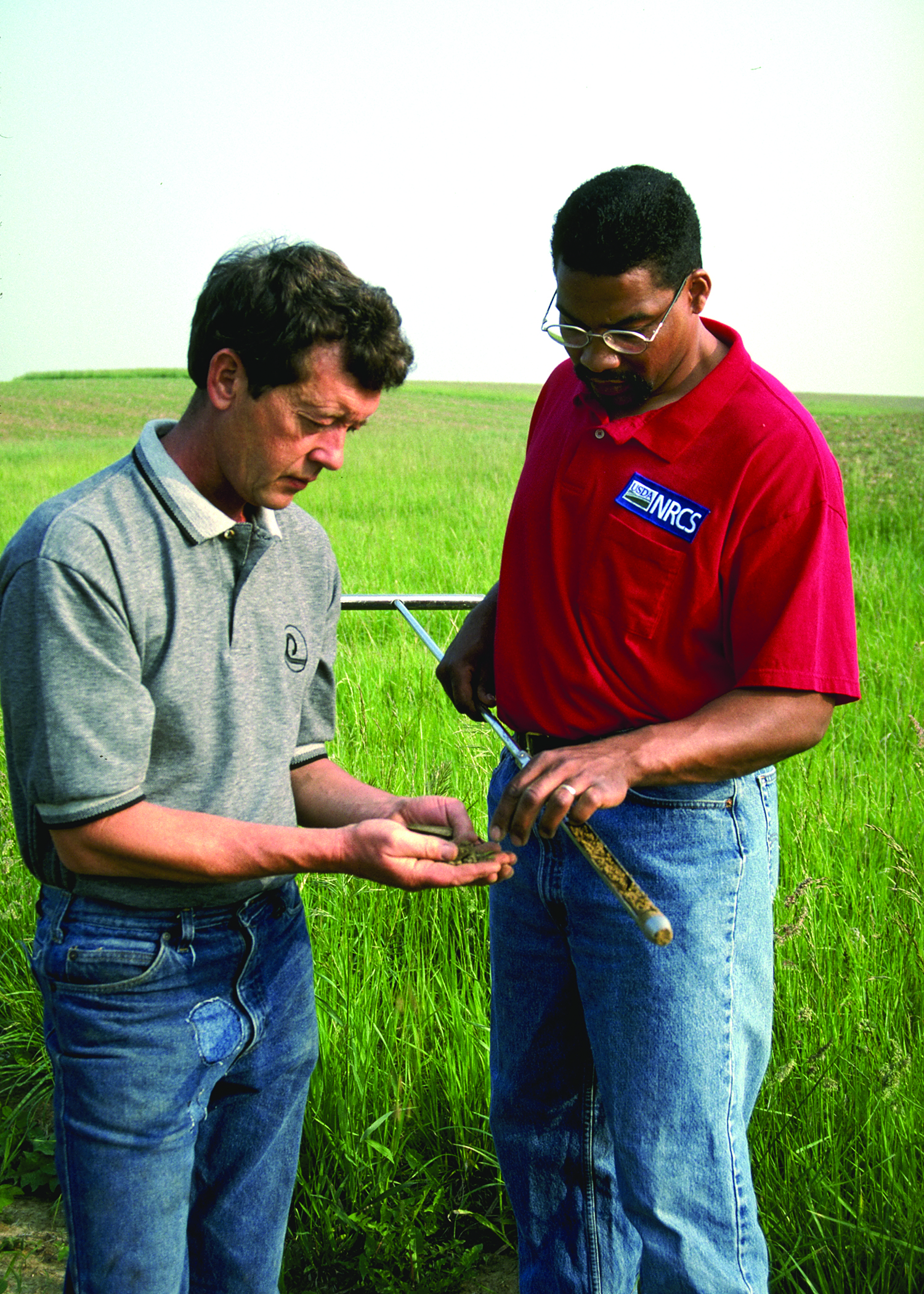
Several of the properties in the column's list are linked. The US Department of Agriculture's Natural Resources Conservation Service (NRCS), in its soil quality indicator sheet on electrical conductivity, explains that EC measures the ability of soil water to carry an electrical current, which it does through the salts dissolved in it, so the concentration of ions determines a soil's EC. In agriculture EC has been used mainly as a measure of salinity, expressed in deciSiemens per metre (dS/m). The sheet notes that EC does not directly measure specific ions, though it has been correlated with potassium, sodium, chloride, sulphate, ammonia and nitrate, and that, other things being equal, the wetter the soil the higher its EC. EC also generally rises with clay content. The NRCS advises calibrating an EC meter before use.
The NRCS sheet gives these salinity classes by EC:
- below 2 dS/m: non-saline
- 2 to below 4 dS/m: very slightly saline
- 4 to below 8 dS/m: slightly saline
- 8 to below 16 dS/m: moderately saline
- 16 dS/m and above: strongly saline
Salinity matters in Bangladesh's coastal belt. Banglapedia's entry on saline soil estimates that about 1.06 million hectares of land were affected by salinity in 2009, mainly in coastal and offshore districts including Khulna, Satkhira, Bagerhat, Barisal, Patuakhali, Barguna, Bhola, Noakhali, Laxmipur, Feni, Chittagong and Cox's Bazar. Soil salinity there rises from February, reaches its maximum in April and May and falls sharply after June, so the same field can give different salinity readings in different months. On acidity, Banglapedia records SRDI's classes: very strongly acidic below pH 4.5, strongly acidic 4.6 to 5.5, slightly acidic 5.6 to 6.5, neutral 6.6 to 7.3, slightly alkaline 7.4 to 8.4 and strongly alkaline 8.5 to 9.0.
Sensors, IoT and precision agriculture
The ideas the column relies on have formal definitions. The International Telecommunication Union, in its Recommendation ITU-T Y.2060 of June 2012, defines the Internet of Things as "a global infrastructure for the information society, enabling advanced services by interconnecting (physical and virtual) things based on existing and evolving interoperable information and communication technologies." A soil sensor that sends its readings to an online platform for analysis is an example of such a connected thing.
The International Society of Precision Agriculture, in a definition revised in January 2024, describes precision agriculture as "a management strategy that gathers, processes and analyzes temporal, spatial and individual plant and animal data and combines it with other information to support management decisions according to estimated variability for improved resource use efficiency, productivity, quality, profitability and sustainability of agricultural production." Location-based fertiliser advice of the kind the column describes falls within that idea.
The Food and Agriculture Organization of the United Nations (FAO) examined these technologies in The State of Food and Agriculture 2022, which was devoted to agricultural automation. Drawing on 27 case studies, the report found that digital automation can raise productivity and resilience and help address environmental problems, but it identified barriers to inclusive adoption, particularly for small-scale producers: low digital literacy, a lack of enabling infrastructure such as connectivity and access to electricity, and financial constraints. Those are the conditions under which a device such as the one in the column would have to reach Bangladesh's farmers.
Photo: U.S. Department of Agriculture / Wikimedia Commons (public domain)
Sources: Jagonews24, Alliance of Bioversity International and CIAT (CGIAR), Computers (MDPI), Banglapedia, Soil Resource Development Institute (SRDI) online fertiliser recommendation system, USDA Natural Resources Conservation Service, International Telecommunication Union (ITU), International Society of Precision Agriculture, Food and Agriculture Organization of the United Nations (FAO)
Comments
(0)