
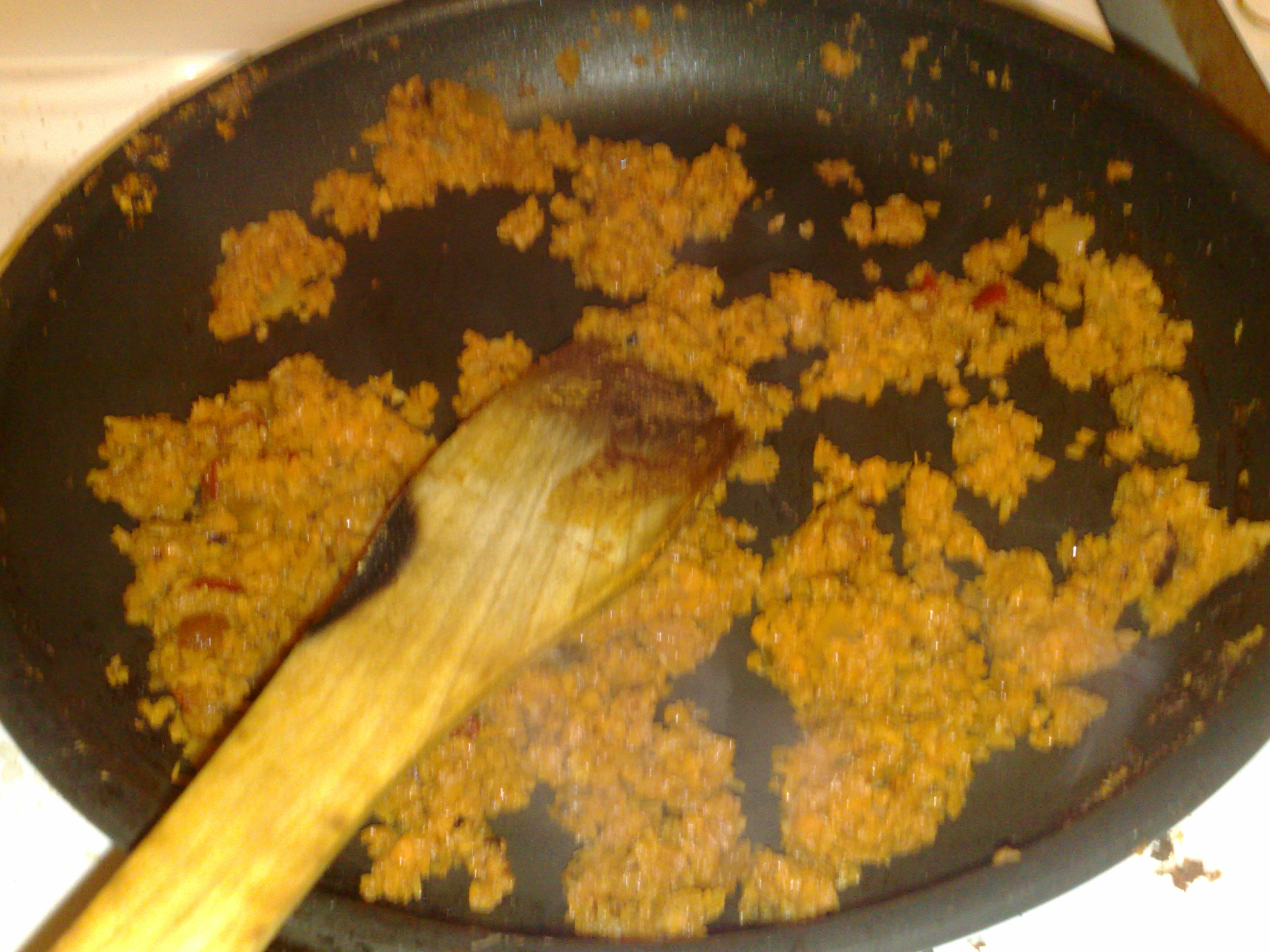
On 25 January 2026, in the winter, when carrots are in season in Bangladesh, the lifestyle section of Jagonews24 published a short home recipe: carrots fried with garlic. Its idea was simple. Many households fry carrots as a plain side dish, and the report suggested that a few cloves of garlic, cooked gently in oil or butter before the carrots go into the pan, give the familiar vegetable a different, homely flavour that goes well with rice or roti. The dish needs a handful of ingredients that most kitchens already have and only a few minutes at the stove. The recipe is given below as the report published it, followed by what nutrition and health authorities say about its two main ingredients, where carrots and garlic come from, and how the farmers of Bangladesh grow them.
The recipe as published
The report gave no exact quantities, so the amounts are left to the cook and the size of the household. The ingredients it named are:
- Carrots
- A few cloves of garlic, finely chopped
- Oil or butter
- Salt
- Black pepper
- Lemon juice
The method, in the order the report gave it:
- Heat the oil or butter in a karai and fry the chopped garlic on a low heat.
- When the garlic releases its aroma, add the carrots and fry them on a medium heat for about five minutes.
- Add salt and black pepper.
- When the carrots are nicely fried, sprinkle lemon juice over them and serve hot.
The report presented the dish as a way to bring something new to everyday cooking with simple ingredients and little time, and suggested serving it with rice or roti. It also said that garlic could add to the dish's nutritional value as well as its taste. What the evidence says on that point, and on the carrot's own nutrients, is set out in the sections that follow.
Why chopped garlic is pungent and frying mellows it
Garlic (Allium sativum) belongs to the genus Allium, the same group as the onion, shallot, leek and chives. The sharp taste and smell for which it is known are produced when the plant's cells are damaged. When a cell is broken by chopping, chewing or crushing, enzymes stored in the cell's vacuoles trigger the breakdown of several sulphur-containing compounds held in the cell fluid. Fresh or crushed garlic yields allicin, ajoene, diallyl polysulphides and other sulphur compounds. Allicin is the compound most responsible for the "hot" sensation of raw garlic, and allicin and its breakdown products, diallyl disulphide and diallyl trisulphide, are major contributors to the characteristic odour of garlic.
Heat changes this. Cooking removes allicin and so mellows garlic's spiciness, and garlic mellows and sweetens considerably when it is cooked. Cooked garlic also forms Maillard reaction products, compounds that are not sulphur-based. That is the kitchen chemistry behind the recipe's first step: chopping the cloves releases the pungent compounds, and frying them gently on a low heat until they give off their aroma softens that sharpness before the carrots join the pan.
Carrots, vitamin A and a little fat in the pan
The United States Department of Agriculture's FoodData Central database lists the nutrients in 100 grams of raw carrot as follows: about 88 grams of water, 41 kilocalories of energy, 9.6 grams of carbohydrate including about 4.7 grams of sugars, 2.8 grams of dietary fibre, 0.93 grams of protein and only 0.24 grams of fat. The same 100 grams supply 320 milligrams of potassium, 13.2 micrograms of vitamin K and 8,285 micrograms of beta-carotene, which the database counts as 835 micrograms of vitamin A (retinol activity equivalents).
Beta-carotene is the pigment that gives the carrot its orange colour. MedlinePlus, the health information service of the US National Library of Medicine, describes it as a provitamin A carotenoid, a substance the body converts into vitamin A, and lists carrots, sweet potatoes, mangoes and cantaloupe among the orange and yellow foods that supply it. According to MedlinePlus, vitamin A helps form and maintain healthy teeth, skeletal and soft tissue, mucous membranes and skin, supports eyesight, especially in low light, and plays a role in a healthy pregnancy and in breastfeeding.
MedlinePlus gives the recommended daily amounts of vitamin A as 300 micrograms for children aged one to three, 400 micrograms for ages four to eight and 600 micrograms for ages nine to thirteen; 900 micrograms for males aged 14 and over; and 700 micrograms for females aged 14 and over, rising to 770 micrograms in pregnancy and 1,300 micrograms while breastfeeding for women aged 19 to 50.
The fat in the pan matters. MedlinePlus notes that plant sources of vitamin A such as carrots are free of fat and cholesterol, and that eating them with a little fat improves absorption. A 2002 laboratory study in the European Journal of Clinical Nutrition, which simulated digestion, estimated that only about 3 percent of the beta-carotene in raw carrots is released during digestion, and that pulping, cooking and adding cooking oil can raise this to 39 percent. Frying carrots in a little oil or butter, as the recipe does, is the kind of preparation that study describes.
There are limits on both sides. MedlinePlus says too little vitamin A can cause night blindness that can be reversed, damage to the cornea (xerophthalmia) and dry, scaly skin. Large amounts of beta-carotene from food will not cause serious harm but can turn the skin yellow or orange, which fades when intake drops; this harmless discolouration after very high carrot consumption over a long time is known as carotenemia. Supplements are a different matter: MedlinePlus says beta-carotene supplements do not reduce cancer risk and may raise it in current and former smokers and in workers exposed to asbestos, and that large doses of vitamin A in pregnant women can cause birth defects. Anyone thinking of supplements, or of changing their diet because of a health condition, should see a doctor first.
What garlic adds, and what the evidence says
Per 100 grams, raw garlic is far richer than carrot in some nutrients. USDA FoodData Central lists about 59 grams of water, 149 kilocalories, 33 grams of carbohydrate, 6.4 grams of protein, 2.1 grams of fibre, 31.2 milligrams of vitamin C, 1.2 milligrams of vitamin B6, 1.7 milligrams of manganese and 14.2 micrograms of selenium. But nobody eats 100 grams of garlic at a meal. In a typical serving of one to three cloves, about 3 to 9 grams, raw garlic provides no significant nutritional value, with every essential nutrient below 10 percent of the Daily Value. The few cloves in this recipe therefore add flavour far more than they add nutrients.
The US National Center for Complementary and Integrative Health (NCCIH), part of the National Institutes of Health, reviewed the evidence on garlic in a fact sheet last updated in February 2025. It says garlic supplements may modestly lower total and LDL cholesterol in people with high cholesterol, the use that has been studied most. Limited evidence suggests a small reduction in blood pressure in people with high blood pressure, and supplements may modestly lower blood sugar in people with diabetes. Eating garlic does not seem to reduce the risk of stomach cancer, and its effect on colorectal cancer risk is uncertain. Very little research has been done on garlic for colds and flu.
On safety, NCCIH says garlic taken by mouth was used safely in studies lasting up to seven years. Its side effects include breath and body odour, abdominal pain, gas and nausea, and some people are allergic to it. Garlic supplements may increase the risk of bleeding, so people should tell their health care providers before surgery or if they take anticoagulants or aspirin, and should check before combining garlic with any medicine. Amounts larger than those in food may not be safe during pregnancy or breastfeeding, and raw garlic applied to the skin can cause severe irritation and chemical burns. Garlic in a home recipe is food, not a treatment; a person with high blood pressure, high cholesterol or diabetes should follow a doctor's advice.
The carrot: from Central Asia to the orange root
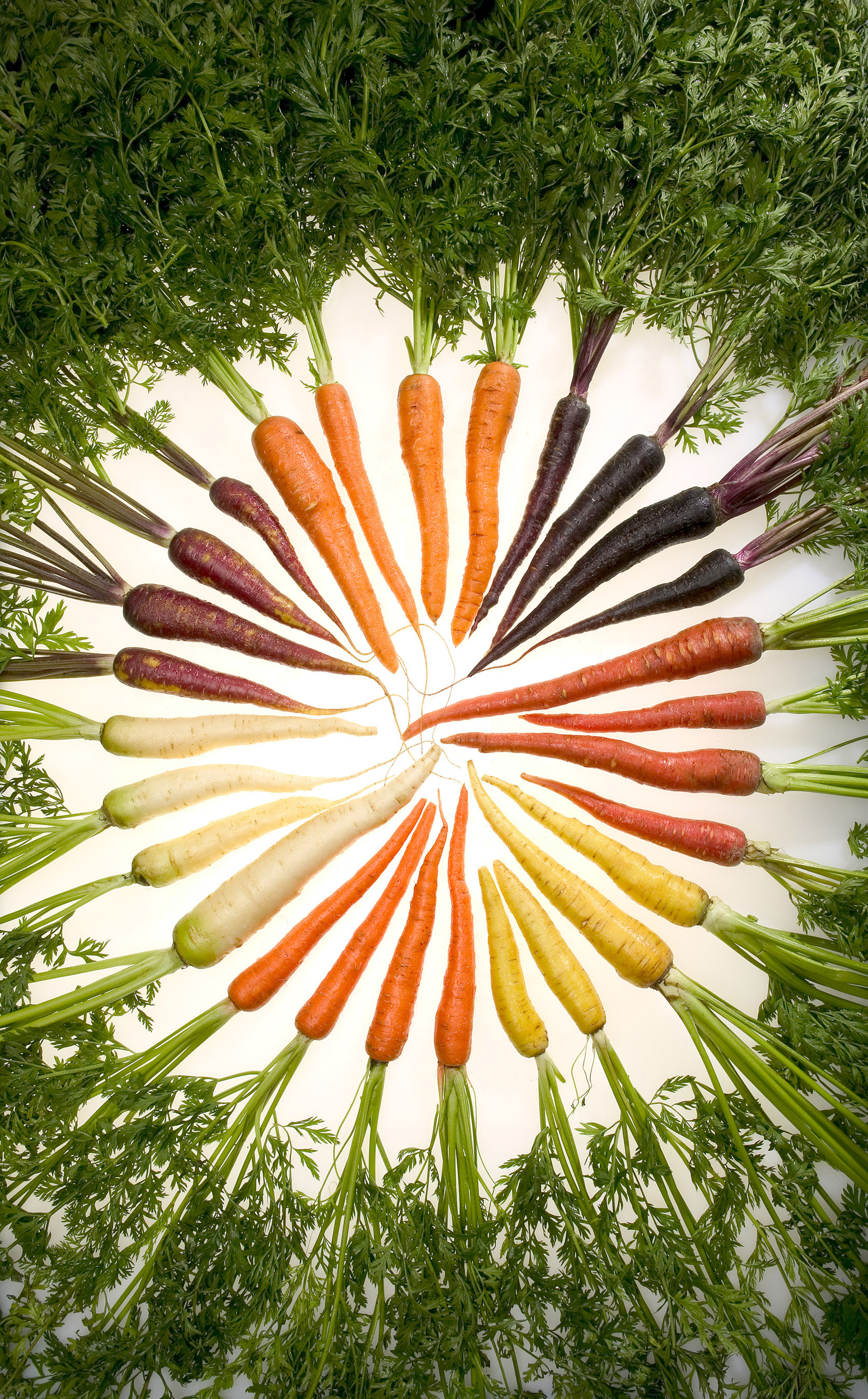
The cultivated carrot (Daucus carota subspecies sativus) is a biennial plant of the umbellifer family, Apiaceae. All cultivated carrots are domesticated forms of the wild carrot, Daucus carota, native to Europe and south-western Asia. The domesticated plant probably originated in Iran and was first grown for its leaves and seeds rather than its root. A sixth-century copy of the Greek physician Dioscorides' first-century work on medicinal plants, the Juliana Anicia Codex, depicts the plant and states that "the root can be cooked and eaten".
The Moors brought the carrot to Spain in the eighth century. In the tenth century, carrot roots in West Asia, India and Europe were purple, and the modern carrot originated in Afghanistan at about this time. The eleventh-century scholar Simeon Seth described both red and yellow carrots. Cultivated carrots appeared in China in the twelfth century and in Japan in the sixteenth or seventeenth century. The orange carrot was developed by Dutch growers: there is pictorial evidence of orange carrots from 512 AD, but it probably did not become a stable variety until the Dutch bred the cultivar called "Long Orange" at the start of the eighteenth century. A popular story says the colour honoured William of Orange, but other authorities say the claim lacks convincing evidence. Heirloom carrots in purple, black, red, white and yellow are still grown. A belief that carrots help people see in the dark was spread as propaganda during the Second World War to explain British pilots' success at night; the real reason was radar.
As a biennial, the carrot stores energy in its taproot in its first year so that it can flower in the second; the root is harvested before that. Carrots are grown from seed. Most cultivars mature in 70 to 80 days under the right conditions, though some take up to 120 days. They grow best in full sun, with an optimum temperature of 16 to 21 degrees Celsius, in deep, loose, well-drained sandy or loamy soil with a pH of 6.3 to 6.8. The crop needs little nitrogen, moderate phosphate and high potash; rich or rocky soils make the roots hairy or misshapen, and seedlings are thinned to 8 to 10 centimetres apart. World production of carrots, counted together with turnips by the UN Food and Agriculture Organization (FAO), was 42 million tonnes in 2022, with China producing 44 percent.
Carrots in Bangladesh: the fields of Singair
In Bangladesh the carrot is a winter crop, and Singair upazila of Manikganj district is one of its best-known growing areas. In February 2019 the Dhaka Tribune reported that carrots had been planted on about 1,200 hectares across 30 villages of the upazila. The Department of Agricultural Extension (DAE) office in Manikganj expected a yield of 18 to 20 tonnes per hectare, and farmers expected a harvest of about 35,000 tonnes. Officials said the area's soil and weather suit the crop. With no local high-yielding seed available, farmers used the imported "Orange King" variety from Japan; one farmer said his seed cost had risen from Tk 10,000 to almost Tk 15,000. Farmers put production costs at Tk 25,000 to Tk 30,000 per bigha and were selling carrots at Tk 15 to 20 per kilogram, to markets in Dhaka, Sylhet, Chittagong, Comilla, Noakhali and Barisal. The carrots could be picked three months after sowing but took about 125 days to ripen fully.
Two years later, in February 2021, The Business Standard gave the upazila DAE office's figures: 38,571 tonnes of carrots from 1,102 hectares in the 2017-18 fiscal year, 42,180 tonnes from 1,110 hectares the following year, and 42,725 tonnes from 1,117 hectares in 2019-20. The target for 2020-21 was 43,000 tonnes from 1,071 hectares, an area 46 hectares smaller than the year before because of floods. Most of Singair's soil is sandy loam, which suits carrots. Sowing begins in the Bengali months of Ashwin and Kartik, and the crop is ready for sale in about 90 days. Farmers put the cost of cultivation at Tk 19,000 to 20,000 per bigha and the yield at 150 to 160 maunds per bigha in a normal year, rising to 220 to 230 maunds in a good one. Wholesale traders from Dhaka buy much of the crop, often before harvest, and many farmers sell directly in the capital's kitchen markets.
Seed is the weak link. In February 2024 the news agency UNB, in a report carried by FreshPlaza, said a team from Bangladesh Agricultural University (BAU) led by Professor Md Harun Ar Rashid, working with USAID, the US Department of Agriculture's Agricultural Research Service and the Bangladesh Agricultural University Research System, had tested 56 American and 24 local carrot varieties and developed several high-yielding varieties suited to warm, drought-prone parts of the country. Traditional cultivation yields about 10 tonnes per hectare; the new varieties were projected to yield 30 to 40 tonnes, to be harvested in 70 to 80 days, with roots of 200 to 250 grams. The report said Bangladesh imports 99 percent of its carrot seed, mostly hybrids, and that the team was working to produce seed of the new varieties so farmers could buy it cheaply.
Garlic: an ancient crop and a major Bangladeshi spice
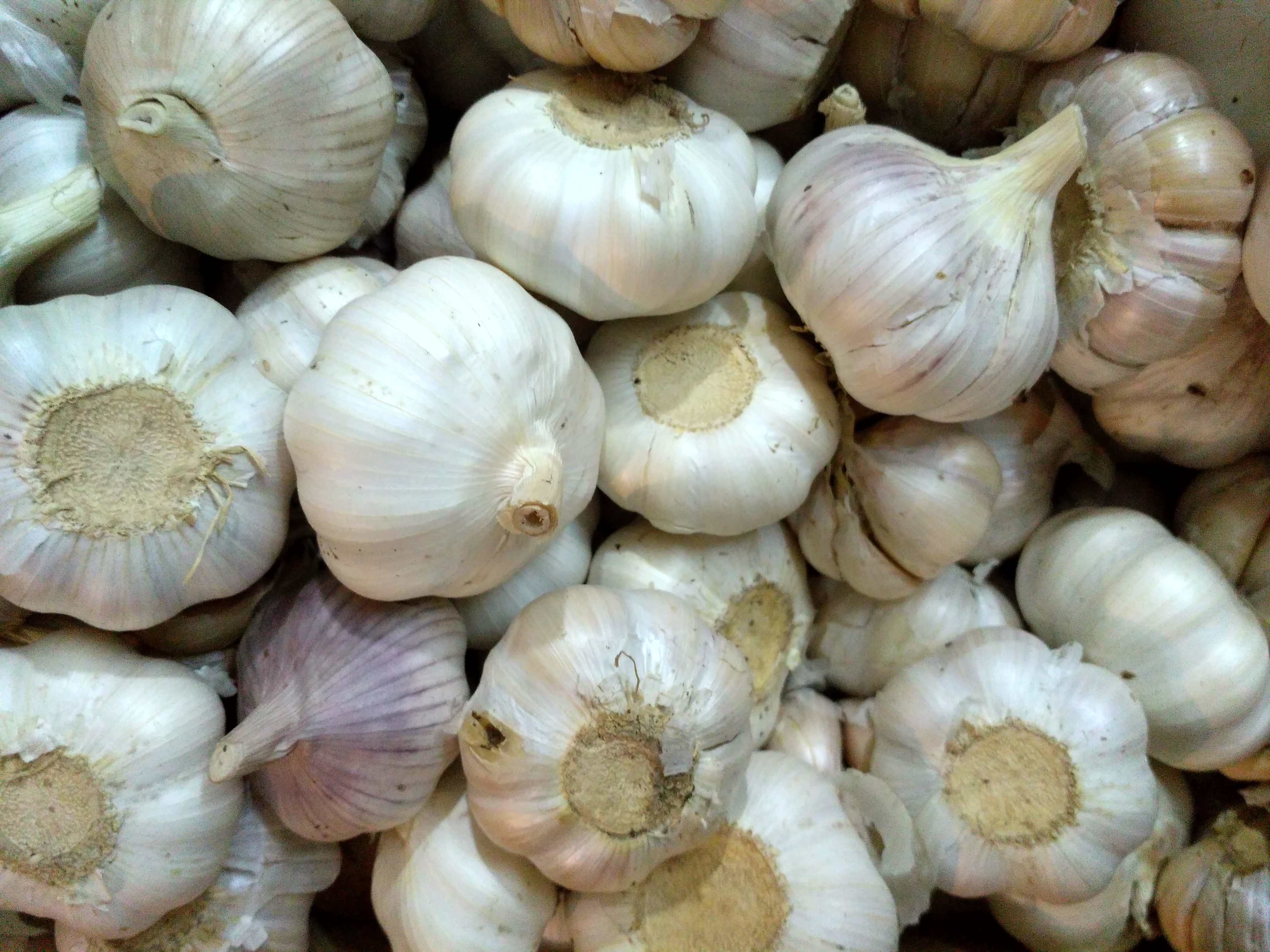
Garlic is native to Central and South Asia, in a band stretching from the Black Sea through the southern Caucasus and north-eastern Iran to the Hindu Kush. Cuneiform records show it has been cultivated in Mesopotamia for at least 4,000 years, its use in China and Egypt also goes back thousands of years, and well-preserved garlic was found in the tomb of the Egyptian king Tutankhamun, from about 1325 BC. The bulb is usually made up of 10 to 20 cloves, each wrapped in a sheathing leaf. Garlic is propagated by planting individual cloves, a method called division, and needs cool temperatures to form multi-clove bulbs: hardneck varieties need long cold exposure, while softneck varieties do well in milder climates.
According to FAO statistics for 2023, the world produced about 28.7 million tonnes of garlic. China grew 20.7 million tonnes, about 72 percent of the total, followed by India with 3.3 million tonnes; Bangladesh and Egypt produced about 0.5 million tonnes each, ahead of Spain with 0.2 million tonnes.
Inside Bangladesh, garlic is a major spice crop of the rabi (winter) season, grown from October to April. A study by scientists of the Bangladesh Agricultural Research Institute (BARI), published in October 2020 in the Journal of Applied Life Sciences and Environment, cited Bangladesh Bureau of Statistics figures for 2016-17: about 66,289 hectares under garlic, 16.08 percent of the country's total spice and condiment area, producing 4.25 lakh tonnes at an average of 6.42 tonnes per hectare. The authors called production "extremely insufficient" against demand and blamed low yields on low-yielding local varieties, pests and diseases, and growers' limited technical knowledge. BARI's Spices Research Centre has released four varieties, BARI Rashun-1 to BARI Rashun-4, with a yield potential of 6 to 11 tonnes per hectare and lower susceptibility to pests and diseases. In the authors' three-season trial on the calcareous soils of the High Ganges River Floodplain in Kushtia, from 2013-14 to 2015-16, BARI Rashun-1 gave the highest yields, 8.34 to 9.80 tonnes per hectare, 3 to 12 percent more than BARI Rashun-2 and 7 to 20 percent more than the local cultivar, with a gross margin of Tk 2,19,425 per hectare.
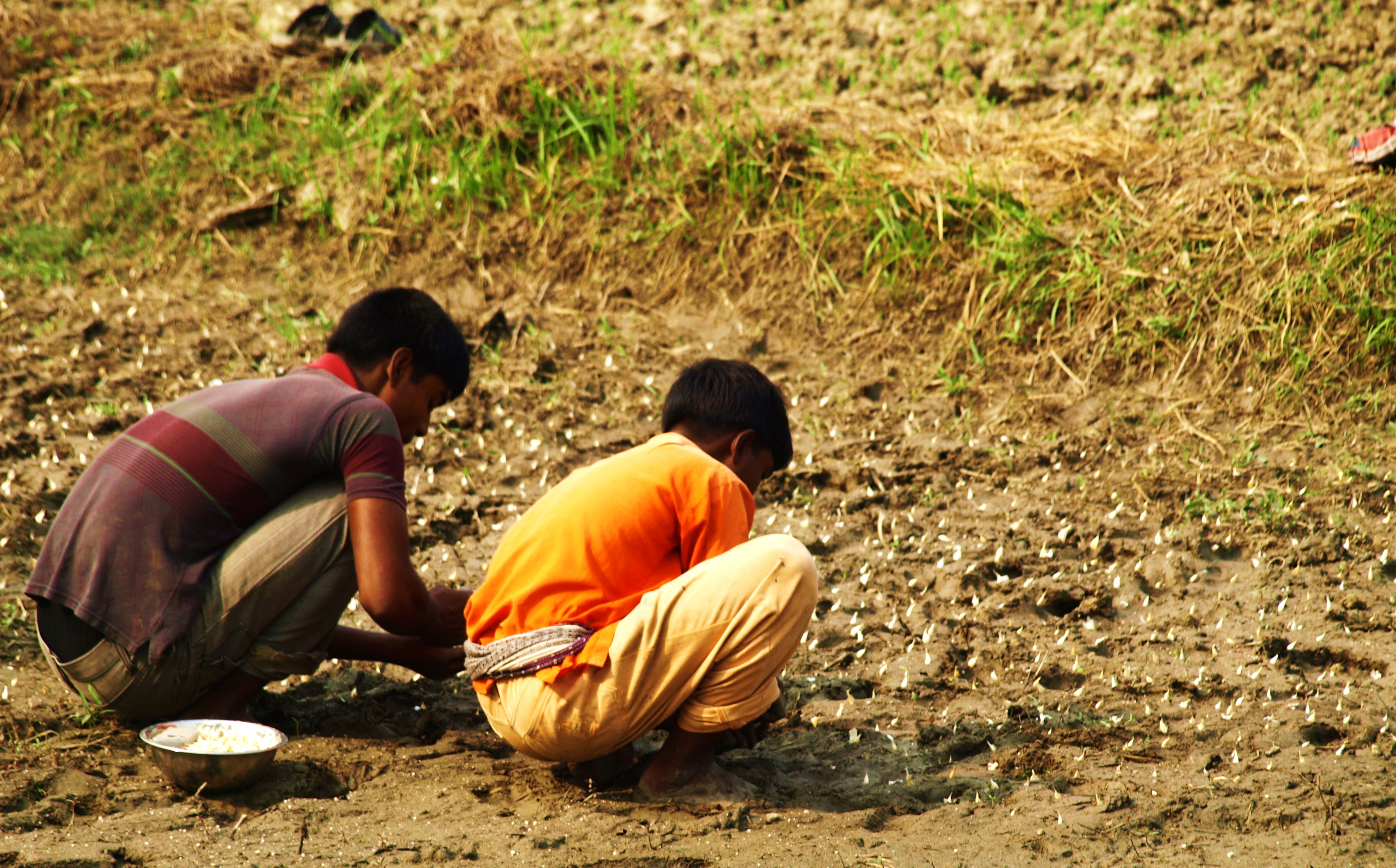
Natore district grows a large share of the country's garlic. In May 2025 The Daily Observer reported DAE Natore's figures: about 2.15 lakh tonnes of garlic that season, worth about Tk 2,000 crore and about 30 percent of national output, from 22,815 hectares against a target of 18,200 hectares. In 2023 the district had grown garlic on 16,745 hectares, producing 1,48,257 tonnes, and in 2024 on 18,000 hectares, producing 1,58,201 tonnes. Baraigram upazila alone had 8,993 hectares and Gurudaspur 7,375. Farmers there plant garlic without tilling the land, a method first introduced in Baraigram and Gurudaspur in 1994-95, which they said lowers production costs and fertiliser needs and gives higher yields; one upazila agriculture officer said most farmers cultivated garlic this way.
Bangladesh still buys garlic from abroad. In May 2022 The Business Standard, citing the Bangladesh Trade and Tariff Commission, put the country's garlic consumption at about six lakh tonnes a year, of which about five lakh tonnes were produced at home and the rest imported. That month imported garlic rose to Tk 160 a kilogram at Chattogram's Khatunganj wholesale market, from Tk 95 to 100 in the first week of May, and local garlic to Tk 60 to 72 from Tk 50 to 60, a rise traders put down to the falling taka and a supply shortage.
Cooking it safely at home
The World Health Organization's Five Keys to Safer Food, published in 2006, sum up the basics of a safe home kitchen in five rules: keep clean; separate raw and cooked food; cook thoroughly; keep food at safe temperatures; and use safe water and raw materials. For a vegetable side dish such as this one, the last rule means starting with sound carrots and garlic and clean water.
This recipe fries the garlic and serves it straight away, which is different from keeping garlic in oil to make a flavoured oil. That practice needs care to prevent spoilage, which can include rancidity and the growth of Clostridium botulinum, the bacterium that causes botulism. Acidifying the garlic with a mild vinegar solution reduces bacterial growth; refrigeration does not by itself make garlic kept in oil safe, so it should be used within one month. Whole garlic is stored dry: at home it is kept warm, above 18 degrees Celsius, to keep it dormant and stop it sprouting, while commercial stores keep it at 0 degrees Celsius in a dry, low-humidity environment. It keeps longer if the tops are left attached.
Photo: Miia Ranta / Wikimedia Commons (CC BY-SA 2.0)
Sources: Jagonews24, USDA FoodData Central, MedlinePlus (US National Library of Medicine), US National Center for Complementary and Integrative Health (NCCIH), Wikipedia, Dhaka Tribune, The Business Standard, UNB via FreshPlaza, Journal of Applied Life Sciences and Environment (BARI study), The Daily Observer, World Health Organization


Comments
(0)