
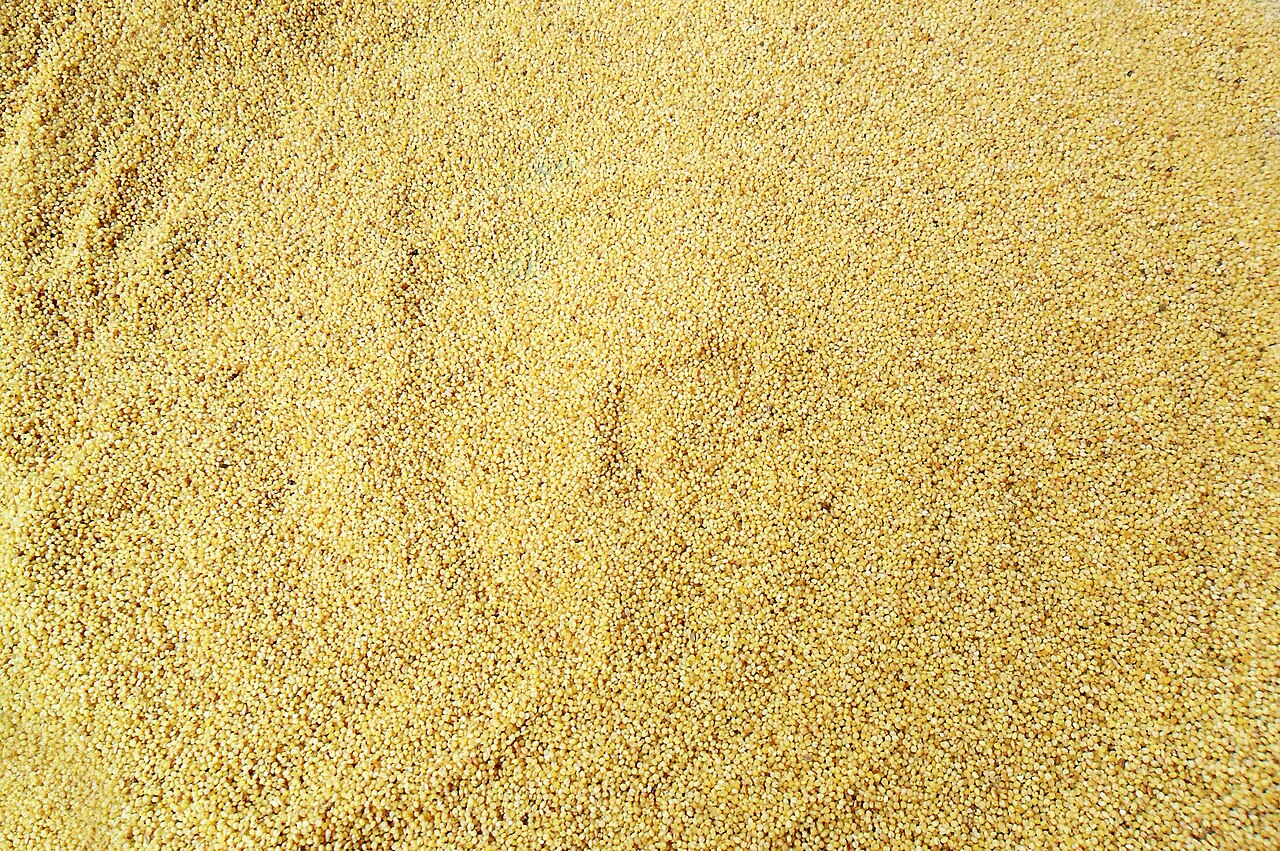
Kaun, the foxtail millet, is one of the oldest grains in cultivation. Small-seeded and long thought of as food for the poor, it is now finding its way onto the plates of the health-conscious.
What it gives
- Protein for muscle and fibre for digestion.
- Magnesium, potassium and iron, and the B vitamins.
- Few calories and a low glycaemic index — good for weight control, blood sugar and the heart.
Growing it
- Soil: almost any, but best on sandy loam that does not waterlog, pH 5.5–7.5; ploughed two or three times and harrowed fine.
- Sowing: in the north from Agrahayan to Magh (mid-November to mid-February), in the south usually Agrahayan; a monsoon sowing in June–July also succeeds.
- Seed: 10 kg per hectare broadcast, 8 kg in rows 25–30 cm apart.
- Fertiliser: usually none; on poor land a modest dose of urea, TSP and MoP raises the yield.
Variety
Besides the local types, BARI's Titas — collected at Shibnagar in Cumilla in 1980 and released after selection — is the improved variety.
Harvest when the heads turn golden, thresh and dry. On marginal land that gives nothing else, kaun gives a crop.
Photo: Kaun, foxtail millet (Setaria italica), Chattogram — Moheen Reeyad / Wikimedia Commons (CC BY-SA 4.0)

Comments
(0)