
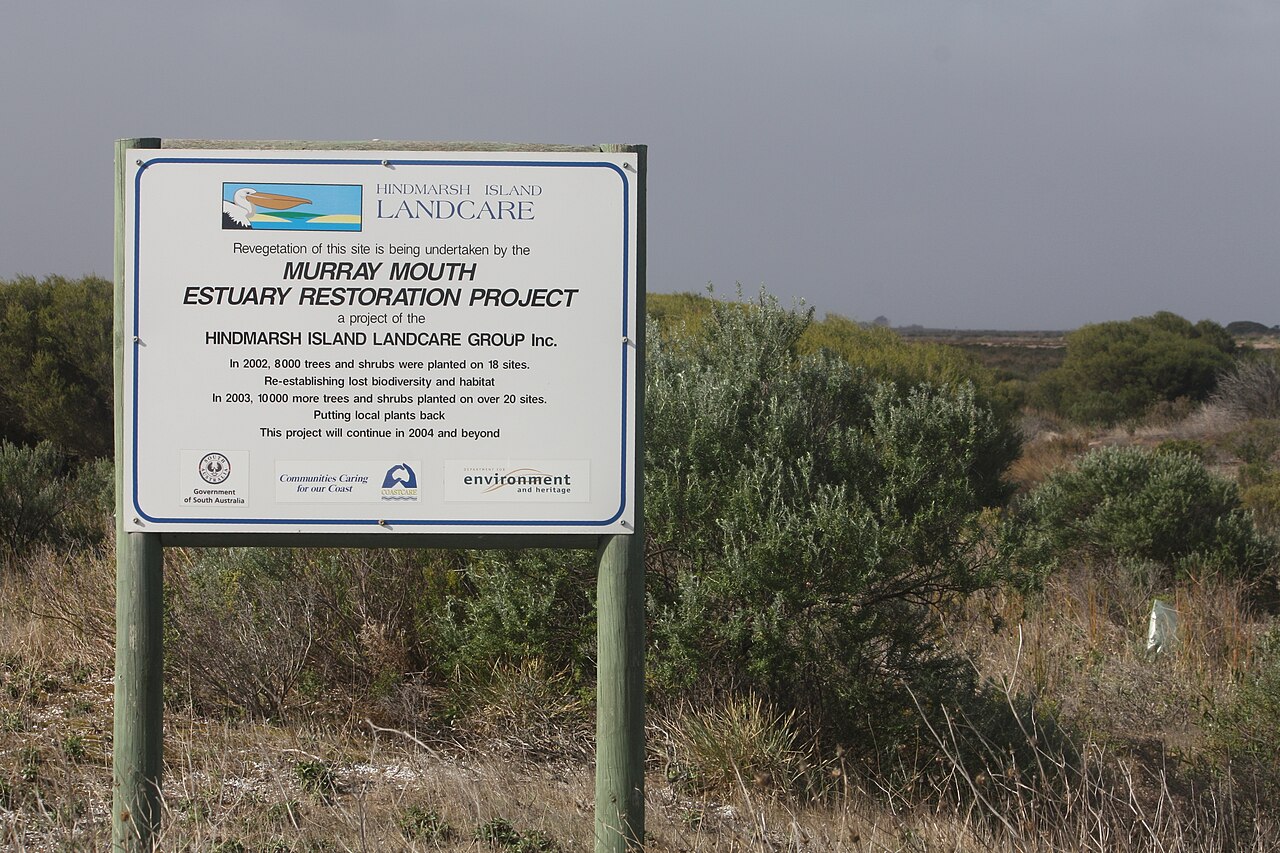
Turning farmland back into native vegetation does not bring the soil's fungi back to health at the same pace as the plants, a six-year study from Flinders University in Adelaide has found.
The study, led by Professor Martin Breed of Flinders University's Restoration Ecology group and published in the journal Molecular Ecology, sampled the same revegetation plots again and again over six years. Its co-authors are Carl D. Watson, Alfie J. Lem and Craig Liddicoat of Flinders and Andrew Bissett of CSIRO, Australia's national science agency, in Hobart. The paper is titled "Restoration plantings promote functional recovery of soil fungi".
The researchers found that what the fungi do, such as cycling nutrients and breaking down organic matter, kept improving steadily for the full six years. The community itself, the mix of species present, recovered comparatively little in the same period. The soil was doing more of the right biological work, even though the organisms doing it had not moved much towards those of an undisturbed native site. Breed said the study "identified changes consistent with continued functional recovery over six years".
The authors suggest that the land's history as farmland, and high nutrient levels left by past fertiliser use, may be a lasting barrier to the fungal community recovering fully once native plants are back.
The practical point is that gains above ground, the easiest thing to measure in a restoration project, do not mean the soil has recovered too. Revegetation schemes, biodiversity offsets and carbon projects that turn old cropland or pasture back into native habitat often judge success by plant cover and tree survival. This study suggests soil biology, which underpins long-term fertility and carbon storage, can lag well behind, particularly on land with a long history of fertiliser.
Photo: Mundoo (revegetation on Hindmarsh Island, South Australia) / Wikimedia Commons (CC BY-SA 4.0)
Source: Global Agriculture


Comments
(0)