
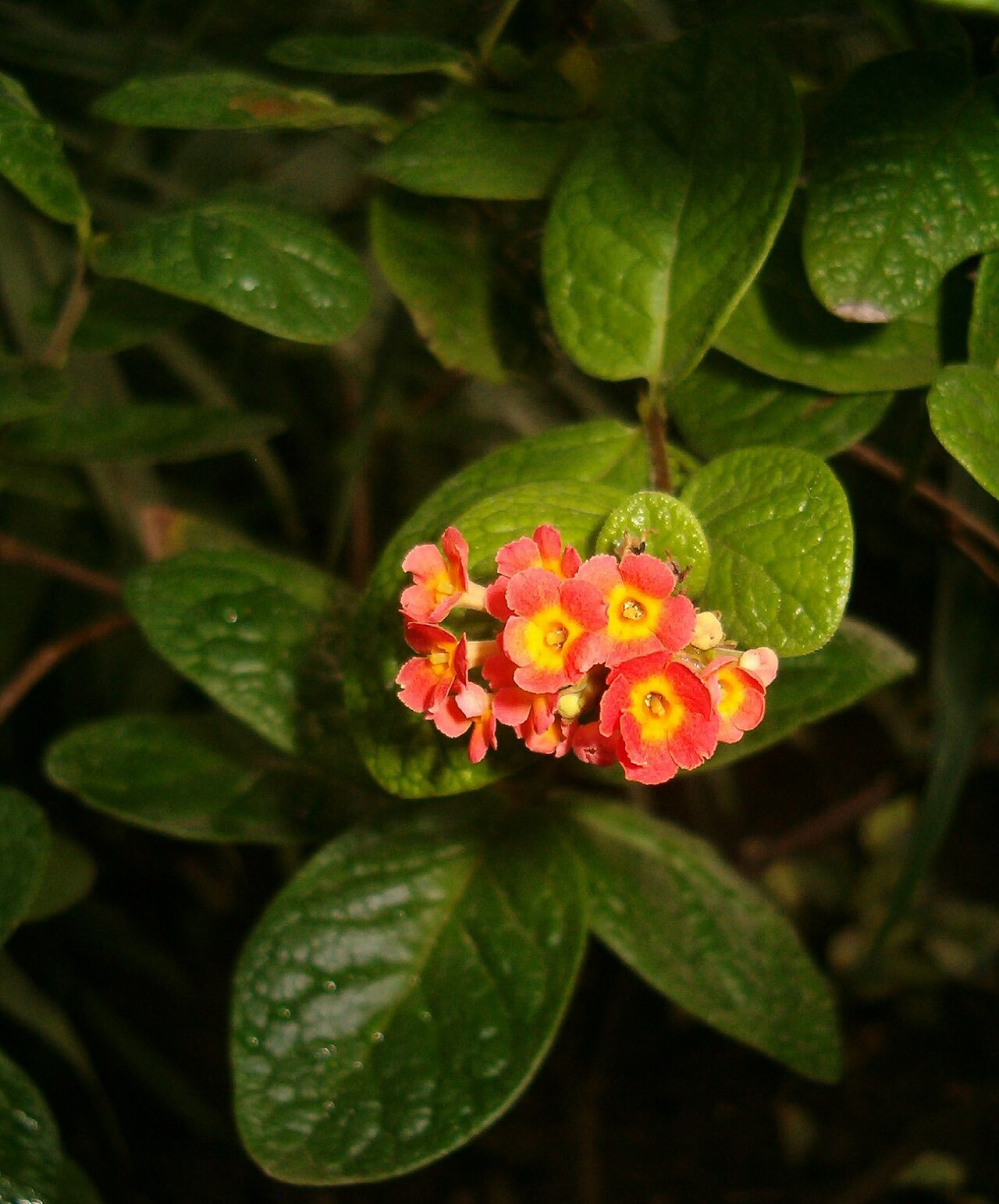
Every October, clusters of Panama rose bloom in the nursery of the National Botanical Garden at Mirpur, Dhaka: vivid orange-red flowers with a golden-yellow eye and a light, sweet scent. In Samakal, an agriculturist and environmental specialist introduces the plant. Despite the name it has nothing to do with roses and looks rather like ixora; it is native to Panama and Cuba, hence the name. It has no Bengali name.
Its botanical name is Rondeletia odorata, in the family Rubiaceae. As far as the writer knows, the recently introduced plant is not yet on Bangladesh's plant lists and is not among the 95,898 records of 2,592 genera in 323 families in the Bangladesh National Herbarium database. The genus has 160 species worldwide; the writer says at least two grow in Bangladesh, the other being the pink-flowered Rondeletia leucophylla, which he saw used as a hedge on a university campus in Savar.
The genus honours the French botanist and physician Guillaume Rondelet (1507-1566) and was named by Carl Linnaeus in 1753; 'odorata' refers to the scent. The species has three subspecies, and the one mostly planted as an ornamental bears bright red or orange-red, fragrant flowers. All are evergreen perennial shrubs no taller than two metres, which grow bushy when pruned.
The leaves are opposite, oval to elliptic, up to five centimetres long and leathery. Many flowers open in clusters at the branch tips, each with a tube 12 to 20 millimetres long and almost round petals. Flowering and fruiting usually run from October to May; the fruit is a hairy capsule three to four millimetres across.
The best way to propagate it is by cuttings: cut a pencil-thin stem 10 to 15 centimetres long with nodes, at a slant, and push it into moist soil; roots form in three to five weeks and leaves appear from the upper node. Spring to early summer is the time to take cuttings. The plant grows in partial shade or sun, but colours better in sun, and occasional pruning brings more flowers. It suits gardens and large pots; potted plants need fresh soil every two or three years.
Photo: Wikimedia Commons (CC BY-SA 3.0); Rondeletia odorata in flower at the Berlin Botanic Garden
Source: samakal

Comments
(0)