
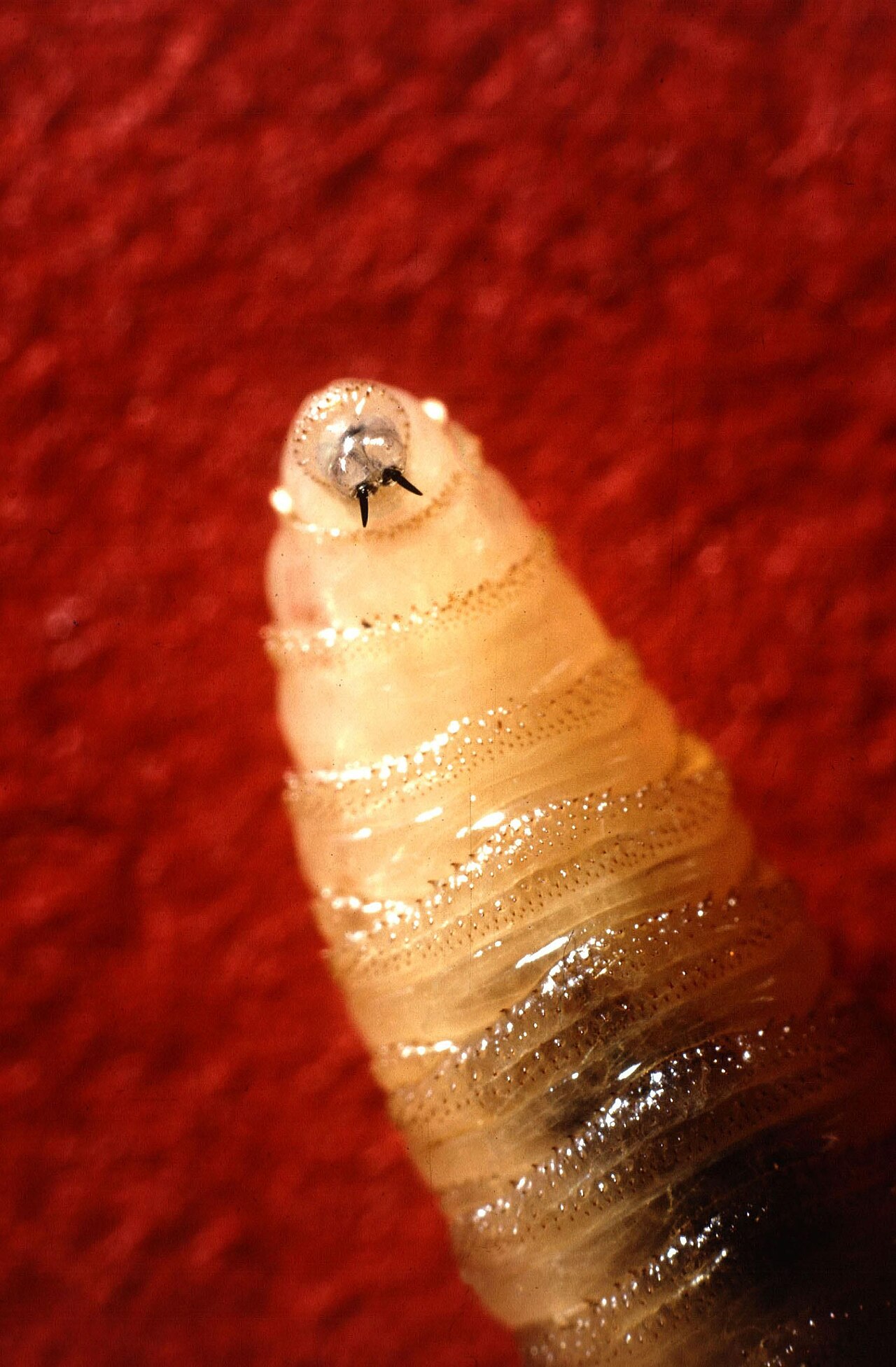
The Foundation for Food & Agriculture Research (FFAR) and the University of Notre Dame are investing $140,389 in a Rapid Outcomes from Agricultural Research (ROAR) grant to test whether an existing human drug can be repurposed to kill New World screwworm larvae, as the pest continues to affect the southern United States.
The drug, nitisinone, is approved by the US Food and Drug Administration and has an established safety record in people. Research over the past five years has shown it kills other blood-feeding insects. The team, led by Dr Lee Haines, associate research professor of biological sciences at Notre Dame, and Professor Álvaro Acosta-Serrano, is using the closely related secondary screwworm as a model to test the drug's toxicity to larvae and adults, with a focus on larvae and its potential use in treating infested wounds. They will also measure its effects on fly growth, reproduction and survival, to guide dosing for later trials on the primary screwworm.
Screwworm's re-emergence threatens US livestock, wildlife and agricultural trade, and there are few approved control options; reports from South America of some common treatments losing effectiveness add to the urgency, FFAR said.
"By evaluating a drug already approved for human use, the project could accelerate the path toward veterinary applications by building on existing safety data," said Dr Jasmine Bruno, FFAR scientific program director.
Haines, who grew up on a farm, said she had seen how blood-sucking insect pests "wear an animal (and the farmer) down" every summer. The ROAR grant funds a pilot to establish methods and determine the drug's toxicity, laying groundwork for a new tool for producers and veterinarians.
Photo: John Kucharski / Wikimedia Commons (Public domain)
Source: The Fence Post


Comments
(0)