

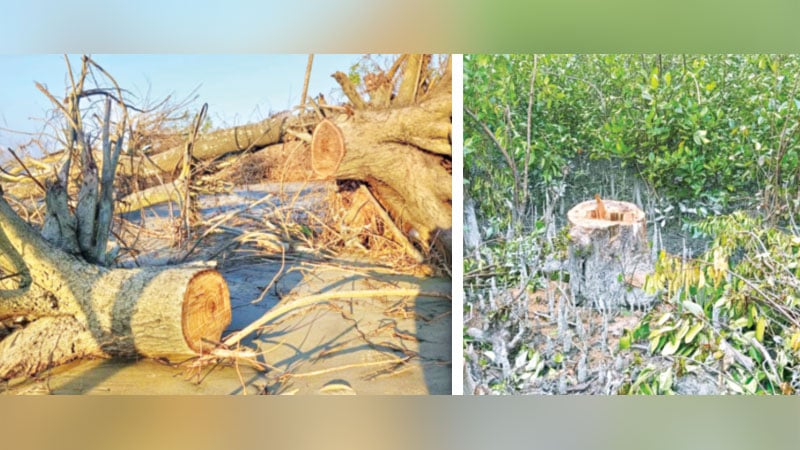
The baya weaver's nest, woven from palmyra, casuarina and coconut leaves, once hung at the corner of every dirt track, canal bank and paddy field in Faridpur's villages. A tour of villages across the district's nine upazilas found that tree felling and the breakdown of the natural environment have cut the bird's habitat at an alarming rate.
Elderly residents and people who follow the environment say the causes are several: palmyra, coconut and date palms being cut indiscriminately, uncontrolled pesticide use on cropland, and a shortage of the wild grasses and creepers the birds need, all of which are destroying the conditions for the weaver to breed and build.
Abdul Jalil, in his sixties, of Kanaipur in Sadar upazila said hundreds of nests used to hang in the trees every monsoon, their perfect craftsmanship swaying in the storms; now a palmyra is hard to find in the villages and seeing a weaver is a matter of luck. Khalek Molla, a farmer in Saltha, said the bird kept the balance naturally by eating crop pests, but the toxic pesticides now used in the fields are leaving the birds short of food and killing them.
Agriculturist Md Shahaduzzaman, deputy director of the Department of Agricultural Extension in Faridpur, said the weaver does farmers a great service by eating harmful insects and its role in biodiversity is immense; the department is encouraging farmers in the field not to use excessive pesticide and to think before cutting the trees the birds nest in.
Divisional forest officer Md Tarikul Islam said climate change, tree felling and unplanned urbanisation have put the weaver's habitat under extreme threat. The palmyra palm is its main refuge, and as the trees go the bird loses its breeding sites. It acts as a natural pesticide, he said, and the department is encouraging people to plant more palmyra and coconut seedlings under the social forestry programme.
Environmentalists warn that without action now, the weaver's nest will survive only in the pages of a schoolbook. For the farmer the arithmetic is simple: losing a bird that controlled pests for free means a bigger pesticide bill, so planting palms and using pesticide sparingly are both in the field's own interest.
Source: banglanews24

Comments
(0)