
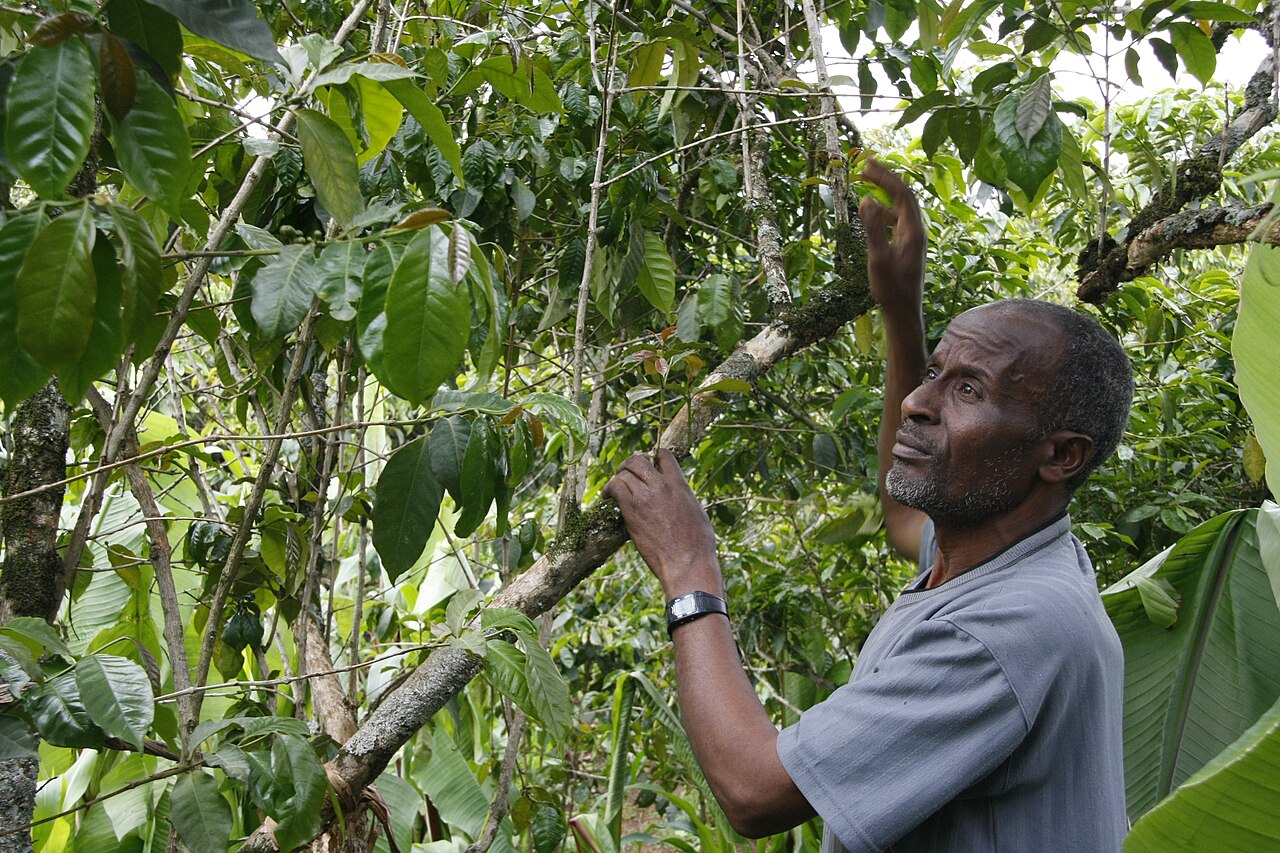
Renewed fighting in northern Ethiopia is unlikely to disrupt the country's coffee production or exports for now, analysts at the commodity platform Expana and the Dutch bank Rabobank told FoodNavigator. Ethiopia's coffee regions lie largely to the south and south-west of Addis Ababa, far from the current clashes in the Tigray, Afar and Amhara regions.
Ethiopia, the birthplace of Arabica coffee, produces about 4.4 percent of the world's coffee and 7.7 percent of its Arabica, according to Rabobank, and is Africa's largest producer and the world's fifth largest, according to the US Department of Agriculture. Expana estimates the 2026/27 crop at 9.5 million bags, of which about 6.7 million will be exported, against a global crop forecast at 193 million bags. Around 25 to 30 percent of Ethiopia's coffee is drunk at home.
The 2020-2022 Tigray war did not dent coffee exports, Expana's data show; shipments stayed in line with earlier years and grew after the war ended. "In general, we saw very limited impact on the export numbers," said Oliver Broster, senior manager for coffee analysis at Expana.
Broster expects no impact on production if the fighting stays in the north. If it moved closer to Addis Ababa, logistics to the port and local storage and processing could suffer, though that is hard to quantify; in 2021 Tigrayan forces came within 85 miles of the capital before being pushed back.
Landlocked Ethiopia ships most of its coffee through neighbouring Djibouti, and Carlos Mera, head of agri commodity market research at Rabobank, said that route is likely protected, while noting that conflicts are hard to predict. Broster said the road and rail link from Addis Ababa to Djibouti is currently a long way from the fighting, and that any effect on global coffee supply and prices is likely to be minimal.
For the millions of Ethiopian farmers who depend on coffee, the crop already faces ageing trees, falling productivity, climate change, pests and diseases and limited access to finance, according to the Food and Land Use Coalition.
Photo: DFID / Wikimedia Commons (CC BY 2.0)
Source: FoodNavigator

Comments
(0)