
The US Environmental Protection Agency has proposed reallocating 770 million biofuel blending credits, waived through small refinery exemptions, to refiners' obligations under the Renewable Fuel Standard (RFS) for 2026 and/or 2027, DTN reports. EPA Administrator Lee Zeldin announced the proposal on Tuesday, 13 October, at an event in Peosta, Iowa.
In August EPA granted 18 full and 11 partial exemptions to small refineries, covering 1.76 billion Renewable Identification Numbers (RINs), the compliance credits of the RFS. It had already counted 990 million of them in its "Set 2" rule for 2026 and 2027. The proposal would reallocate the remaining 770 million, which belong to 2025 obligations, so that the exemptions do not cut the country's overall blending requirement. In effect it would protect the equivalent of 770 million gallons of ethanol.
EPA offers two options: split the reallocated RINs between 2026 and 2027, or add them all to 2027. Public comments are open until 4 December.
Biofuel groups welcomed the plan. "Reallocating lost gallons would strengthen the rural economy and provide relief to farmers looking for reliable new markets," said Emily Skor, chief executive of Growth Energy. Geoff Cooper of the Renewable Fuels Association said the reallocation would help offset the lost demand for ethanol producers and farmers, while calling again for reform of the exemptions. Dave Walton, an Iowa farmer and president of the American Soybean Association, urged EPA to finalise the rule quickly, saying soybean farmers are "navigating a tough farm economy."
The American Petroleum Institute criticised the move, saying it would add uncertainty to a strained fuels market and make it harder for refiners to plan. The announcement brought no immediate reaction in grain markets: corn futures were flat at midday and soybeans were down 3 to 3.5 cents.
The report is by Chris Clayton, DTN farm business editor.
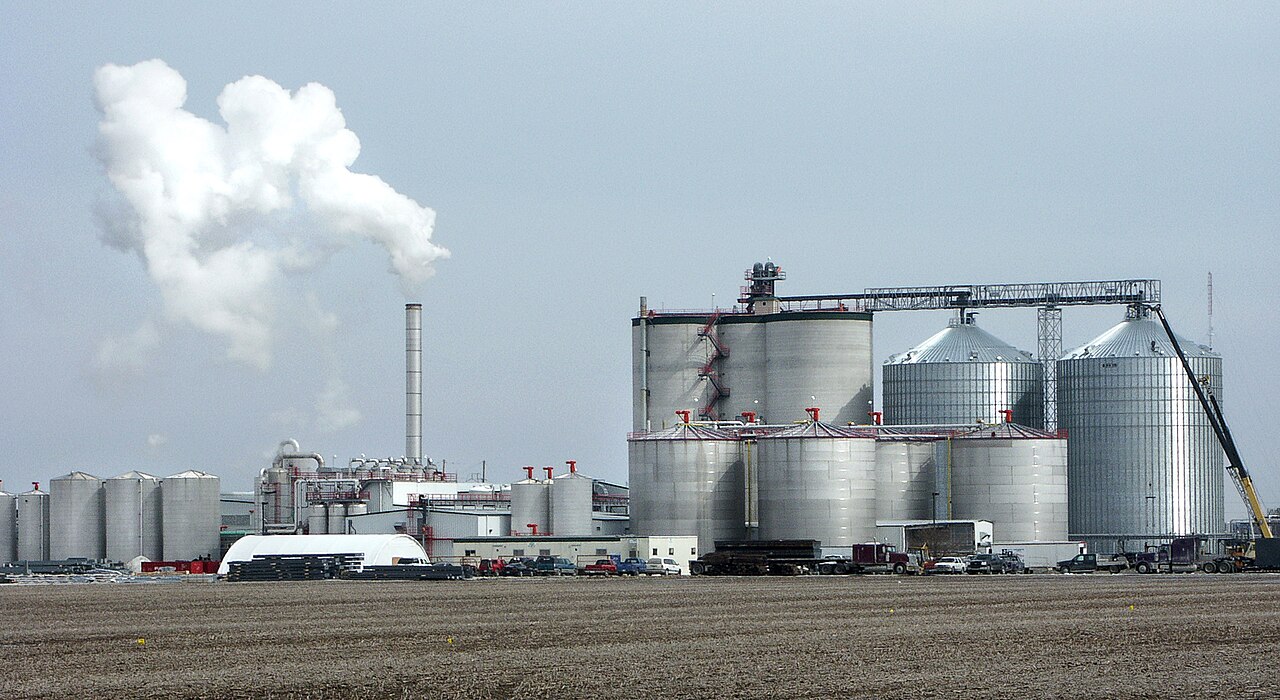
Photo: Steven Vaughn / Wikimedia Commons (Public domain)
Source: DTN / Progressive Farmer



Comments
(0)