
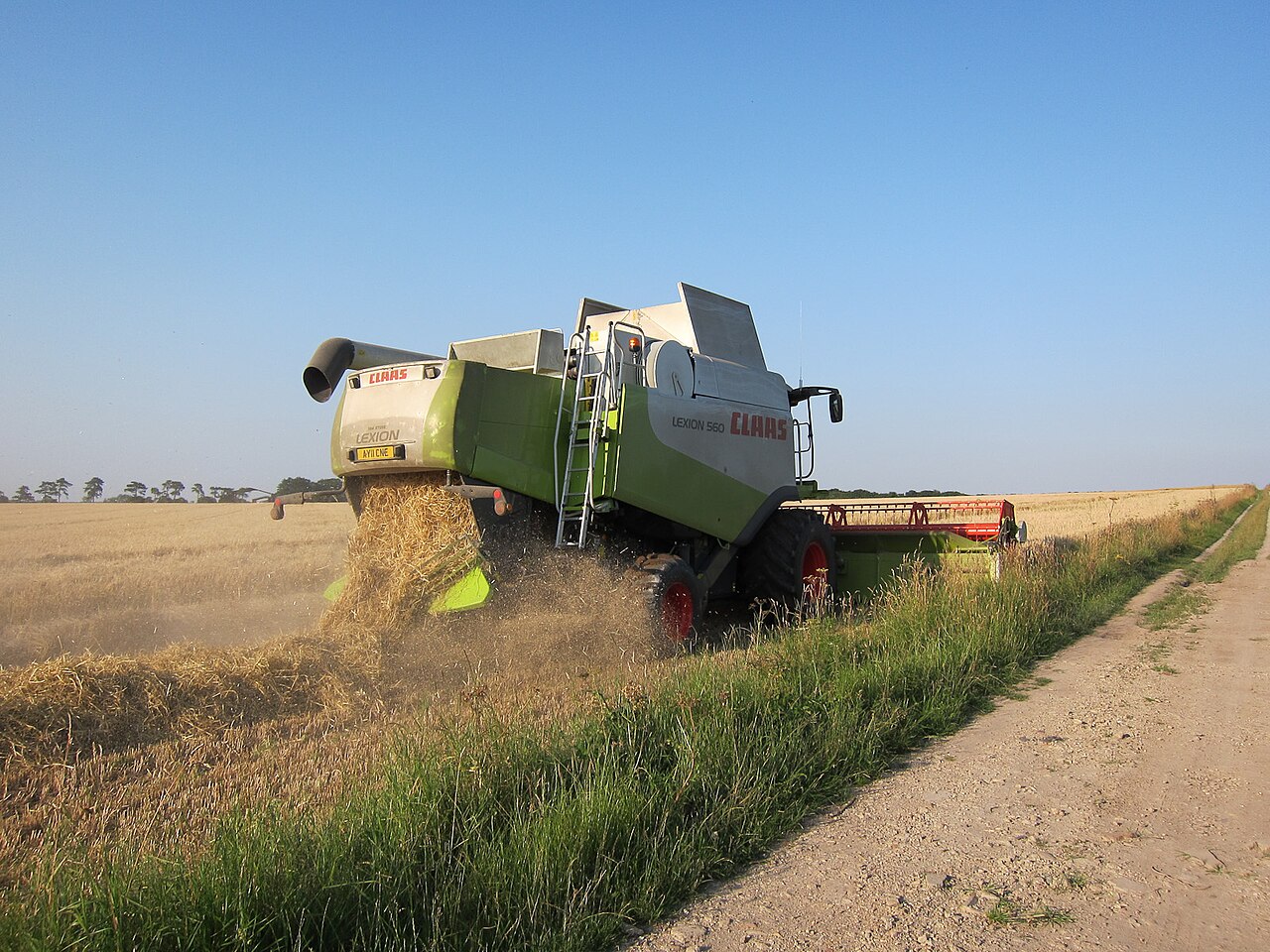
England's combined harvest of wheat, barley, oats and oilseed rape fell to 16.03 million tonnes in 2026, the lowest since records began in 1984 and below the previous low of 16.16 million tonnes in 2020, reports Kiran Pandey for Down To Earth, citing an analysis by the Energy and Climate Intelligence Unit of provisional figures from the Department for Environment, Food and Rural Affairs (Defra).
A dry spring was followed by heatwaves in May and June and an exceptionally dry July across England and Wales, leaving all of Wales and about half of England in drought during key growing periods.
Barley and oats were hit hardest. Barley production fell 11% to 3.7 million tonnes and oats 29% to 527,000 tonnes, their lowest in 14 years. Wheat production rose slightly to 10.8 million tonnes, though yields stayed below the long-term average.
Data from the Agriculture and Horticulture Development Board (AHDB) put winter wheat yields at 6.9 tonnes per hectare, 11% below the five-year average; spring barley at 4.8 tonnes, 17% below; and oats at 4.6 tonnes, 14% below.
Oilseed rape was the exception: production rose 43% to about one million tonnes on a larger area and better yields, but not enough to offset the fall in cereals. Northern regions generally did better than the south, and Yorkshire and the Humber recorded more wheat.
Some farmers harvested early and others reported much lower yields, adding to financial pressure from high production costs, the report says, and lower yields and quality can limit marketable supplies and complicate storage and sales. It points to better soil moisture retention, water storage and irrigation, drought-tolerant varieties and more research as ways for farming to withstand more extreme weather.
Photo: Hugh Venables / Wikimedia Commons (CC BY-SA 2.0)
Source: Down To Earth

Comments
(0)