
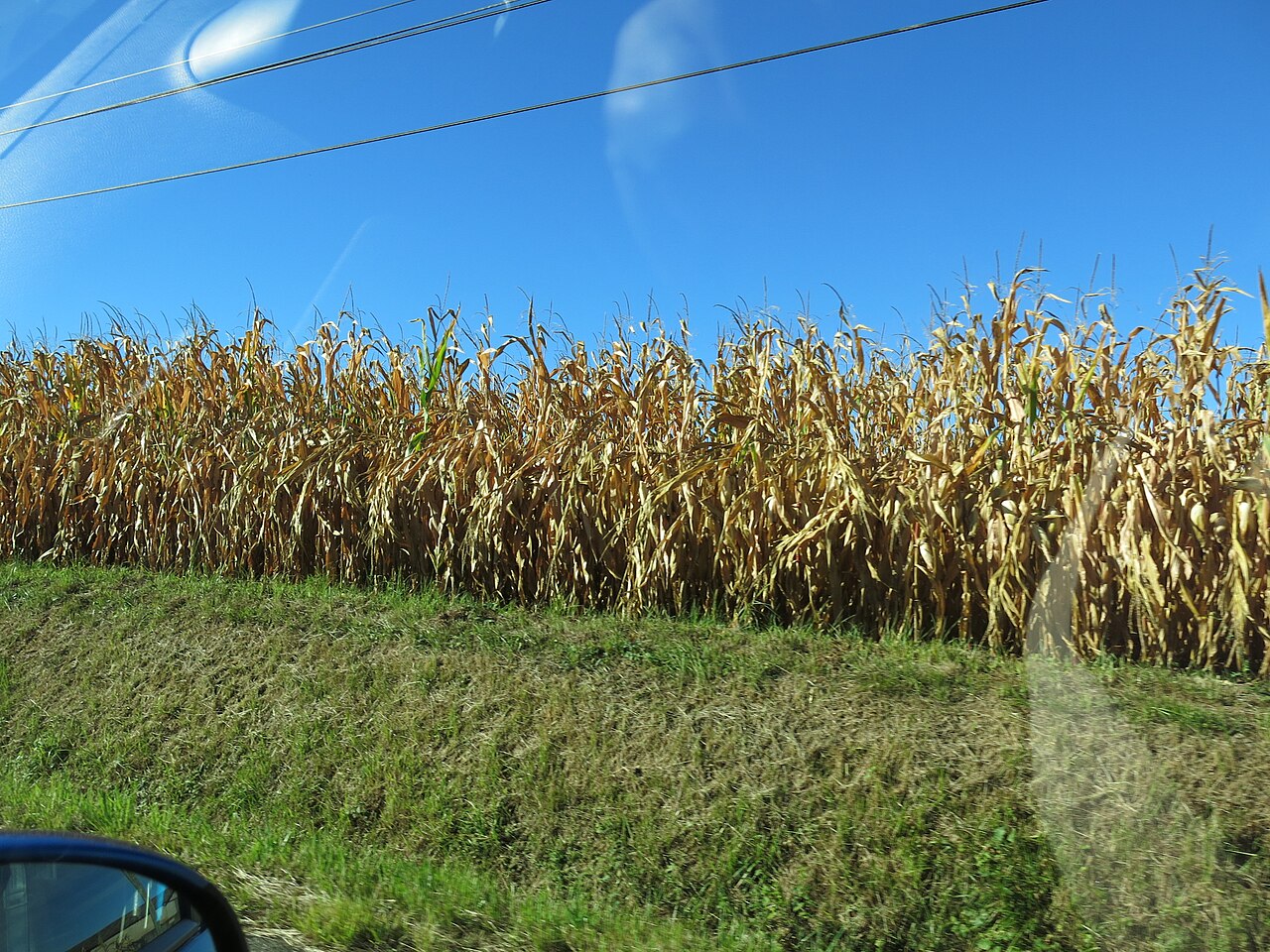
Heatwaves and drought are pushing growers towards technologies that keep yields up while using less water, according to Jean-François Déchant, co-founder and chief executive of the French startup Elicit Plant, who spoke to AgNavigator at the World Agri-Tech Innovation Summit in London.
Elicit Plant's technology is built on phytosterols, compounds that occur naturally in plants and help them manage water stress. It is applied as a preventive spray on broadacre crops including corn, soybeans, sunflower and wheat, before the stress arrives. For farmers, Déchant said, it addresses two problems at once: making better use of water, and protecting or raising yield.
The company says it has run more than 1,000 field trials in five years. In this season's trials across France and Central Europe it recorded yield gains of more than one tonne per hectare and water-use efficiency improvements of 17% to 30%. In practice, Déchant said, a farmer could cut irrigation from about 300mm to about 220mm without losing crop performance. These are the company's own figures.
Elicit Plant raised €45 million ($48 million) in November 2024 to grow internationally and develop more crop-resilience biosolutions. It now operates in 16 countries across Europe, Brazil and North America, works with Bayer on corn in several European markets, and has recent agreements with Certis Belchim on potatoes and Mosaic on canola in North America. It was named Climate Adaptation Solution of the Year at the 2026 AgTech Breakthrough Awards and selected for the Blue Earth Summit's 2026 BE100 cohort.
Déchant expects demand for resilience products to keep growing as weather becomes less stable. Rising temperatures let weather patterns stay in place for weeks or months, he said, so long wet spells are followed by long dry ones, a pattern he sees in the UK as well as on the continent.
The report is by Oliver Morrison for AgNavigator.
Photo: Tangopaso (maize in drought, Landes, France) / Wikimedia Commons (Public domain)
Source: AgNavigator

Comments
(0)