
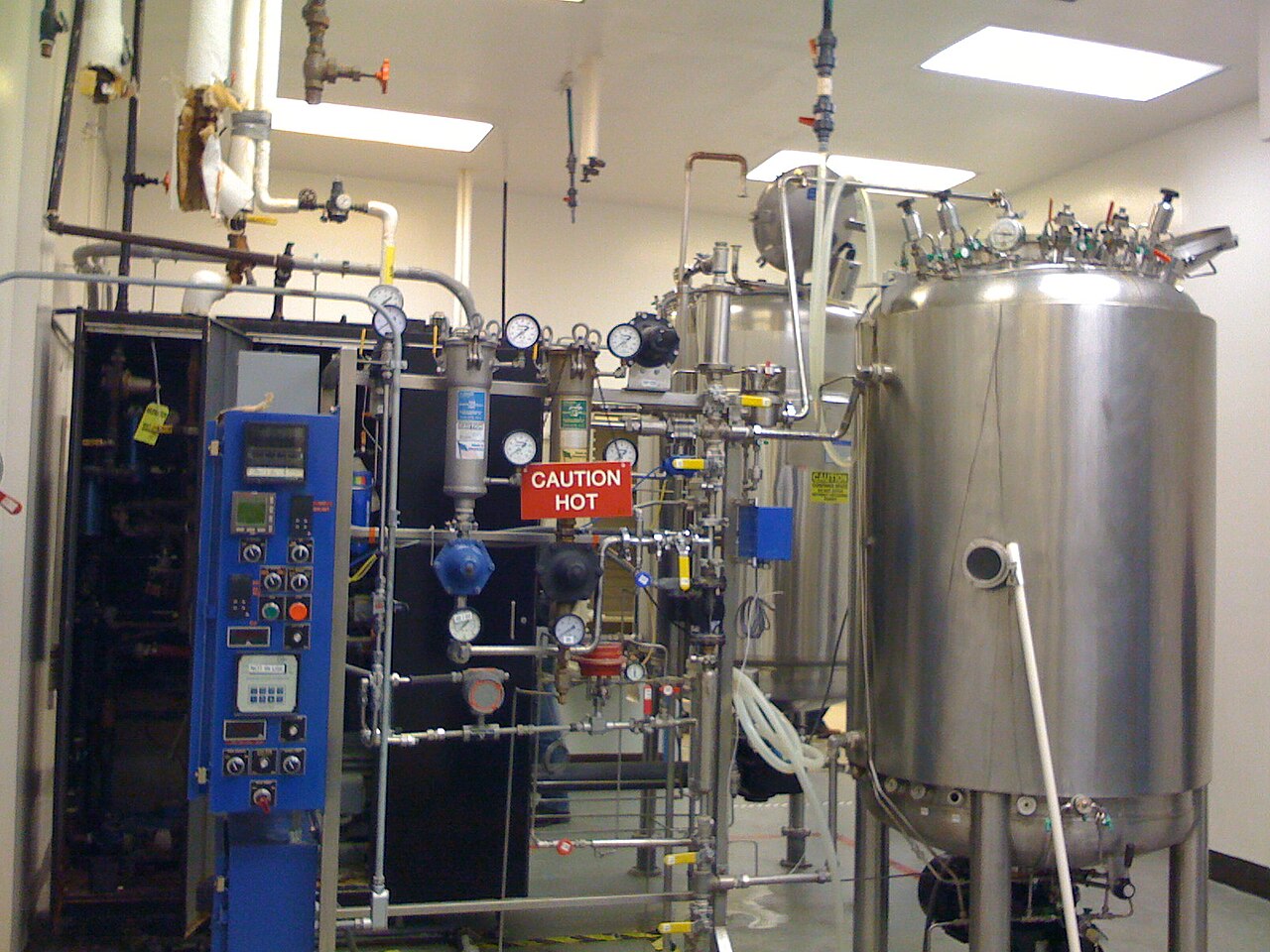
Producing animal proteins such as whey, casein and egg white with microbes instead of animals is technically proven, but it is still too costly to compete at scale. A new Dutch public-private consortium, EcoFerm (Efficient Continuous Fermentation for Alternative Proteins), wants to tackle that with continuous production, Green Queen reports.
Precision fermentation inserts a DNA sequence into microbes so that they produce a target protein when fermented. Today's commercial plants mostly use fed-batch processing, a stop-and-start method in which the tank has to be emptied, cleaned, refilled and sterilised between runs. In a continuous system the microbes stay in the bioreactor and the product is harvested without interruption, which can raise yields, keep vessels fuller and cut downtime.
Continuous systems such as chemostats have their own problems: productive microbes and nutrients flow out with the product, and long runs risk contamination, genetic instability and falling performance. EcoFerm's answer is controlled cell agglomeration, which lets microbial cells clump and stay inside the tank without energy-hungry separation equipment such as membranes or centrifuges. It will use proteins such as beta-lactoglobulin, a whey protein, as test cases.
The two-year project is funded by the non-profit TKI Agri & Food. Its partners are contract manufacturer Nizo Food Research and its Biotechnology Fermentation Factory, fermentation specialist Dab.bio, whose Fast reactor it will optimise, precision fermentation startup Vivici, ingredients group DSM-Firmenich and Van Hall Larenstein University of Applied Sciences. Vivici's animal-free beta-lactoglobulin is already cleared for sale in the US.
"Precision fermentation has enormous potential to contribute to a more sustainable food system, but further process innovation is needed to improve production economics," said Robyn Eijlander, project manager at Nizo Food Research. Dab.bio chief executive Eric van der Meer called continuous fermentation "a critical next step for the maturation of precision fermentation". The partners hope to establish a platform that can be used across many precision-fermented ingredients and to strengthen Europe's food biotech competitiveness, in line with the European Commission's new food research and innovation strategy.
Photo: Peter grotzinger / Wikimedia Commons (CC BY-SA 3.0)
Source: Green Queen


Comments
(0)