
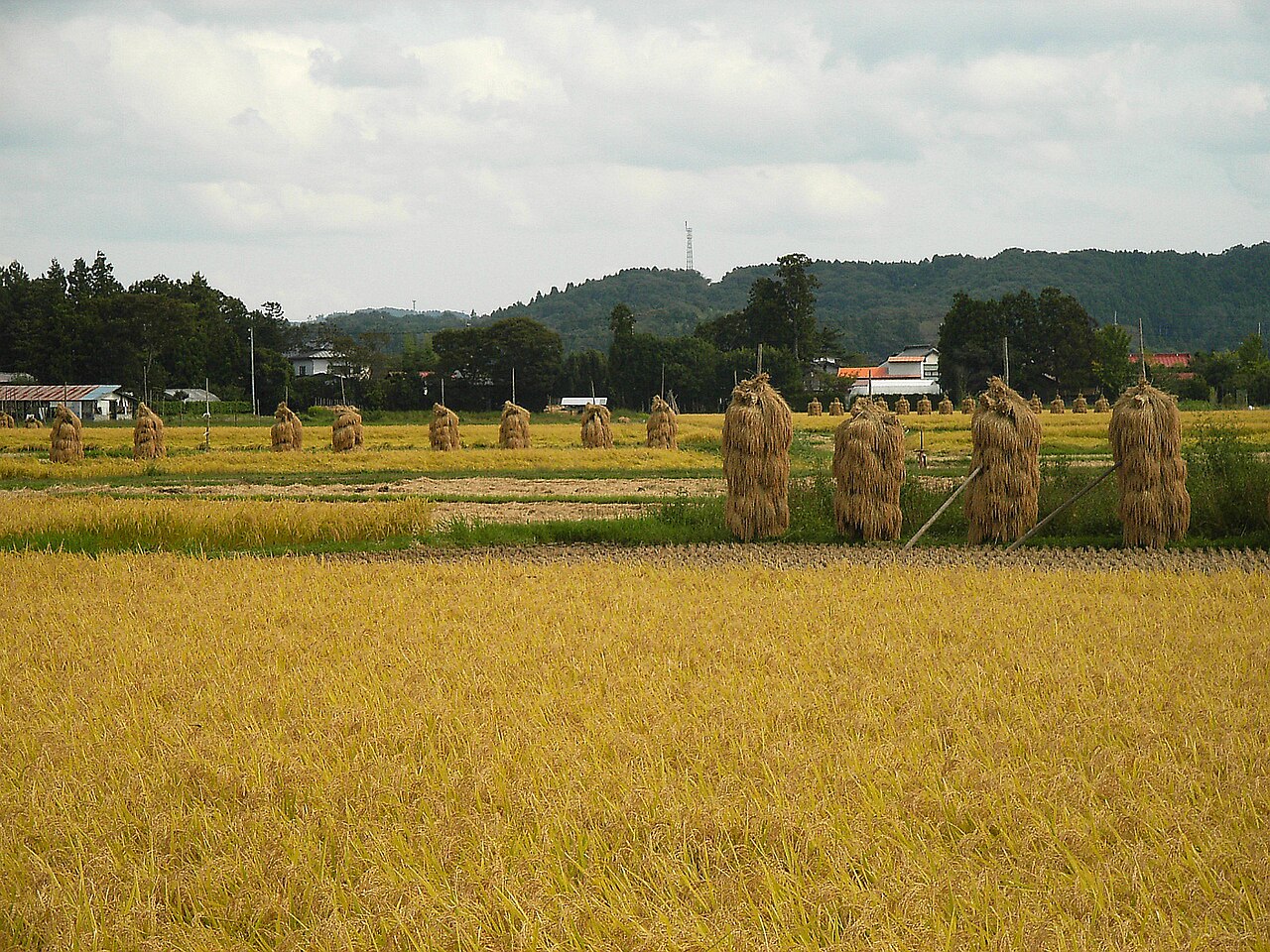
Farmers in the Netherlands, a country built on dairy cattle, are experimenting with growing rice on wet peatland, a crop once unthinkable in its temperate climate, Euronews reports with AFP. Researchers hope it can help with one of the country's most pressing environmental problems: peat soils that sink as they are drained and dry out.
Roughly a tenth of the Netherlands is peatland, which farmers drain to grow grass for cattle. As the peat dries it releases millions of tonnes of carbon dioxide and the land subsides by up to several centimetres a year in the worst areas. Wageningen University estimates emissions from Dutch peat soils at about 2 to 3 percent of the country's total. Keeping fields wet would stop this, but until now farmers had nothing to grow on them.
The pilot covers just 0.6 hectares between Amsterdam and The Hague, on land provided by the Land van Ons association, and aims to produce about three tonnes of short-grain rice. The team is testing around 30 cultivars from Russia, China, Japan and Uzbekistan; a grain from northern Japan appears best suited. "My goal is to show that more things are possible on wetland than just grass," said farmer Sander Roeleveld, 53.
Julian Helfenstein of Wageningen University and Research, who runs the project with colleagues from Leiden University, called rice a rare way both to adapt to climate change and to mitigate it, since wet fields stop the peat degrading. The team is measuring carbon dioxide and methane from the rice against grassland to make sure "the cure is not worse than the illness", and he said results so far are promising. The peat problem also affects Germany, Belgium and the Baltic states, he said.
Guusje van der Vossen of the Wij Land association said local restaurants are interested in premium Dutch rice. Land van Ons chairman Philippe Terheggen, 68, said growing rice in the Netherlands would have been unimaginable 20 years ago, "but it's also scary because it tells you what is possible" now that the climate has changed.
Photo: Kinori / Wikimedia Commons (Public domain)
Source: Euronews

Comments
(0)