
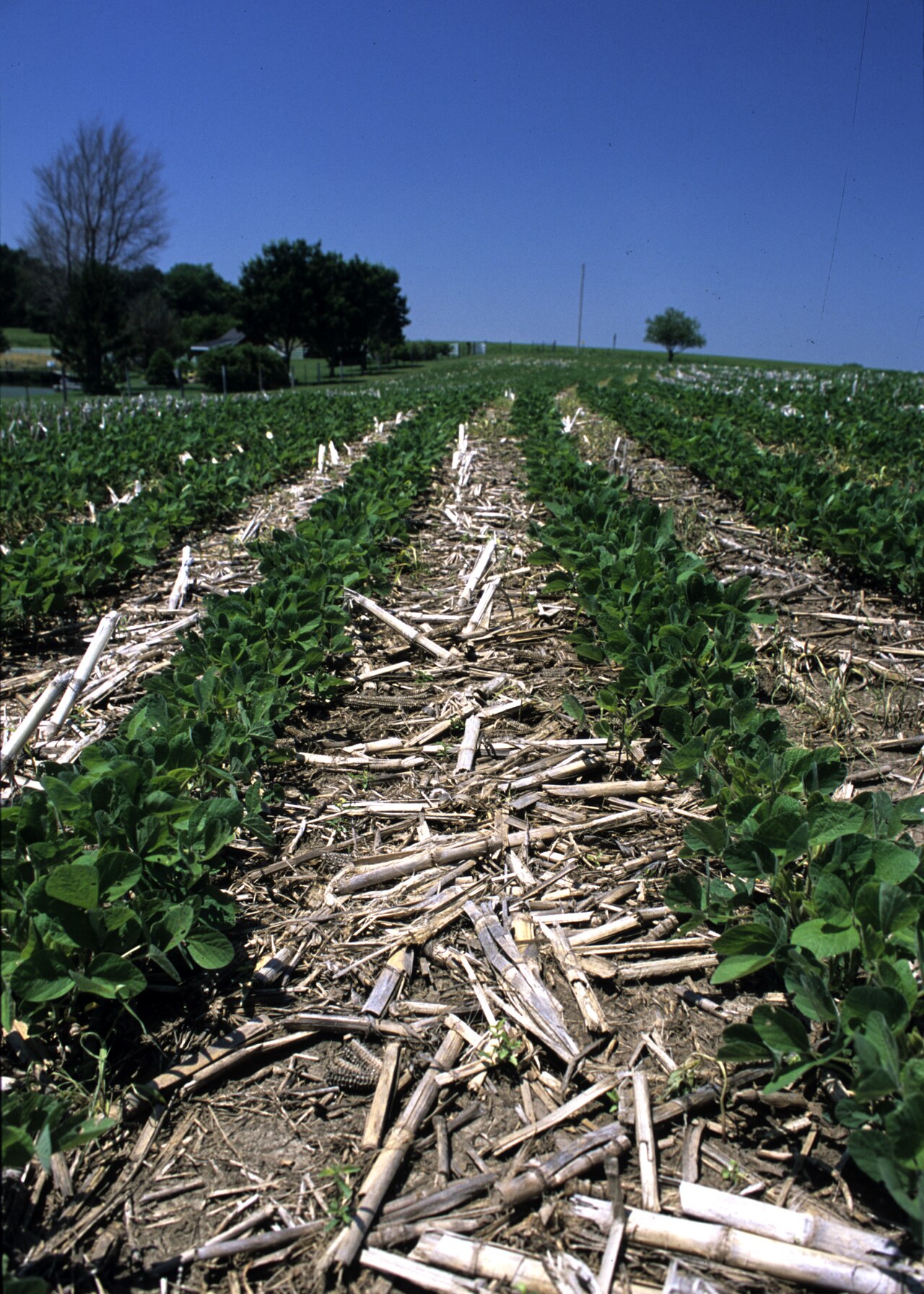
Researchers in Ontario are using genomics and machine learning to find new sources of genetic resistance to white mould in soybeans, a disease that conventional breeding has struggled to tackle, AG Canada reports from Glacier FarmMedia, in a story first published by Farmtario.
White mould, caused by the fungus Sclerotinia sclerotiorum, infects soybeans at flowering and damages stems, pods and vascular tissue. Its sclerotia survive in soil for years, fungicides depend on accurate forecasting and timing and can miss tissues the pathogen reaches, and thinner canopies that reduce disease can conflict with practices aimed at maximum yield.
Breeding is hard because resistance is quantitative and polygenic, coming from many genes with small effects, and because disease severity varies strongly with the environment, said Bahram Samanfar, a research scientist with Agriculture and Agri-Food Canada and research professor at Carleton University. "We integrate large-scale genomic, transcriptomic, protein-protein interaction, and regulatory datasets and use machine-learning approaches to identify complex patterns that are difficult to detect through conventional analysis," he said.
The aim is to find resistance genes and markers breeders can select for earlier, and to stack several mechanisms so varieties hold yield in high-disease years and need fewer routine fungicide sprays. "We are not looking for a single solution that replaces fungicides," Samanfar said, but for genetic resistance that lets growers spray only when truly needed.
He sees the method becoming a transferable platform for other complex traits and crops. The team includes AAFC's Elroy Cober and Carleton's James Green with their students; part of the work is funded by Grain Farmers of Ontario.
Photo: Lynn Betts, USDA NRCS / Wikimedia Commons (Public domain)
Source: AG Canada


Comments
(0)