
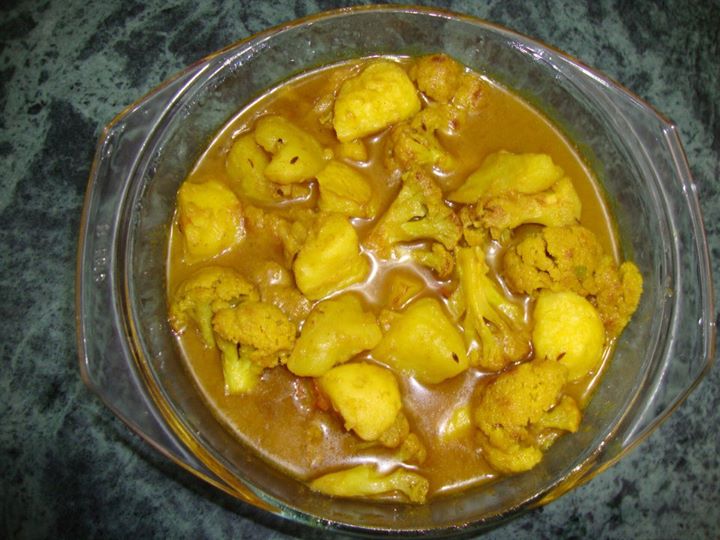
On 27 December 2025, in the middle of the winter vegetable season, the lifestyle desk of the Bengali news site Jagonews24 published a home recipe for doi fulkopi: cauliflower and potatoes, lightly fried and then cooked down in whisked sour yoghurt with mustard oil, whole cumin, dried chillies, turmeric, chilli and cumin powder, salt and a little sugar. The site presented it as a simple dish for the family table that could be made in a few steps, and offered it as a way to cook cauliflower beyond the usual bhaji, curry or soup.
The recipe is set out below as Jagonews24 published it, followed by background on the two foods at its centre, doi and fulkopi: what they are, where Bangladesh's supply came from in the 2024-25 season, what the national food tables say they contain, and the World Health Organization's advice on the sugar, salt and kitchen hygiene that apply to any home-cooked curry.
The recipe as Jagonews24 published it
The recipe is written for a family meal and uses one whole cauliflower. The quantities below are the original's own.
Ingredients
- Cauliflower: 1
- Potatoes: 2
- Sour yoghurt (tok doi): 200 grams
- Turmeric powder: 1 tablespoon
- Onions: 2
- Salt: to taste
- Chilli powder: 1 tablespoon
- Cumin powder: 1 tablespoon
- Mustard oil: as needed
- Sugar: 2 tablespoons
- Dried chillies: 2
Method
- Cut the cauliflower and potatoes into small pieces, fry them lightly and set them aside.
- Heat mustard oil in a karai (a deep frying pan) and lightly fry whole cumin and the dried chillies in it.
- When they are fried, add the turmeric, chilli and cumin powders mixed in a little water.
- Whisk the sour yoghurt, add it to the pan, and add the salt and sugar.
- Add the fried potatoes and cauliflower and cook them well, stirring (koshano).
- When the vegetables have been well cooked in the masala, add a little water.
- When the water has dried off, take the pan off the heat. The doi fulkopi is ready.
Two details of the published text are worth knowing before cooking. The ingredient list includes two onions, but the method does not say when to add them. The method also calls for whole cumin to be fried in the oil at the start, while the list names only cumin powder. A cook following the recipe will need to decide where the onions go and keep a little whole cumin aside for the tempering.
The original introduction also called the dish rich in nutrients and said it contained ingredients that aid digestion. Those general claims are not repeated here; the section on what the plate holds below gives the measured nutrient values of the main ingredients from Bangladesh's own food composition table and the United States Department of Agriculture instead.
Doi: the yoghurt in the pan
Doi, also called dahi or curd in South Asia, is the traditional yoghurt of the Indian subcontinent, made by fermenting milk with bacteria. It is usually made from cow's milk and sometimes from buffalo or goat milk. During fermentation, bacteria turn the lactose in the milk into lactic acid, which thickens the milk and gives it its sour taste. The species involved vary with the temperature and humidity of the place and can include Lactococcus lactis, Streptococcus thermophilus and Lactobacillus delbrueckii subspecies bulgaricus.
At home, doi is set by boiling and cooling milk, mixing in a little curd saved from an earlier batch as a starter, and leaving the bowl undisturbed for five to ten hours until it turns slightly sour. Buffalo milk, which has more fat, gives a thicker set, and buffalo curd is often sold in clay pots.
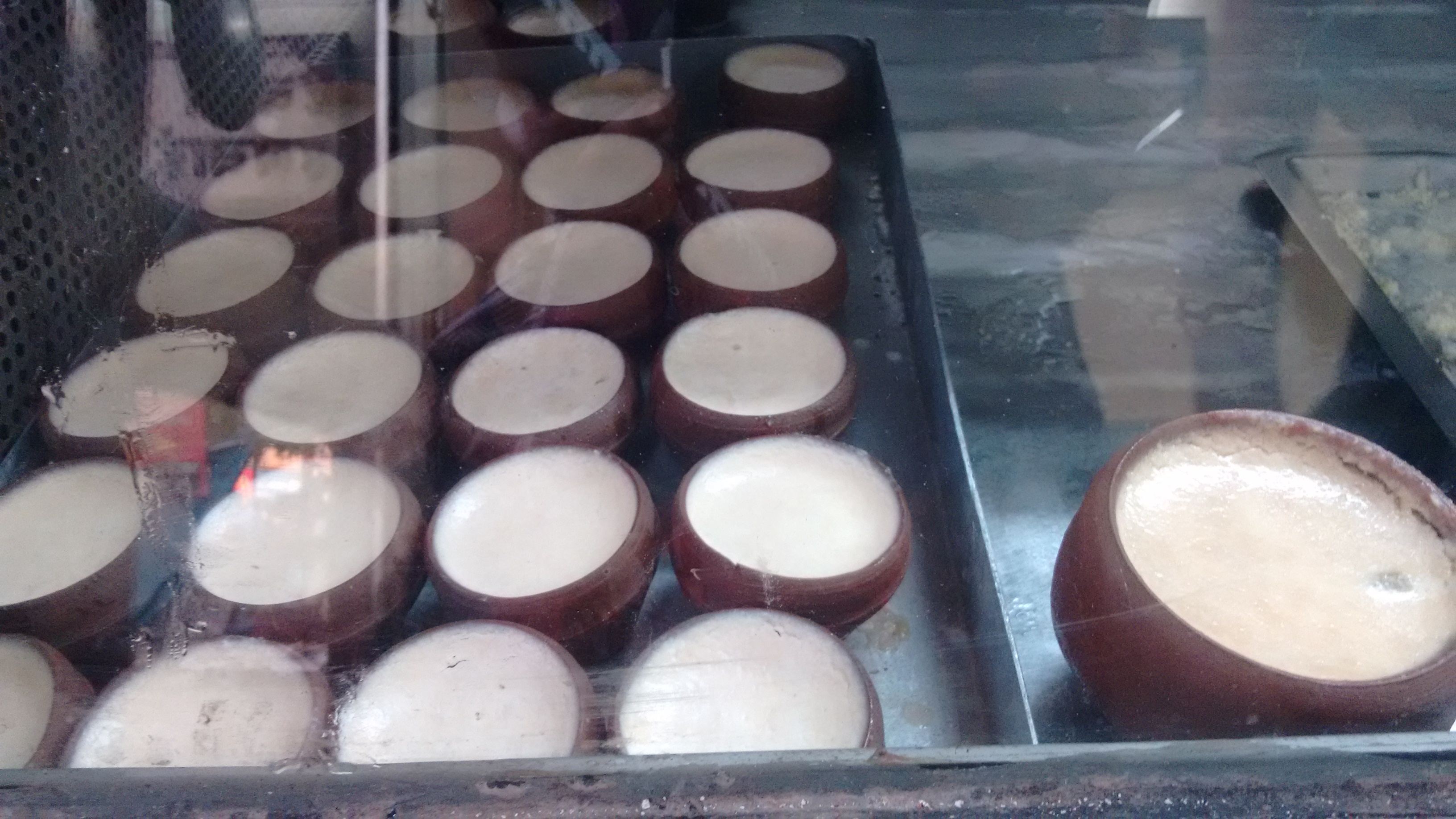
Bengal knows doi in two broad forms. Mishti doi, the sweet curd, is made from milk that is boiled until it thickens, sweetened with sugar or with gur (cane or date-palm molasses), and left to ferment overnight in earthenware, whose porous walls let water evaporate and help keep the culture at the right temperature. Tok doi is the plain, sour yoghurt, and it is tok doi that this recipe calls for. Sour yoghurt is a common base for savoury cooking across the subcontinent: doi maach, fish cooked in a yoghurt curry, is a well-known Bengali example, and dishes such as raita and kadhi elsewhere in South Asia also rest on curd.
In doi fulkopi the whisked sour yoghurt, seasoned with salt and two tablespoons of sugar, becomes the sauce in which the fried cauliflower and potatoes finish cooking.
Bogura's doi and the country's milk
In Bangladesh the name most tied to doi is Bogura. In June 2023 the Department of Patents, Designs and Trademarks, under the Ministry of Industries, issued geographical indication (GI) certificates to Bogura's yoghurt along with the Langra and Ashwina mangoes of Chapainawabganj and Sherpur's Tulshimala rice. The Business Standard reported on 5 July 2023 that the certificates were issued on 25 June, and that with them 15 Bangladeshi products, including Jamdani, Ilish and Rajshahi silk, had GI recognition.
The same report described Bogura as the country's "capital of yogurt", producing an average of 50 tonnes of yoghurt a day in about 400 factories of various sizes, with demand doubling during festivals such as Eid. The chairman of one of the district's established sweets and yoghurt makers told the paper that Bogura city and Sherpur upazila together sold at least one lakh pieces of yoghurt a day, worth Tk 1 crore.
All of it begins with milk. The Department of Livestock Services (DLS), in its summary Livestock Economy at a Glance 2024-2025, prepared in July 2025 from Bangladesh Bureau of Statistics (BBS) data and marked provisional, put the country's milk production in 2024-25 at 155.38 lakh tonnes, up from 150.44 lakh tonnes in 2023-24. It set the demand at 162.33 lakh tonnes, calculated at 250 millilitres per person per day, and the availability at 239.29 millilitres per person per day. The same summary put livestock's share of gross domestic product at 1.81 per cent at constant prices.
Cauliflower: from the Mediterranean to Bengal
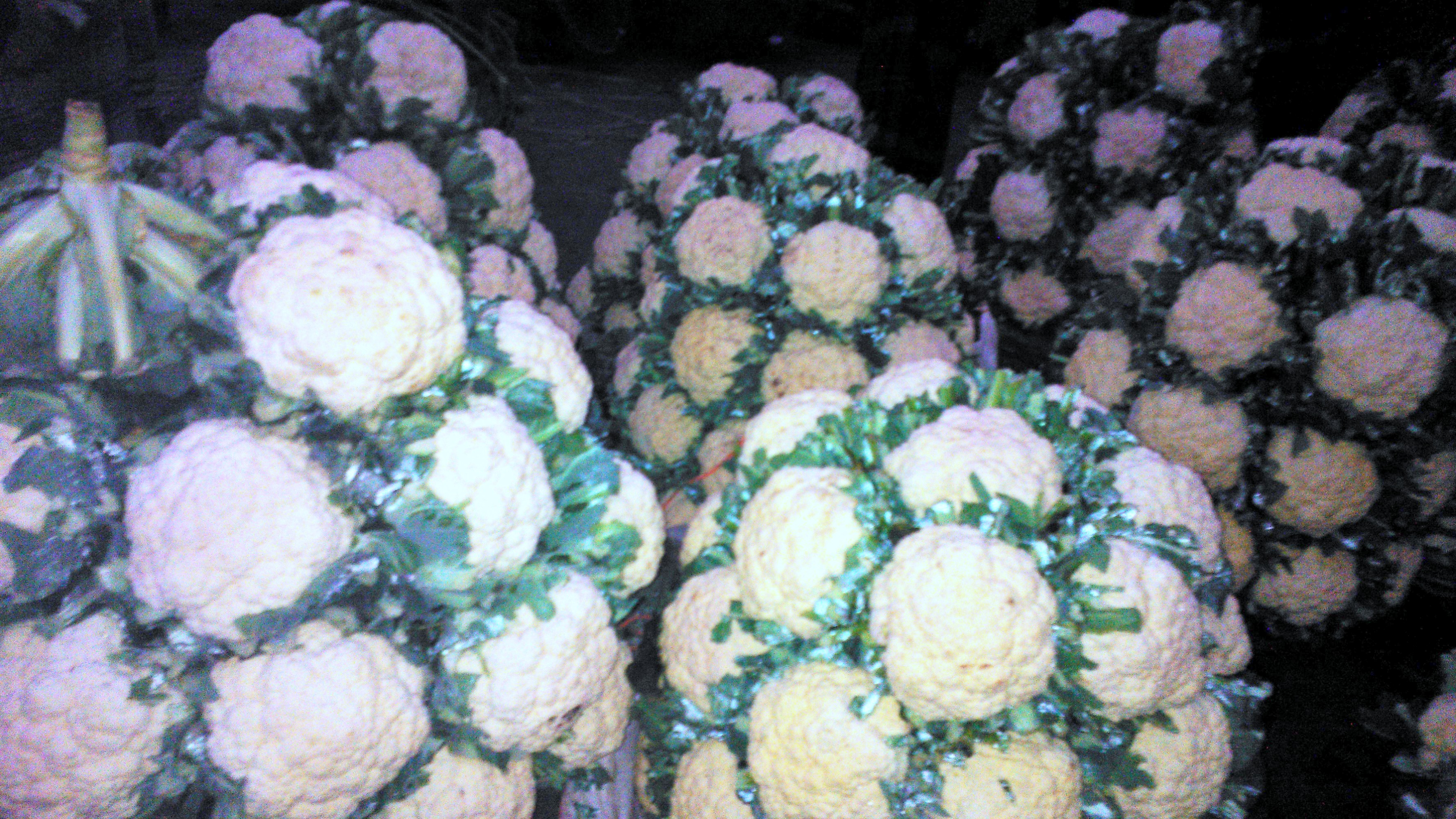
Cauliflower, fulkopi in Bengali, is one of several vegetables bred from the same wild species, Brassica oleracea, in the mustard family (Brassicaceae, also called Cruciferae). Banglapedia, the national encyclopedia of Bangladesh, describes it as a cultivated winter crop, Brassica oleracea var. botrytis, whose inflorescence forms a compact, fleshy head. That white head is made of tightly packed, immature flower buds, and it too is called the "curd"; usually only the head is eaten.
The vegetable is the product of selective breeding and most likely arose in the Mediterranean region. Its English name comes from the Italian cavolfiore, "cabbage flower", from the Latin caulis (cabbage) and flos (flower). In the Middle Ages it was associated with Cyprus, and it is thought to have reached Italy from Cyprus or the eastern Mediterranean coast around 1490, spreading to other European countries over the following centuries. The British introduced it to India in 1822.
Cauliflower is grouped into four broad types. The Asian type, a tropical cauliflower grown in India and China, was developed in India during the 19th century from a now-abandoned type, and includes old varieties named Early Benaras and Early Patna. Cauliflower is harder to grow than cabbage: it does best in moderate daytime temperatures of 21 to 29 degrees Celsius with plentiful sun and moist soil, and in Bangladesh it is grown as a winter crop.
Worldwide, cauliflower and broccoli together produced 26.5 million tonnes in 2023, led by China and India with 72 per cent of the total.
Varieties, season and the 2024-25 crop in Bangladesh
Banglapedia records three groups of cauliflower in Bangladeshi fields. Early varieties include Kartica, Patnai and Tropical-55; mid-season varieties include Agrahani, Poushali and Snowball; and late varieties include White Mountain, Maghi and Rakhusi Late. The Bangladesh Agricultural Research Institute (BARI) released a mid-season high-yielding variety named Rupa in 1998. Seedlings about 30 days old are best transplanted in October and November, and yields range from 25 to 30 tonnes per hectare.
Cauliflower output rose sharply in the 2024-25 fiscal year. According to crop statistics published by the BBS on Thursday, 18 December 2025, and reported the same day by The Business Standard, production went from 4,29,670 tonnes in 2023-24 to 5,79,344 tonnes in 2024-25. Its close relative cabbage rose from 4,50,023 tonnes to 6,36,009.86 tonnes in the same period, and onion, which this recipe also lists, from 29,17,354 tonnes to 32,21,437 tonnes.
December 2025: a glut at Sherpur's Fulbari market
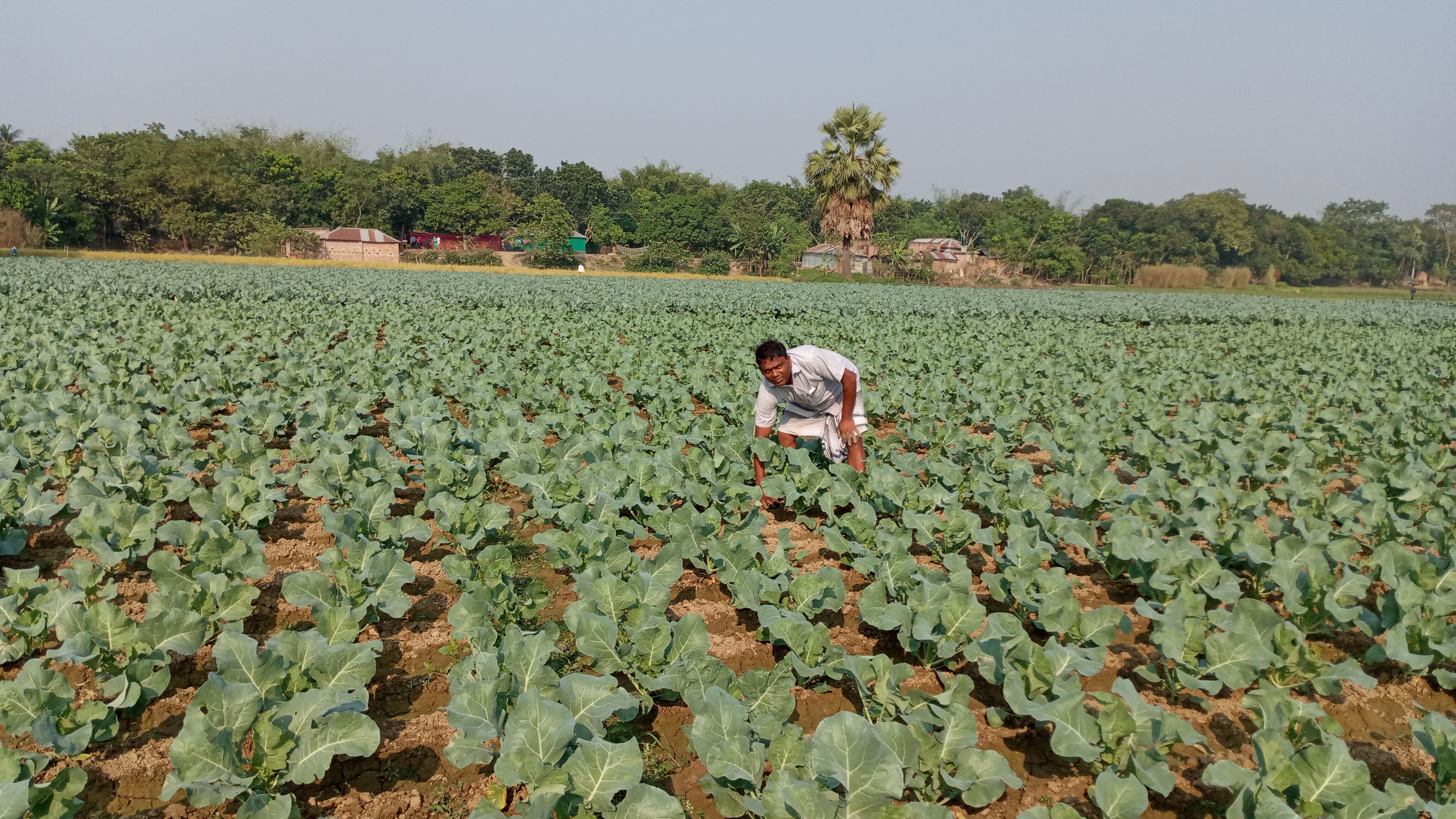
The recipe appeared as the new crop was reaching markets in quantity, and in some producing areas prices had fallen hard. Desh Rupantor reported on 21 December 2025 from Sherpur upazila in Bogura, the same upazila known for its doi, that cauliflower growers there faced heavy losses despite a good supply of winter vegetables. At Fulbari haat in Garidaha union, the upazila's largest wholesale market for fresh vegetables, cauliflower sold that Sunday at Tk 80 to 100 a maund (40 kilograms), which the paper said came to about Tk 2 a kilogram.
According to the upazila agriculture office, Garidaha, Khamarkandi, Mirzapur and Khanpur unions had grown cauliflower and other winter vegetables widely that season. Farmers told the paper that producing a kilogram of cauliflower had cost them at least Tk 5 to 7, with fertiliser, seed and pesticide all dearer, and that prices had been falling steadily for two weeks. One grower said a maund had fetched Tk 2,000 to 2,500 a month earlier, Tk 1,000 to 1,200 fifteen days earlier and Tk 700 to 800 a week earlier, before dropping to Tk 80 to 100 over the previous three days. The paper put the fall down to heavy arrivals, a shortage of buyers and the lack of any storage facility, which left farmers no choice but to sell fresh produce cheaply.
A wholesaler at the market said supply had for several days been far greater than demand, and the upazila agriculture extension officer said vegetable yields had been good that year and production had outstripped demand, bringing prices down somewhat.
Potatoes, mustard oil and the spices
The other vegetable in the pan, the potato, had an even larger crop behind it. The Financial Express reported on 15 August 2025 that, according to the BBS, potato production reached an all-time high of 11.57 million tonnes in 2024-25, up 9.17 per cent from 10.60 million tonnes in 2023-24, helped by 35,000 more hectares under the crop and favourable weather. The Department of Agricultural Marketing said prices had fallen to Tk 7 to 8 a kilogram during the 2025 harvest, after reaching an all-time high of Tk 75 to 85 a kilogram in retail markets in October and November 2024, a year in which the private sector imported 0.2 million tonnes of potatoes for the first time. The Bangladesh Cold Storage Association told the commerce ministry that potatoes were selling from cold stores at Tk 14 to 15 a kilogram.
Mustard oil is the recipe's cooking fat. Banglapedia notes that only a few decades ago mustard oil was the exclusive cooking oil in Bangladesh. Oil was traditionally pressed in a ghani, a grinding mill turned by a bullock, though electric mills now do most of the work. Mustard is a rabi (winter) crop grown in almost every district, with larger areas in Chattogram, Sylhet, Dhaka, Tangail, Jashore, Bogura, Sirajganj and Pabna, but home-grown oil meets only part of the country's needs, and soybean and sunflower oil are imported in large quantities. The BBS figures of December 2025 showed production of local and high-yielding mustard falling from 11.18 lakh tonnes in 2023-24 to 10.6 lakh tonnes in 2024-25.
The spices come from different parts of their plants. Banglapedia lists turmeric among the spices obtained from a rhizome, and cumin and chilli among those obtained from fruits. Turmeric, onion and red chilli are among the spices commonly cultivated in Bangladesh, while cumin is named among other common spices, many of which the country imports from India, Malaysia and Indonesia. In this recipe the whole cumin and dried chillies are fried first to flavour the oil, and the powdered spices are mixed with a little water before they go into the pan.
What the plate holds
The Food Composition Table for Bangladesh, compiled by the Institute of Nutrition and Food Science at the University of Dhaka, gives raw cauliflower 27 kilocalories (113 kilojoules) per 100 grams of the edible part, with 91.8 grams of water, 2.6 grams of protein, 0.3 grams of fat, 2.5 grams of available carbohydrate and 2.0 grams of dietary fibre. It gives the vegetable an edible-portion coefficient of 0.45, a measure of how much of the purchased weight, once the leaves and thick stalk are trimmed, is actually eaten. Boiled without salt, cauliflower is listed at 28 kilocalories with 2.7 grams of protein per 100 grams.
The United States Department of Agriculture's FoodData Central gives similar values for 100 grams of raw cauliflower: 25 kilocalories, 1.92 grams of protein, 2.0 grams of fibre, 48.2 milligrams of vitamin C, 57 micrograms of folate, 299 milligrams of potassium and 15.5 micrograms of vitamin K. For plain whole-milk yoghurt it lists, per 100 grams, 61 kilocalories, 3.47 grams of protein, 3.25 grams of fat and 121 milligrams of calcium. Cooking changes some of these values. The cabbage family's sulphur compounds called glucosinolates fall when cauliflower is boiled, while steaming, microwaving and stir-frying have been found to have no significant effect on them.
The World Health Organization's fact sheet on a healthy diet advises adults to eat at least 400 grams, or five portions, of fruit and vegetables a day. Potatoes, sweet potatoes, cassava and other starchy roots do not count towards that figure, so in this dish it is the cauliflower and onion, not the potatoes, that count.
The same guidance limits free sugars to less than 10 per cent of total energy intake, equivalent to about 50 grams, or 12 level teaspoons, for an adult of healthy weight eating about 2,000 kilocalories a day, with less than 5 per cent suggested for further health benefits. Free sugars include sugar added by the cook, so the two tablespoons in this recipe count towards the limit. The WHO also advises keeping salt below 5 grams a day, about one teaspoon, and keeping saturated fat below 10 per cent of energy intake. People with diabetes, high blood pressure or kidney disease, or anyone on a special diet, should ask their doctor or a registered dietitian how much sugar, salt and oil suits them, and can reduce the sugar and salt in the recipe accordingly.
Cooking and keeping it safely
The WHO's Five Keys to Safer Food set out the basic rules for a home kitchen: keep hands, surfaces and utensils clean; keep raw and cooked food apart; cook food thoroughly; keep food at safe temperatures; and use safe water and raw materials, including washing fruit and vegetables, especially if they are eaten raw.
For a yoghurt curry made ahead, the temperature rule matters most. The WHO advises not leaving cooked food at room temperature for more than two hours, refrigerating cooked and perishable food promptly, preferably below 5 degrees Celsius, and keeping food piping hot, above 60 degrees Celsius, before serving. Leftover doi fulkopi should therefore be cooled and refrigerated soon after the meal and reheated until it is steaming hot all the way through.
Photo: Hrishikes / Wikimedia Commons (CC BY-SA 4.0)
Sources: Jagonews24, The Business Standard, Desh Rupantor, The Financial Express, Banglapedia, Department of Livestock Services (DLS), Bangladesh Bureau of Statistics (BBS), Institute of Nutrition and Food Science (University of Dhaka), USDA FoodData Central, World Health Organization (WHO), Wikipedia


Comments
(0)