
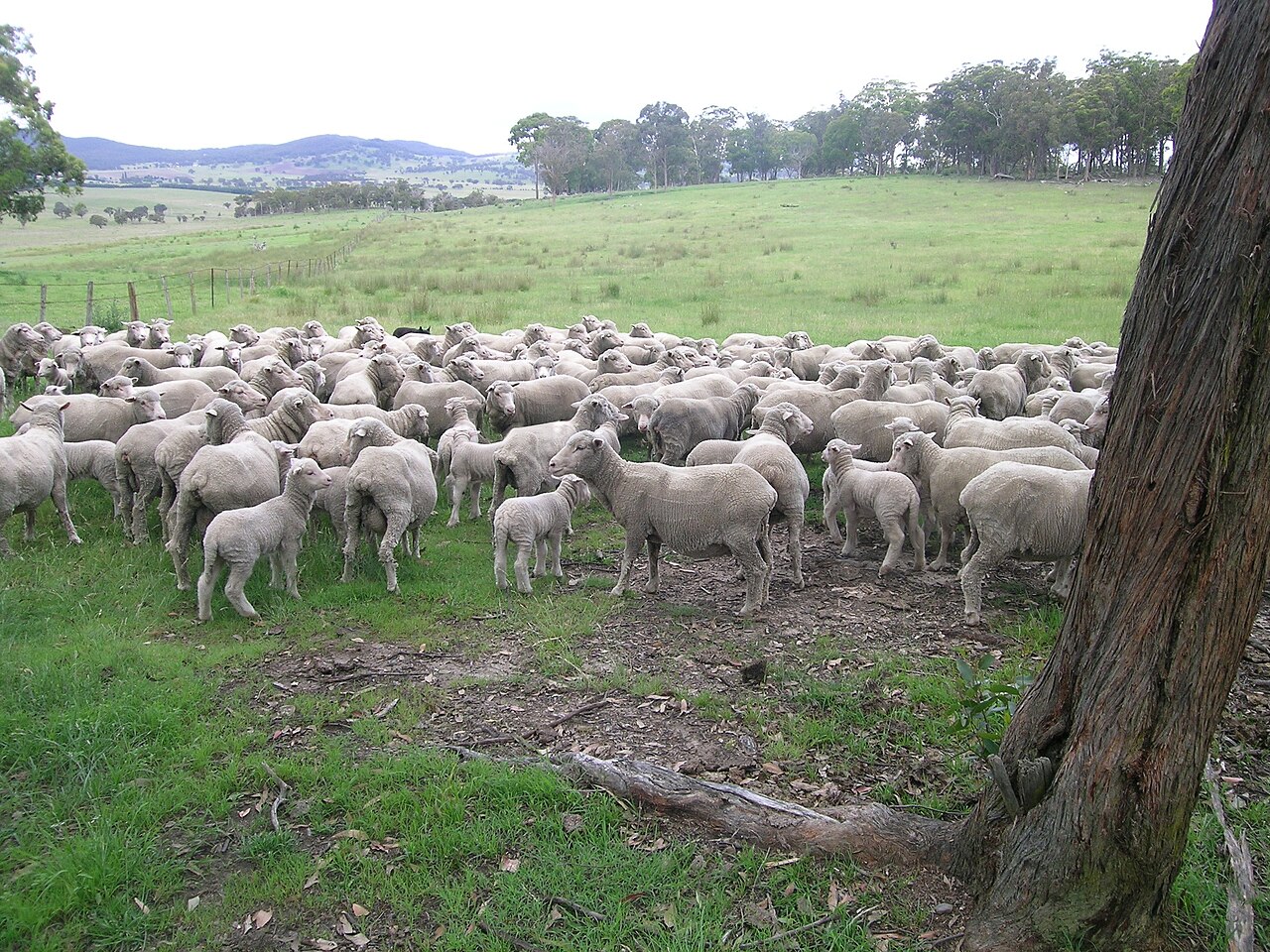
Breeders at the World Dohne Merino Conference, held at the Arabella Hotel near Kleinmond in the Western Cape, heard four speakers ask one practical question: are breeding and production decisions on the farm delivering what buyers of lamb and wool actually want?
Dalena White, secretary-general of the International Wool Textile Organisation (IWTO), said wool competes with a throwaway clothing culture in which the average garment is worn seven to ten times before it is discarded, and global clothing and textile production doubled in the first 15 years of this century. Wool's case is a durable, renewable fibre that biodegrades, but she argued that the tools retailers use to compare fibres, the EU's Ecobalyse method and the Higg Materials Sustainability Index, "treat a sheep as a machine", counting its emissions without crediting the natural carbon cycle, while synthetics get a much lighter allocation and microplastic pollution is not counted properly. IWTO published its Green Book in June 2026, and further farm studies are expected to report in early 2027.
Prof Johann Kirsten, director of the Bureau for Economic Research at Stellenbosch University, described how Karoo Lamb became a geographical indication tied to the region's grazing bushes. In a survey of 355 consumers, 93.8% linked Karoo Lamb with animals raised in the Karoo and 88.5% knew that the bushes give it its taste. That recognition has not yet produced a consistent premium for farmers, although some specialist butchers pay more and an early retail trial found labelled Karoo Lamb outsold its rival despite a higher price.
Prof Louw Hoffman of the University of Queensland said carcass weight, fat cover and conformation do not predict tenderness or flavour. In Australia, selecting for leaner, heavier carcasses cut marbling: research on 1,471 lambs linked deeper eye muscle with lower consumer scores. DEXA X-ray scanning can now estimate lean, fat and bone for each carcass, but a 2016 plan for an A$150 million rollout to up to 90 plants stalled over who should pay, and only seven lamb abattoirs had DEXA by 2025. In 2024/25, 99.5% of lambs presented to Meat Standards Australia met its minimum, yet only 4.8% of the national lamb slaughter followed the full pathway, because most payment grids do not reward eating quality.
Dan Kriek, general manager of the National Wool Growers' Association, pointed breeders to more than 45,000 communal farmers with an estimated two to three million sheep. "A ram is also a product," he said. In the figures he presented, improved rams gave 2.14kg of clean wool per fleece against 1.64kg from communal rams, at 18.4 microns instead of 20, lifting clean wool income from R60.09 to R92.67 a fleece, a 54% rise. Financing ram purchases remains the constraint, and he asked breeders to supply rams and mentor developing breeders through the Eastern Cape Stud Breeding Project.
The report was written by Glenneis Kriel for Farmers Weekly South Africa.
Photo: Cgoodwin / Wikimedia Commons (CC BY-SA 3.0)
Source: Farmers Weekly South Africa

Comments
(0)