
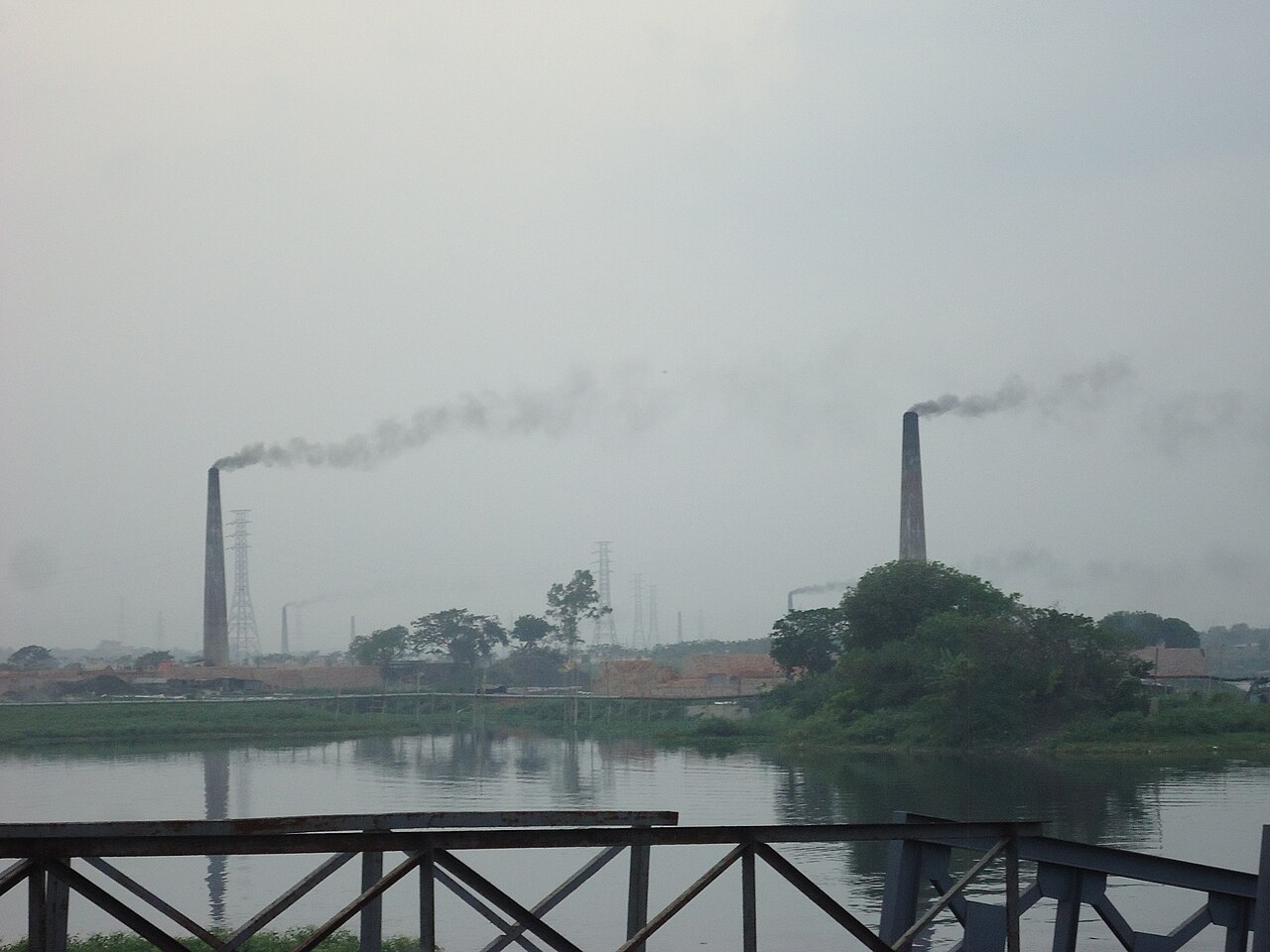
Avijatrik Foundation is to install air pollution monitors at eight sites in Dhaka to learn how polluted the city's poorer neighbourhoods are and how that affects the people living there. The project, Breathing Dhaka, was launched on Tuesday at the Department of Environment's seminar hall in Agargaon.
Technical support comes from the Centre for Atmospheric Pollution Studies (CAPS) at Stamford University, with the Department of Environment as a partner. Funding comes from the Air Quality Fund 2026 of the Energy Policy Institute at the University of Chicago.
The monitors will stand in Kamarpara in the Turag area, Uttarkhan, Korail, Sipahibagh in Khilgaon, Hazaribagh, Bhatara, Kamrangirchar and Keraniganj. Testing finishes in November, installation starts in December and readings will run for 18 months.
Professor Ahmad Kamruzzaman Majumder, founder and chairman of CAPS, said air measurement had so far concentrated on road junctions. For the first time, he said, sites were being chosen for the public health of poor communities, to show the sources of pollution there and its effect on people's health.
Md Lutfur Rahman, director general of the Department of Environment, said such work would supply the data and evidence needed for effective action. Mohammad Abdul Motalib, a deputy director of the department, stressed proper calibration, checking of the data and the involvement of local people.
Photo: Mirza Khalid / Wikimedia Commons (CC BY-SA 4.0)
Source: Prothom Alo



Comments
(0)