
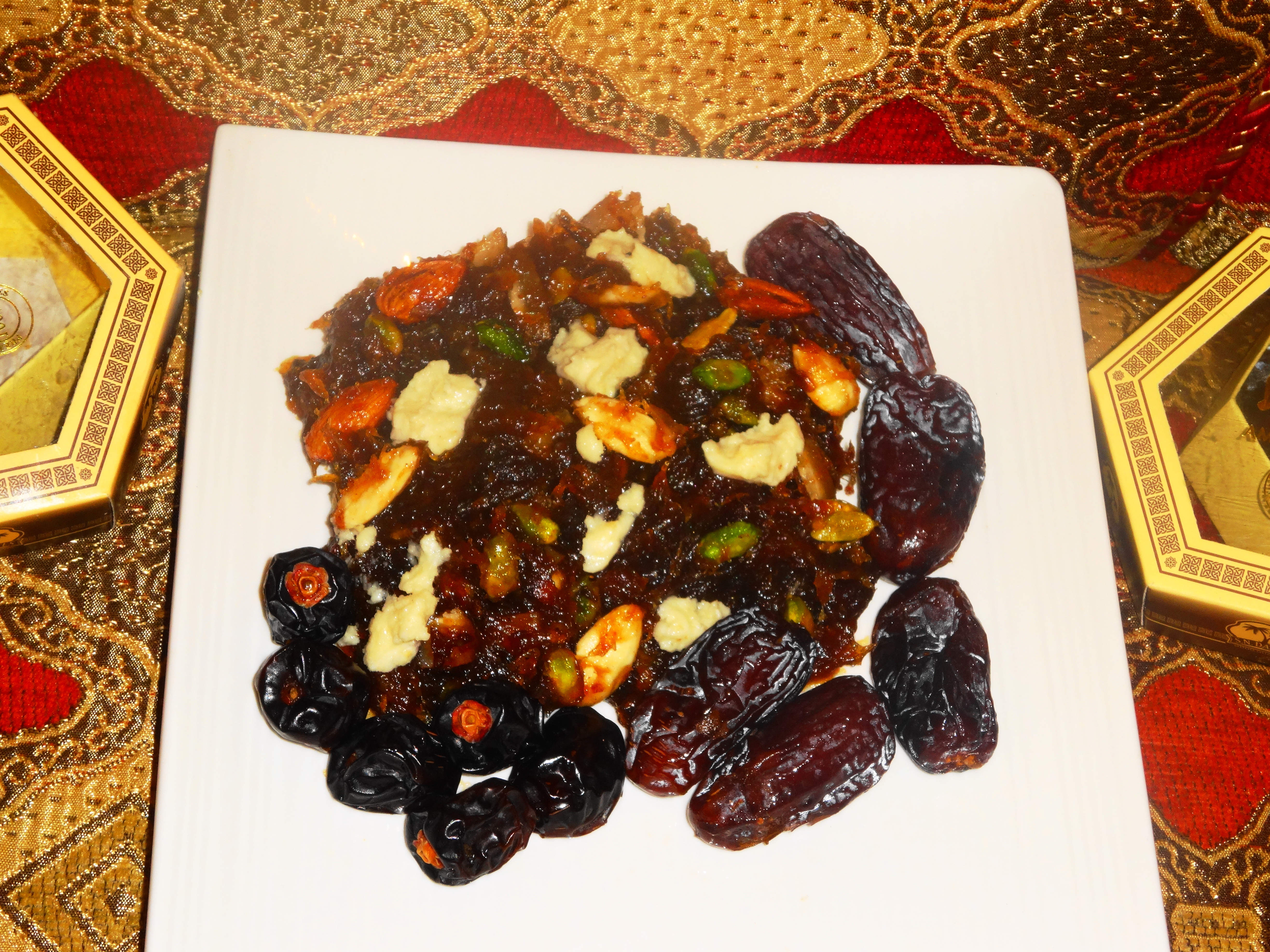
On 2 February 2026, the day before Shab-e-Barat, the lifestyle desk of the Bangladeshi news site Jagonews24 published a short recipe for date halwa (khejur halwa), a soft sweet made from dates cooked down with ghee. The piece ran in the site's Shab-e-Barat special series, alongside recipes for chickpea-lentil (chholar dal) halwa and bottle gourd (lau) halwa, and it promised a soft, smooth halwa that keeps the flavour and the nourishment of the dates.
Lovers of sweets in Bangladesh are very fond of the taste of dates, the recipe noted, and a plate of date halwa with a cup of tea at an evening gathering or on a festive day is a simple pleasure. The method needs five ingredients, a pan and a blender. It is set out below as Jagonews24 published it, followed by background on the festival it was written for, on halwa itself, on the date palm and its fruit, on the date market before Ramadan, and on what health authorities say about sugar and fat in sweets of this kind.
Ingredients
The recipe lists five ingredients. It does not give a number of servings, and the quantities are measured in cups and spoons, as is usual in home cooking in Bangladesh.
- Dates: 2 cups
- Sugar: 1 tablespoon
- Ghee: 2 tablespoons
- Raisins and nuts: 2 tablespoons
- Rose water: 1 teaspoon
The added sugar is small next to the dates: the sweetness of the dish comes mostly from the fruit itself. The recipe does not name a variety of date or a particular nut, and leaves that choice to the cook.
Method, step by step
- Remove the stones from the dates, then boil the dates.
- Blend the boiled dates into a paste.
- Put all the ingredients together in a pan on the stove and keep stirring, taking care that the mixture does not stick to the bottom of the pan.
- When the water has dried off, add the rose water, stir for a few more minutes and turn off the heat.
- The date halwa is ready to serve.
These steps match the way other Bangladeshi newspapers have described cooking dates into a sweet paste. A Shab-e-Barat recipe for date rolls that Desh Rupantor published on 8 February 2025 has the cook wash and stone the dates, blend them, fry chopped nuts lightly in ghee, then add the blended dates and keep stirring until the mixture firms up and comes away from the sides of the pan. That moment, when the paste no longer clings to the pan, is the practical sign that the water has cooked off.
Constant stirring matters because a thick, sugary paste catches easily on the bottom of a pan, and Jagonews24's recipe makes this its one warning. The rose water goes in at the end, once the moisture has gone. Rose water is a flavoured water made from rose petals, often as a by-product of distilling rose oil, and in South Asian cooking it is a common ingredient in sweets such as laddu, gulab jamun and peda and in milk dishes such as rice pudding.
Shab-e-Barat and the custom of halwa and ruti
Shab-e-Barat is observed on the night of 15 Shaban, the eighth month of the Hijri calendar. Banglapedia, the national encyclopedia of Bangladesh, explains that the Persian name joins shab, night, and barat, which it renders as commission or assignment, and that the night is known in Arabic as Lailatul Bara'at. In the subcontinent it is observed as a night of good fortune. Many Muslims go to the mosque to pray through the night, and many fast during the day, which Banglapedia notes is optional.
In 2026 the date depended on the moon. On 19 January the National Moon Sighting Committee, meeting at the Islamic Foundation's conference room at the Baitul Mukarram National Mosque in Dhaka with the religious affairs secretary in the chair, said the moon of Shaban 1447 Hijri had not been seen anywhere over Bangladesh. Rajab therefore ran to 30 days, Shaban began on 21 January, and Shab-e-Barat was set for the night of Tuesday, 3 February, Prothom Alo reported. The committee decided after reviewing reports from all district administrations, the Islamic Foundation's head, divisional and district offices, the Bangladesh Meteorological Department and the Space Research and Remote Sensing Organisation (SPARRSO). The government's holiday list for 2026, issued on 9 November 2025, had already scheduled a Shab-e-Barat holiday by executive order on 4 February, subject to the sighting of the moon.
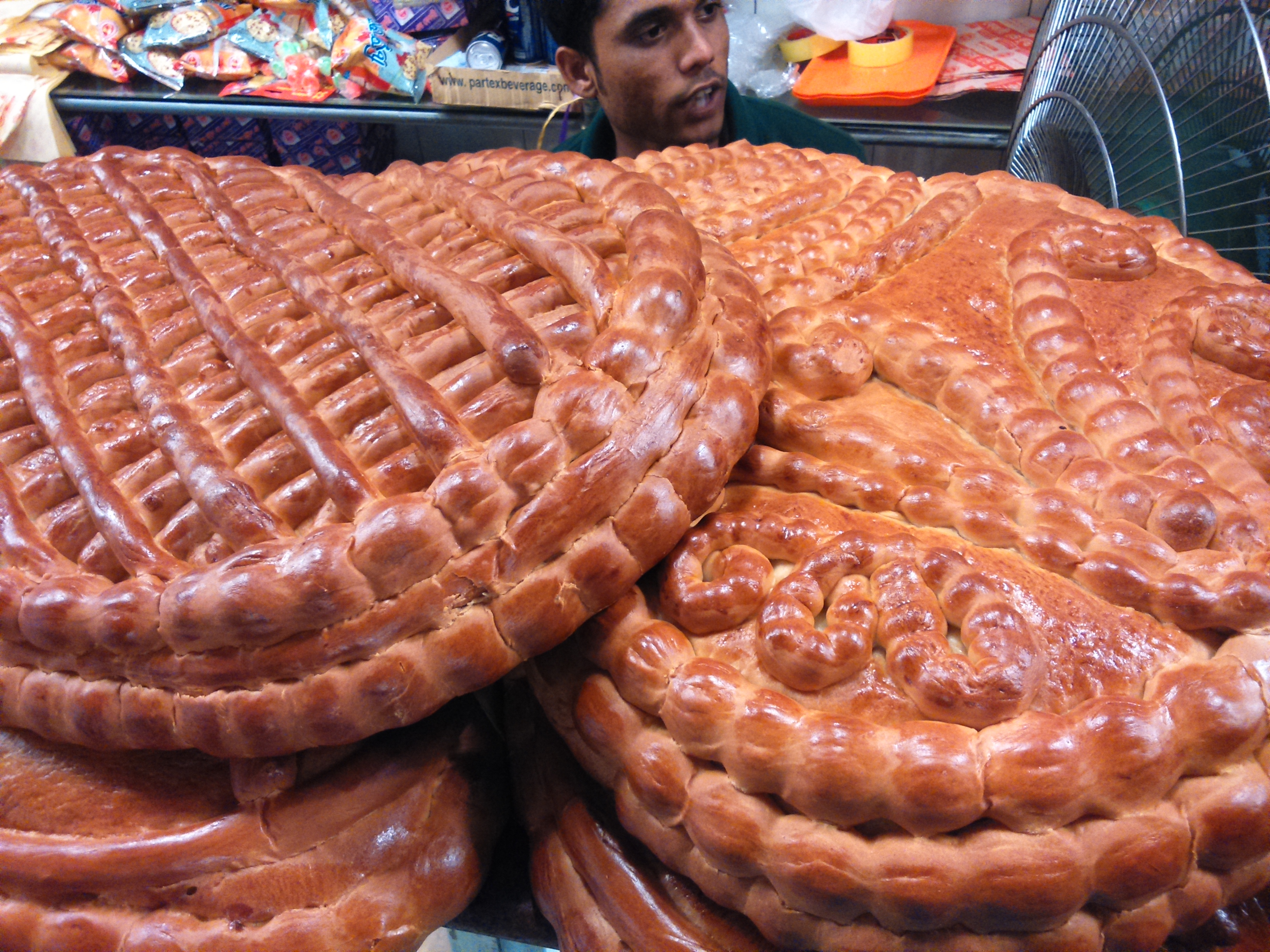
Food is a large part of how the night is kept in Bangladesh. Banglapedia records that people prepare breads and various kinds of sweetmeats and give them to neighbours and to the poor. A Daily Star feature on Old Dhaka, published in June 2015, described roti and halwa as the traditional meal of Shab-e-Barat, sent door to door among neighbours and relatives and, by a common custom, to the homes of in-laws. The old town's bakeries sold egg, semolina (suji), chickpea (boot) and neseshta halwa as well as carrot halwa, and bread shaped like a fish was described as an age-old part of the celebration; sales began a day before the night itself.
Date halwa belongs to the same family of home-made festive sweets, but it starts from a different base. Semolina and chickpea halwa begin with a grain or a pulse cooked in fat and sweetened with sugar; date halwa begins with a fruit that is already sweet, which is why the Jagonews24 recipe calls for only one tablespoon of sugar.
What halwa is
Halwa, also written halva or halua, is the name of a broad family of dense sweets found from North Africa and the Balkans through West and Central Asia to South Asia. According to encyclopedic references, the word reached English through Ottoman Turkish and Persian from Arabic, from a root, ḥ-l-w, that means sweet. The same references record that in the seventh century, in the Arabian Peninsula, the word denoted a paste of dates kneaded with milk, and that by the ninth century it was applied to many kinds of sweets, including the now familiar cooked semolina or flour paste. The first full recipes appear in the thirteenth-century Arabic cookbook Kitab al-Tabikh (The Book of Dishes).
Most halwa is made by cooking a base in fat and sweetening it. Grain-based halwa is made by toasting flour or semolina in oil or butter and then cooking it with sugar and water or milk; semolina halwa, shujir halua, is the Bangladeshi example most encyclopedias name. Sesame halwa, made from tahini with sugar or honey, is the version best known around the Mediterranean. Its texture is drier and more crumbly than the soft, spoonable halwa of Bengal.
In Bengal, sweets have long been part of social and religious life. Banglapedia's entry on sweetmeats notes that Bengalis traditionally share sweets with neighbours and relatives at births, engagements, weddings and examination results, and that raisins, cashew nuts, cardamom and cassia leaves are among the flavourings used, the same kind of garnish that the date halwa recipe uses. The encyclopedia also records that in earlier times Bengalis entertained guests with gud, unrefined sugar boiled down from the juice of sugarcane, palmyra palm or date palm, and made many home sweets by mixing gud with coconut, flattened rice or puffed rice.
The date palm and its fruit
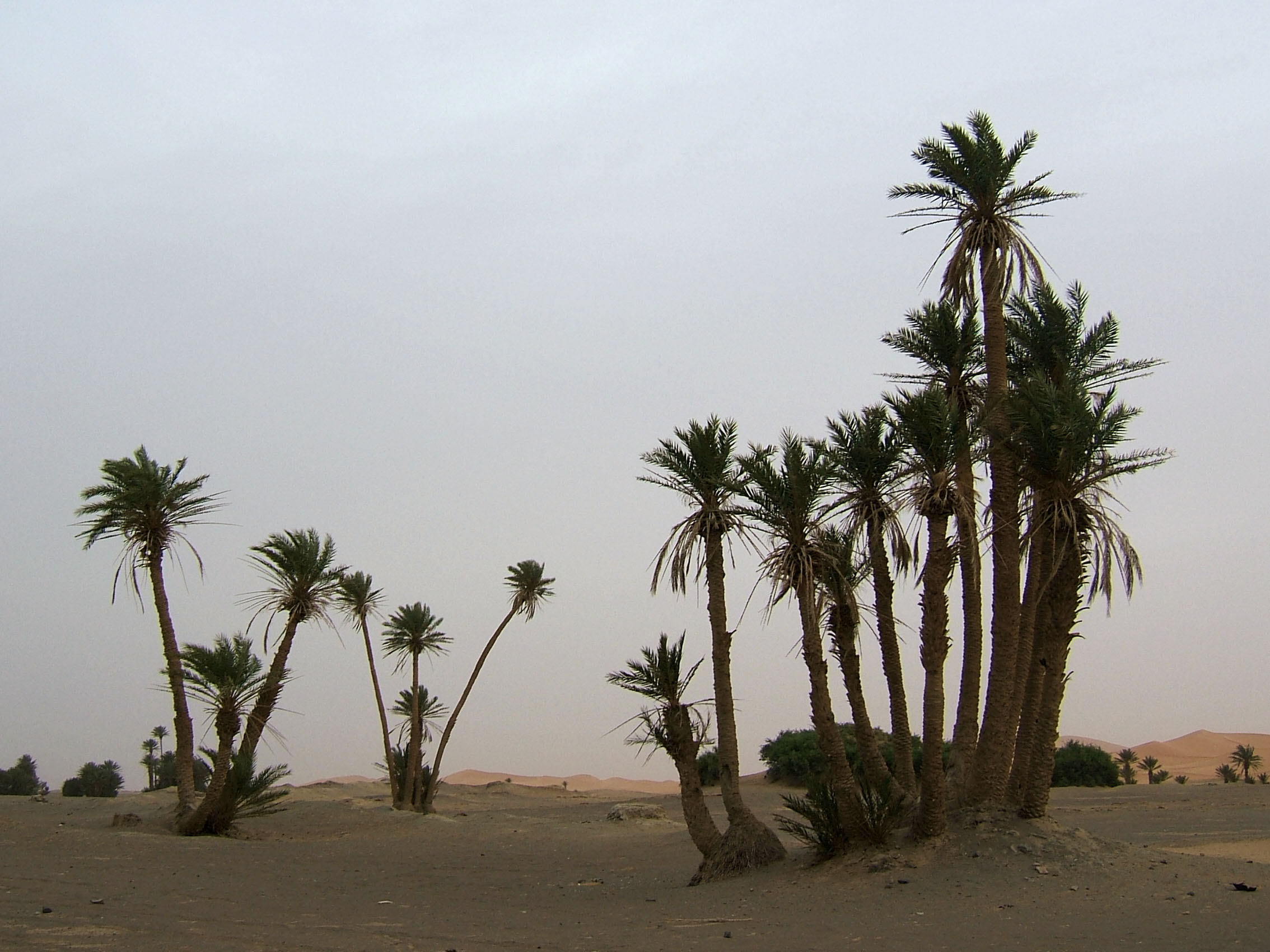
The dried dates used for halwa come from the date palm, Phoenix dactylifera. The Food and Agriculture Organization of the United Nations (FAO), in its handbook Date Palm Cultivation (Plant Production and Protection Paper 156, 2002), explains that the species name comes from the Greek daktulos, a finger, describing the shape of the fruit. FAO calls the date palm probably the most ancient cultivated tree in the world: it was certainly grown by 4000 BC, when its wood was used to build a temple near Ur in southern Iraq.
At the time of that publication FAO put the world total at about 100 million date palms in 30 countries, producing between 2.5 and 4 million tons of fruit a year. Asia had about 60 million palms and Africa 32.5 million. Iraq led with 22 million palms, followed by Iran with 21 million and Saudi Arabia with 12 million, then Algeria with 9 million and Egypt and Libya with 7 million each. The palm grows from 392 metres below sea level, at the Dead Sea, to 1,500 metres above it.
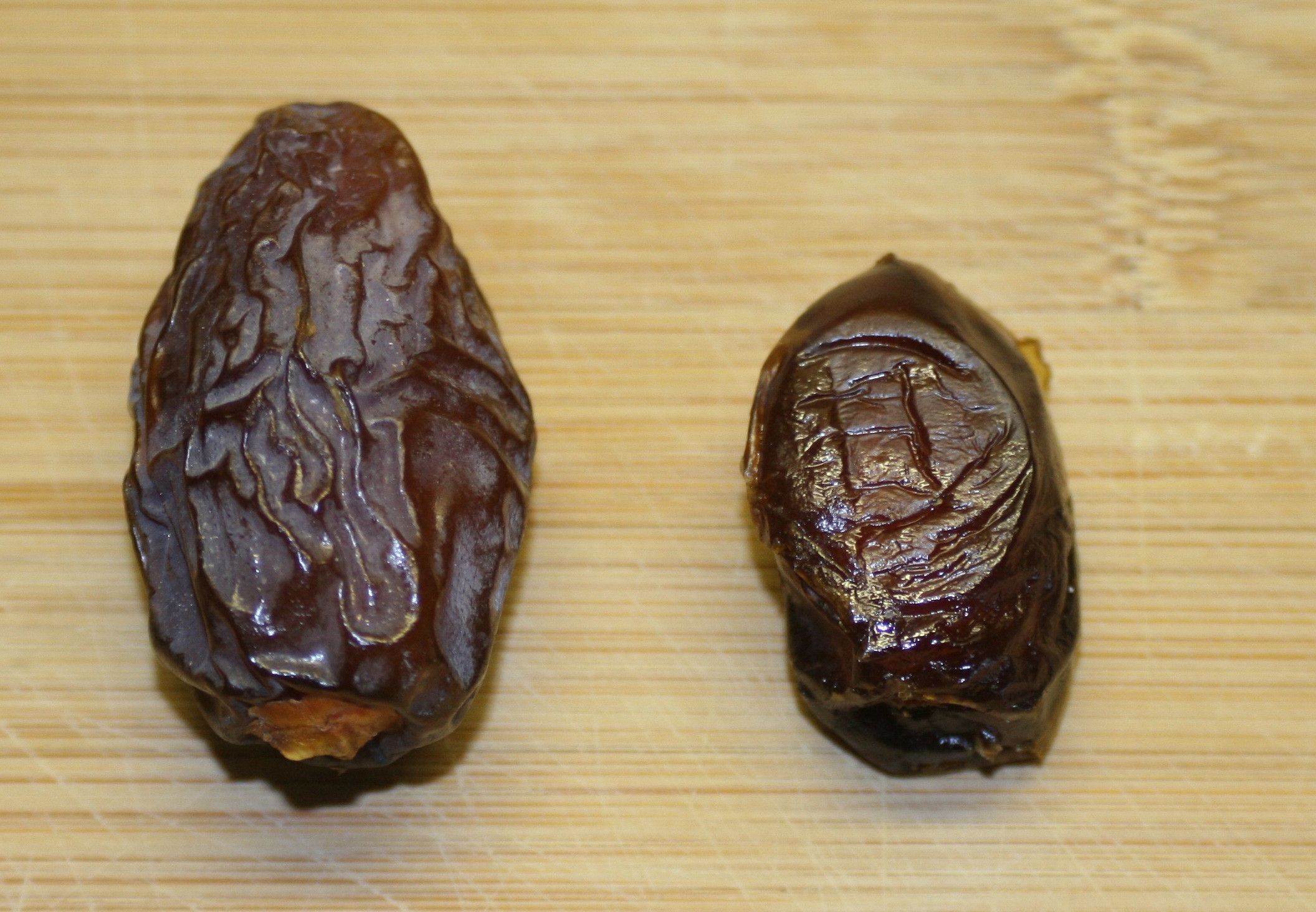
Dates are picked at different stages of ripeness, and the stage decides how the fruit is sold. FAO describes three. At khalal the fruit is physiologically mature, hard and crisp, bright yellow or red, and holds 50 to 85 percent moisture. At rutab it is partly browned and softened, with 30 to 45 percent moisture. At tamar it is amber to dark brown and its moisture has fallen below 25 percent, down to 10 percent or less. Khalal and rutab dates are perishable. Tamar dates, protected from insects, keep for long periods without special care, which makes them the dried dates sold year-round and used for cakes, sauces, date paste and other products. Deglet Nour and Medjool are major varieties harvested at the rutab stage.
FAO also notes that much of the crop, especially tamar fruit, is marketed throughout the year and sometimes even after a year has passed, partly because demand rises when the Muslim fasting month of Ramadan falls close to the harvest. Its list of date products includes whole pitted dates, date paste, date jams and preserves, sweets and date desserts: the family to which a home-made date halwa belongs.
Bangladesh's own date palm and the risk of raw sap
The khejur tree of the Bangladeshi countryside is a different species. Banglapedia names it the wild date palm, Phoenix sylvestris, a palm valued less for its fruit than for its sap; its fruits, the encyclopedia says, are minor but popular. Encyclopedic references describe the species as native to southern Pakistan, most of India, Nepal, Bhutan, Myanmar and Bangladesh, a tree of 4 to 15 metres with a single-seeded fruit that ripens to a purple-red colour.
Banglapedia describes how gachhis, the sap collectors, tap the trees from mid-November to mid-March by shaving the soft top of the trunk and letting the sap drip overnight through a narrow bamboo pipe into a pitcher. The sap is collected in six-day cycles. The first night's juice, called jiran, is the best in sweetness and quantity; the second night's, doket, comes next; the third night's, jhara, is the weakest, and the tree then rests for three days. A healthy tree gives about six litres of juice a day, with the best yields in December and January. Boiled down, the juice becomes date gud: Jessore's khejur gud and the hazari gud of Madaripur are famous. Date trees start bearing fruit at about seven years and continue for 30 to 40 years, and about 100 trees can be planted on a bigha of land.
Raw date palm sap carries a serious risk. The World Health Organization's Nipah virus fact sheet, updated on 29 January 2026, says people can be infected by eating fruits or fruit products, such as raw date palm juice, contaminated by infected fruit bats. Nipah outbreaks have been reported in Bangladesh almost every year since 2001, and WHO estimates the case fatality rate at 40 to 75 percent. WHO advises keeping bats away from sap collection sites, for example with protective coverings, and boiling freshly collected date palm juice. Do not drink raw date palm sap. The halwa in this recipe is made from the dried fruit, boiled and then cooked, not from sap.
Dates in the market before Ramadan 2026
Shab-e-Barat in 2026 came about two weeks before Ramadan, which The Daily Star, in a report published on 28 January 2026, said was due to begin in the third week of February. During the fasting month, the paper noted, demand usually rises for several foods, among them lentils, edible oil, chickpeas, onions, ginger, dates and sugar.
The paper reported that, according to National Board of Revenue data, traders had imported more of these Ramadan foods in the first six months of the 2025-26 fiscal year than in the same period a year earlier. A fruit importer in Dhaka told the paper that date imports were progressing smoothly, helped by lower import duties and better availability of dollars than in the previous year. He said opening letters of credit had not been a major difficulty, although higher dollar-related costs still affected import bills, and he expected date prices to fall by an average of Tk 30 to Tk 35 a kilogram across varieties. The commerce ministry said in the same report that price movements of import-dependent essentials remained limited.
What dates contain
FAO describes dates as very nutritious and energy-giving. Its handbook says dates give more than 3,000 calories per kilogram, against 970 for bananas and 480 for oranges. The fruit is about 70 percent carbohydrate, mostly sugars, and holds 15 to 30 percent water depending on the variety and its ripeness. The flesh contains 60 to 65 percent sugar, about 2.5 percent fibre, 2 percent protein and less than 2 percent each of fat, minerals and pectin. In most varieties the sugar is almost entirely glucose and fructose; Deglet Noor is an exception, with about half its sugar as sucrose. FAO lists dates as a good source of iron, potassium and calcium, very low in sodium at about 1 mg per 100 g, with about 3 mg of iron per 100 g.
A review of more than 80 studies by M. A. Al-Farsi and C. Y. Lee of Cornell University, published in Critical Reviews in Food Science and Nutrition in 2008, reached similar conclusions with somewhat different figures, as varieties and methods differ. It found date flesh low in fat and protein but rich in sugars, mainly fructose and glucose, with 100 g of flesh giving an average of 314 kcal. It reported dietary fibre of 8.0 g per 100 g, mostly insoluble; selenium, copper, potassium and magnesium as the major minerals; B-complex vitamins and vitamin C as the main vitamins; and carotenoids and phenolics as the main antioxidants.
The other ingredients add flavour and fat rather than bulk. Ghee is clarified butter; the World Health Organization's healthy diet guidance lists ghee alongside butter, lard, cream, cheese and palm and coconut oil as sources of saturated fat. Raisins are dried grapes, and the NHS in England counts about 30 g of dried fruit, roughly one heaped tablespoon of raisins, as one portion of fruit.
Sugar, fat and diabetes: what health authorities advise
The World Health Organization's healthy diet fact sheet, updated on 26 January 2026, recommends limiting free sugars to less than 10 percent of total energy intake, which it equates to 50 g, or about 12 level teaspoons, for a person of healthy body weight eating about 2,000 calories a day; cutting further, to 5 percent or less, may bring added benefits. Free sugars, in WHO's definition, are sugars added to foods and drinks by the manufacturer, the cook or the consumer, plus the sugars naturally present in honey, syrups, fruit juices and fruit juice concentrates. The same guidance advises that saturated fat provide no more than 10 percent of total energy.
The NHS explains that sugar found naturally in whole fruit does not count as free sugar, but that sugar in fruit is counted as free sugar once the fruit is juiced or puréed. By that measure the blended date paste at the heart of date halwa, together with the tablespoon of added sugar, counts as free sugar. The NHS advises that adults have no more than 30 g of free sugars a day, children aged 7 to 10 no more than 24 g and children aged 4 to 6 no more than 19 g. It also warns that dried fruit can be high in sugar and bad for the teeth, and that it is best eaten as part of a meal, as a dessert, rather than as a snack between meals.
Dates are sometimes described as suitable for people with diabetes because of research on their glycaemic index. A study by C. J. Miller, E. V. Dunn and I. B. Hashim at United Arab Emirates University, published in the European Journal of Clinical Nutrition in 2003, measured the glycaemic index of Khalas dates in healthy volunteers and found values of 47.2 for rutab dates, 45.3 for traditionally stored dates and 35.5 for commercial tamar dates, which the authors called low. That was a small study of one variety, eaten plain or with yoghurt; it did not test a cooked sweet made with ghee and added sugar.
Diabetes is common. WHO's diabetes fact sheet, dated 14 November 2024, says the number of people living with the disease rose from 200 million in 1990 to 830 million in 2022, when 14 percent of adults aged 18 and over were living with it. WHO adds that diabetes can be treated, and its consequences avoided or delayed, with diet, physical activity, medication and regular screening. People with diabetes, or with any condition for which they follow a special diet, should ask their doctor or dietitian whether, and how much, date halwa fits their plan before serving it at a festive table.
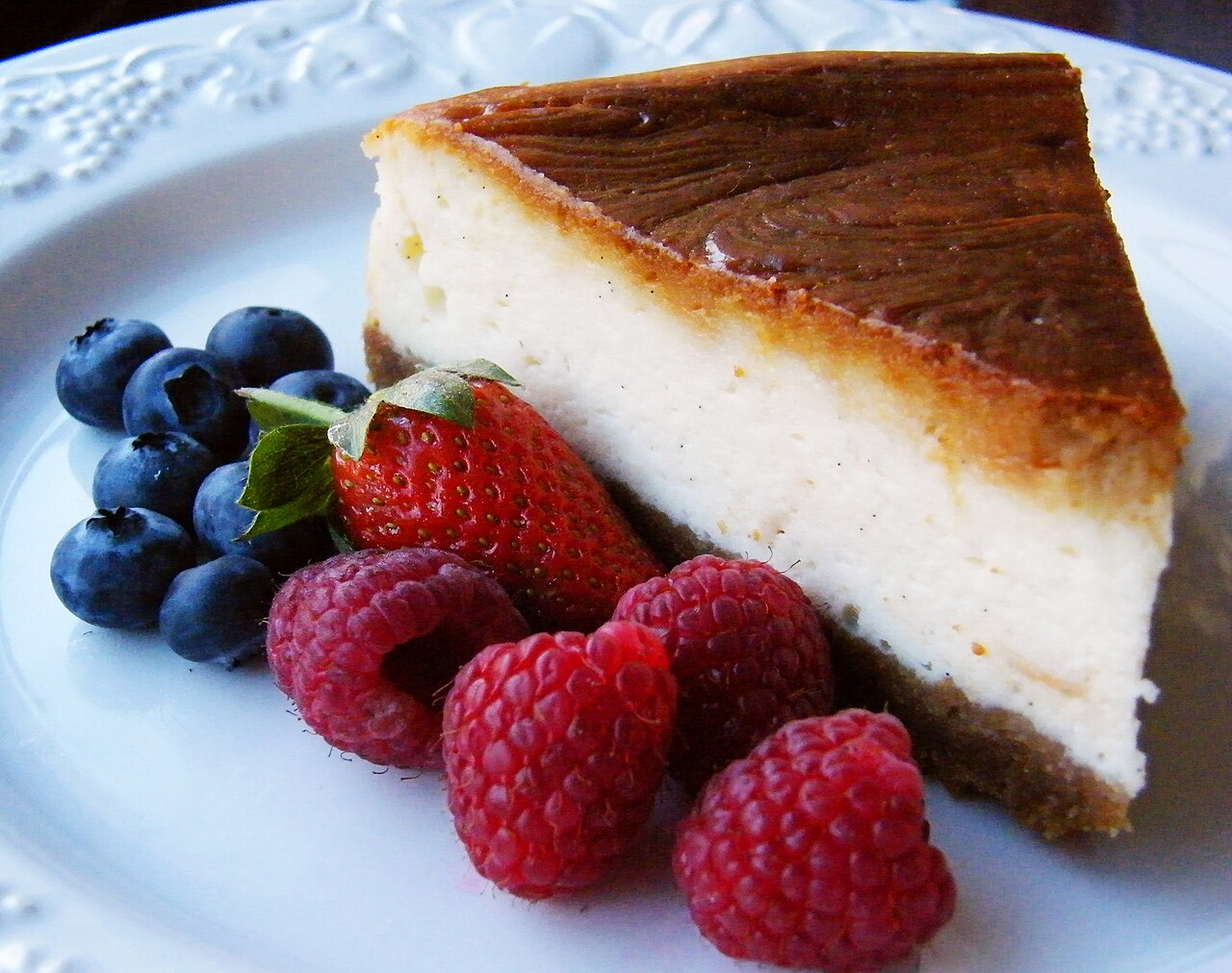
Photo: Miansari66 / Wikimedia Commons (CC0)
Sources: Jagonews24, Prothom Alo, The Daily Star, Desh Rupantor, Banglapedia, Food and Agriculture Organization of the United Nations (Date Palm Cultivation, 2002), World Health Organization, NHS, Critical Reviews in Food Science and Nutrition (Al-Farsi and Lee, 2008), European Journal of Clinical Nutrition (Miller, Dunn and Hashim, 2003), Wikipedia (Halva, Rose water, Phoenix sylvestris)
Comments
(0)