
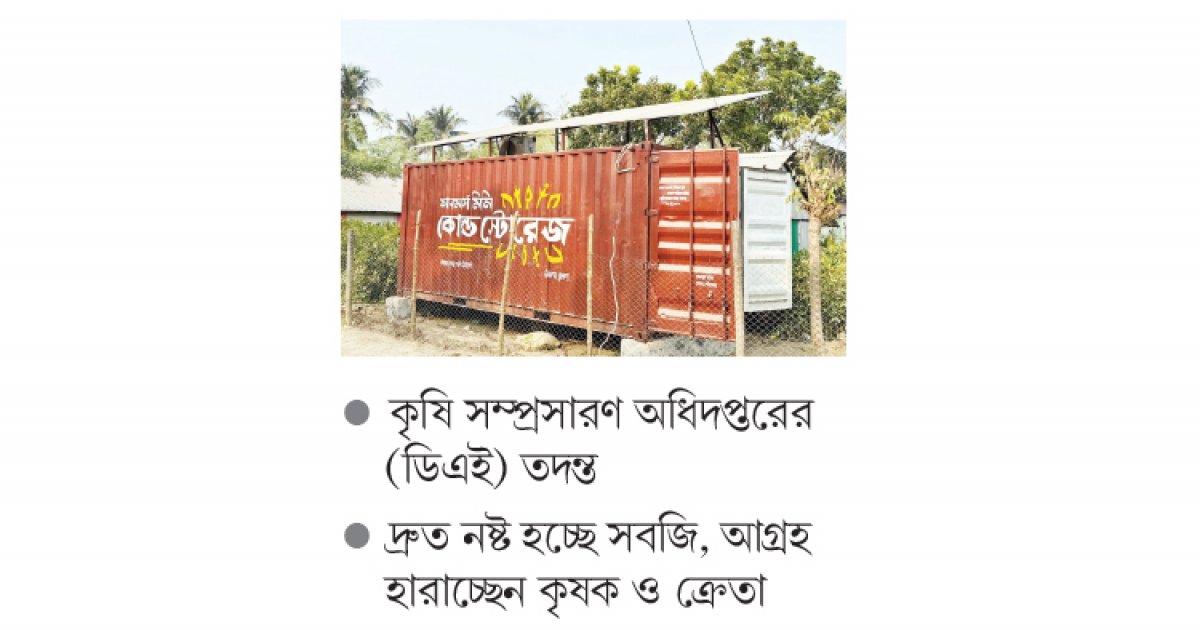
The farmers' mini cold stores built at public expense have not worked, an inquiry by the Department of Agricultural Extension (DAE) has found, Desh Rupantor's staff reporter writes. Built on the idea that growers would hold surplus produce and sell later at a better price, some of the stores are shut and those in use give poor results, putting the Tk 26 crore spent on two projects in question.
At Dakshin Bagmara in Cumilla city, entrepreneur farmer Md Abul Kalam Azad's store, used by a group of ten farmers, discolours and shrivels vegetables and sprouts potatoes; with no solar panels the group pays high electricity bills for produce buyers will not take. At Singair in Manikganj, Atikur Rahman's container store held only 50 kg of potatoes, guava and dragon fruit on inspection; potatoes sprout within 15 days and guava keeps no more than a week.
The inquiry team visited 26 stores across the country and found many idle and the rest limping; meant to run on solar power, most run on grid connections that add to farmers' bills. Reviewing the quantities stored, marketing facilities and running costs, it concluded that at current levels of use the stores are not commercially viable and recommended no further expansion until more research is done.
The first project, worth about Tk 12 crore from the Bangladesh Climate Change Trust and run from April 2025 to June this year, built 100 small stores, 50 of which have never operated for want of a power connection; a second Tk 14 crore project begun in October 2025 has completed 50 of 80. That is 150 of a planned 180 stores, most of them making no significant contribution, with farmers also unhappy about siting.
Agriculture Minister Amin Ur Rashid said on 15 June that the government planned 2,000 fully solar-powered small cold stores within one to two years, each run by a committee of 20 farmers and benefiting about 40,000 farmers; a proposed 'solar-powered mini cold store and post-harvest management project' has been drafted at about Tk 500 crore. After the two small projects' results, the Ministry of Agriculture will decide whether the large one goes ahead.
The field investigation and impact evaluation committee was convened by DAE additional director Md Rawshan Alam with Dr Md Shakhawat Hossain Sharif, Dr Md Masiur Rahman, Md Jahangir Hossain and Md Abu Sayem. An official of the team, speaking anonymously, said the evaluation was made on the ministry's instruction and would help shape the next policy.
Source: Desh Rupantor — Reporting: Staff reporter
Comments
(0)