

Travelling from Dhaka towards Cumilla or Chattogram, the view on both sides of the highway is more than rural scenery; it is a living record of a quiet change in Bangladesh's agriculture and rural economy. There are vegetable fields to the horizon, waves of Aus, Aman and Boro rice, golden maize and watermelons. Cumilla is second in the country for fish production, and commercial orchards, botanical gardens and rooftop gardens have become markedly more common.
Cumilla's first tea garden
On the Lalmai hills stands Cumilla's first tea garden, about 12 km from the district town in the Bara Dharmapur area of Sadar Dakshin upazila. It is reached by a paved road west from Ratanpur Bazar on the Cumilla–Noakhali road, across hillocks and dirt tracks. Its founder, Md. Tarikul Islam Majumder, began growing tea there in 2021 with the help of a Khasia king from Sreemangal. As the district's first tea garden, it has created great enthusiasm and holds potential for agro-tourism.
The country's third botanical garden has also been established on the Lalmai hills to conserve rare and endangered trees, serving as a centre for research and education. A medicinal plant garden has been set up on the Cumilla University campus, and the Cumilla Zoo and Botanical Garden covers about 10 acres at Kaliajuri. Rooftop gardens and new crop gardens are becoming popular in the town, in upazilas such as Nangalkot and in border areas.
Commercial orchards and entrepreneurs
- In Barura upazila, including Muguji village, more than 300 farmers grow malta, which is in good demand in local markets and has become a profitable cash crop.
- In Sadar Dakshin, large mixed orchards of lemon, guava, mango, dragon fruit and banana cover 40 acres at Rupban Mura in Kotbari and fallow hill land at Rajarkhola in Bijoypur union.
- A father and son have created a litchi, mango and fruit orchard at Banggadda in Nangalkot.
- Women entrepreneurs' dragon fruit orchards in Chandina have become highly profitable.
Technology has added momentum. Anwar Hossain, a young agri-entrepreneur from Debidwar, learned grape cultivation from YouTube and has succeeded with a fruit once unimaginable in the area, showing that the internet and social media can be a farmer's best teacher.
From the Comilla Model to smart farming
In the 1950s, rural development researcher Dr. Akhter Hameed Khan developed the famous "Comilla Model", whose core lesson was to organise farmers, create production and finance opportunities through cooperatives and link producers directly to markets. The writer argues that the institutional learning built by the Bangladesh Academy for Rural Development (BARD) and the Department of Agricultural Extension is still needed, and that in the age of smart agriculture the farmer, with a mobile phone, internet, weather information, market prices and digital financial services, is a potential agri-entrepreneur.
Remittances are a major driver. Cumilla is one of the country's top remittance-earning districts, and much of that money is now invested in farming. Many young entrepreneurs have used it to build modern dairy farms, commercial fish farms and fruit and vegetable orchards, especially malta, dragon fruit and mixed orchards.
Seedlings, vegetables, maize and fish
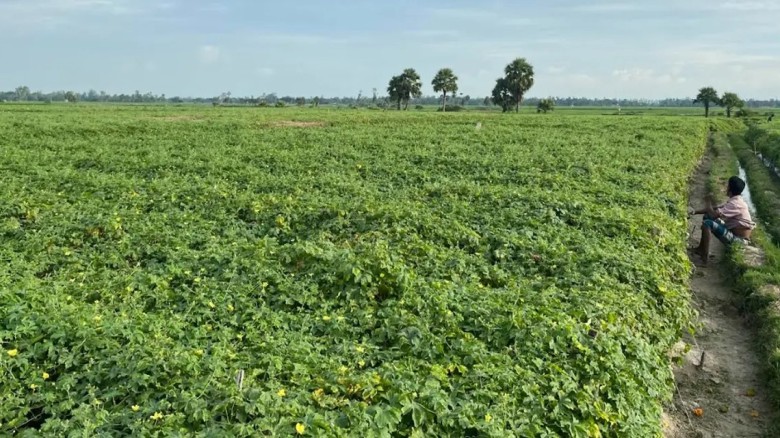
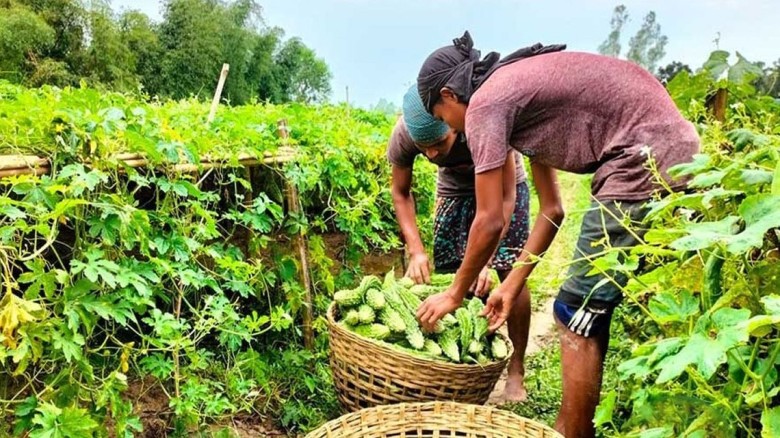
Commercial seedling production around Samespur in Burichong upazila supplies local demand and other parts of the country, creating new entrepreneurs and jobs. Women play a large role in seed saving, nursery care, transplanting, livestock and poultry rearing and homestead vegetable growing. In Burichong, Brahmanpara, Debidwar, Chandina, Chauddagram and other areas, bottle gourd, beans, yardlong beans, bitter gourd, cucumber, cauliflower and leafy vegetables have become the main cash income, while maize has spread onto fallow land and chars because of demand from the livestock, poultry and fish feed industries.
The Nimsar vegetable market on the Dhaka–Chattogram highway trades large volumes every day, supplying Dhaka and other regions, with potential for exports to the Middle East and beyond. The writer asks how much of a fair price the farmer receives in such a long supply chain. In Daudkandi, Muradnagar and Chauddagram, commercial farming of pangas, tilapia and other fish contributes to the country's animal protein supply. Mechanisation, from land preparation to harvesting and threshing with combine harvesters, has cut production costs and time, and Integrated Pest Management (IPM) has opened the way to safe food.
Challenges and the way forward
Irregular rainfall, flash floods, hill water from upstream and the recent breach of the Gomti river embankment keep farmers' lives uncertain. Middlemen, a lack of processing and cold storage, and limited use of solar irrigation and drip irrigation despite pressure on groundwater remain problems.
The writer calls for a planned "second agricultural revolution" that modernises the whole value chain: getting climate-resilient varieties to farmers quickly, easy-term farm credit, certified seedlings and seed, public-private partnership (PPP) investment in cold storage and agro-processing, an investment-friendly environment for expatriates, and well-planned agro-tourism around the Lalmai tea garden, botanical garden and orchards while protecting farmland. Young people, the writer concludes, no longer look down on farming but see in it business, technology and startups.
The writer is Deputy Registrar of Sher-e-Bangla Agricultural University.
Source: Jagonews24. First published in Bengali on The Agro News.
Comments
(0)