
Researchers at Cornell University are testing how far dairy cows' dietary nitrogen can be cut without losing production, as a way to save feed costs and reduce nutrient losses, Farms.com reports. The work is led by postdoctoral associate Ananda Portela Fontoura with dairy nutrition specialist Michael Van Amburgh.
Protein-rich feeds supply nitrogen that cows need for growth and milk, but nitrogen eaten beyond requirements is largely excreted in urine. That is a cost for the farmer, who bought nutrients the cow did not use, and a source of losses once it reaches manure storage.
In one recent study the team compared three feeding programmes for 144 lactating Holstein cows, all relatively low in nitrogen. Two included isoacids, compounds that support microbial activity in the rumen. Milk volume was similar across the groups, but cows receiving isoacids produced more energy-corrected milk and more milk protein and lactose, more valuable milk without more litres.
Preliminary analysis put the economic advantage of the isoacid diets at about 22 cents per cow per day, which the researchers note could add up across larger herds. Early modelling shows methane and carbon dioxide-equivalent emissions were similar across treatments even as output of energy-corrected milk rose, suggesting a smaller footprint per unit of milk.
The team is now running on-farm trials with dairy producers and nutrition consultants to measure production, feed economics and nitrogen-use efficiency under commercial conditions, with the aim of improving the nutrition models used to feed modern herds.
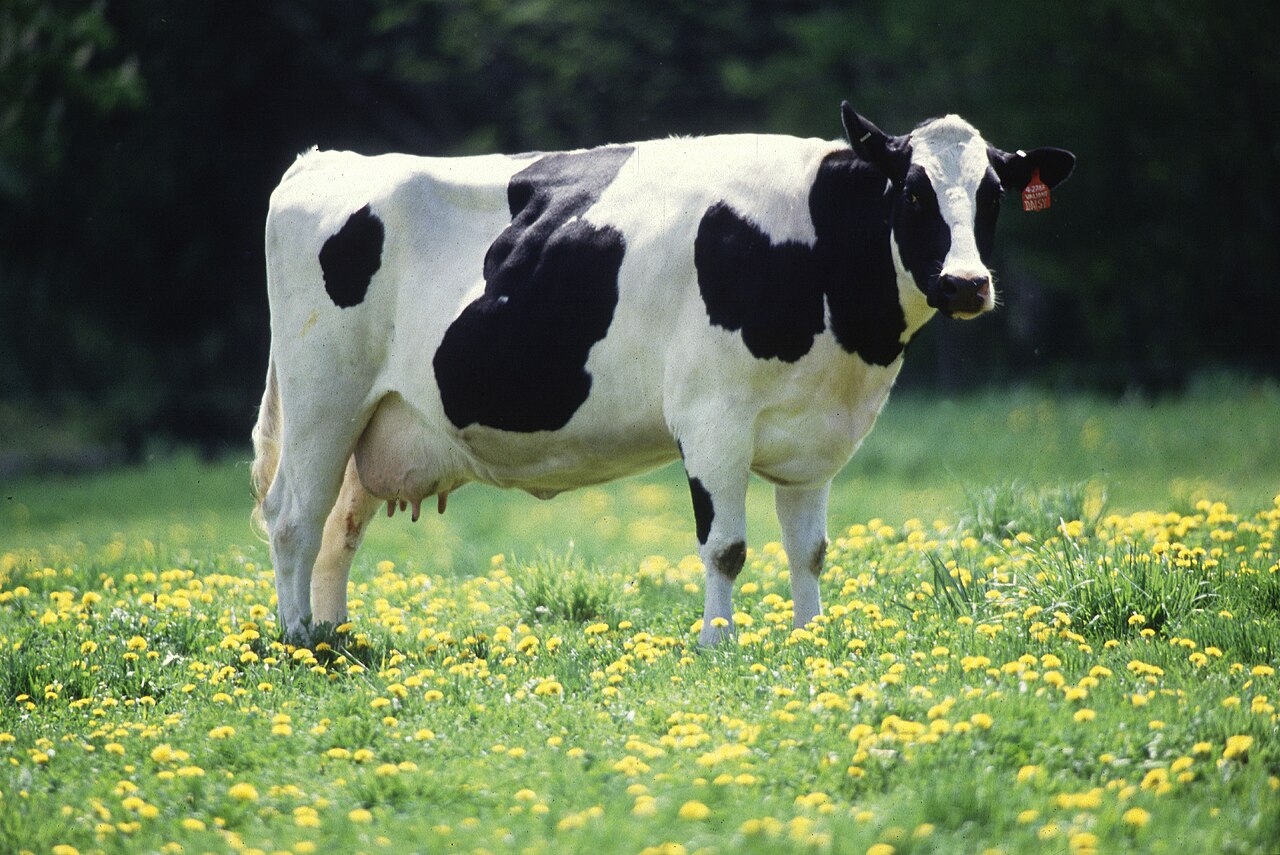
Photo: Keith Weller, USDA (a Holstein-Friesian dairy cow) / Wikimedia Commons (Public domain)
Source: Farms.com

Comments
(0)