
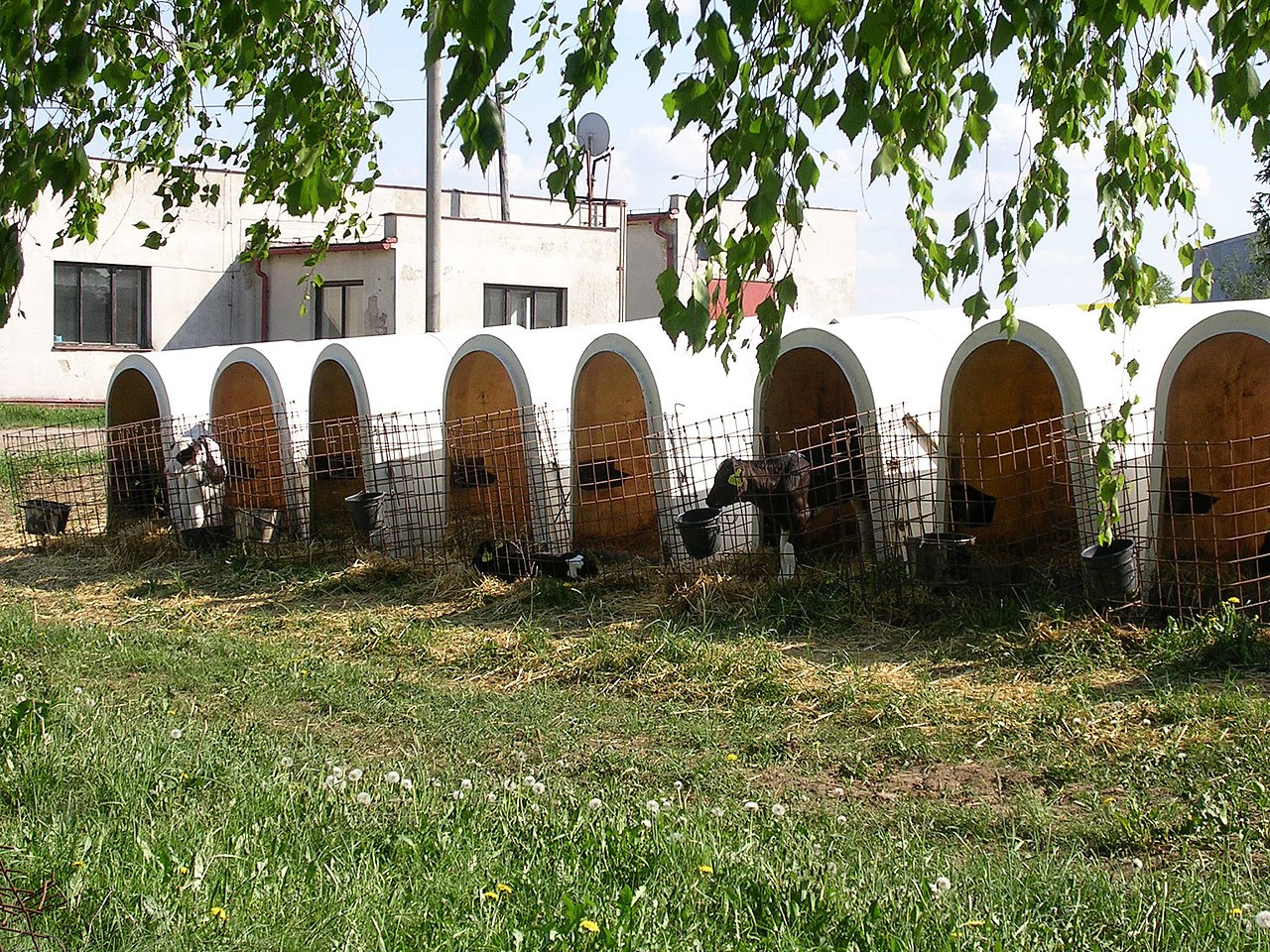
With autumn-born calves arriving on winter-milking farms and temperatures swinging between 16°C by day and below 4°C at night with high humidity, the risk of calf pneumonia is rising, Agriland reports from Ireland.
Pneumonia is among the commonest health problems in young calves and the most common cause of death in calves under 10 months, killing 3 percent of all calves born. Survivors are costly to treat and seldom return to full health: the disease cuts live-weight gain and milk yield in the first lactation, and 14 percent of animals that had pneumonia young never reach that lactation.
The disease has many causes, including viruses, bacteria, poor colostrum intake, poor hygiene and ventilation, overcrowding and bovine viral diarrhoea. An infection can take two to three days to develop into pneumonia, after which calves decline quickly. Early signs are reduced feed intake, coughing, fever, drooping ears and hollow sides; by the time breathing is fast and the eyes and nose run, the infection is advanced.
Because antibiotics are often ineffective, prevention matters most. Hygiene from birth comes first, with enough good colostrum soon after birth under the "1, 2, 3" rule, and continued colostrum for the first four to five days. Calf houses need plenty of air without draughts, and a well-bedded, dry lying area that drains freely.
Pens should not be overcrowded, and calves should be grouped by age and size to reduce stress. The report also recommends a vaccination programme, with a first shot after two weeks of age, a second after four weeks and boosters during risk periods.
Photo: ŠJů (calves at Veliš, Czech Republic) / Wikimedia Commons (CC BY-SA 3.0)
Source: Agriland


Comments
(0)