
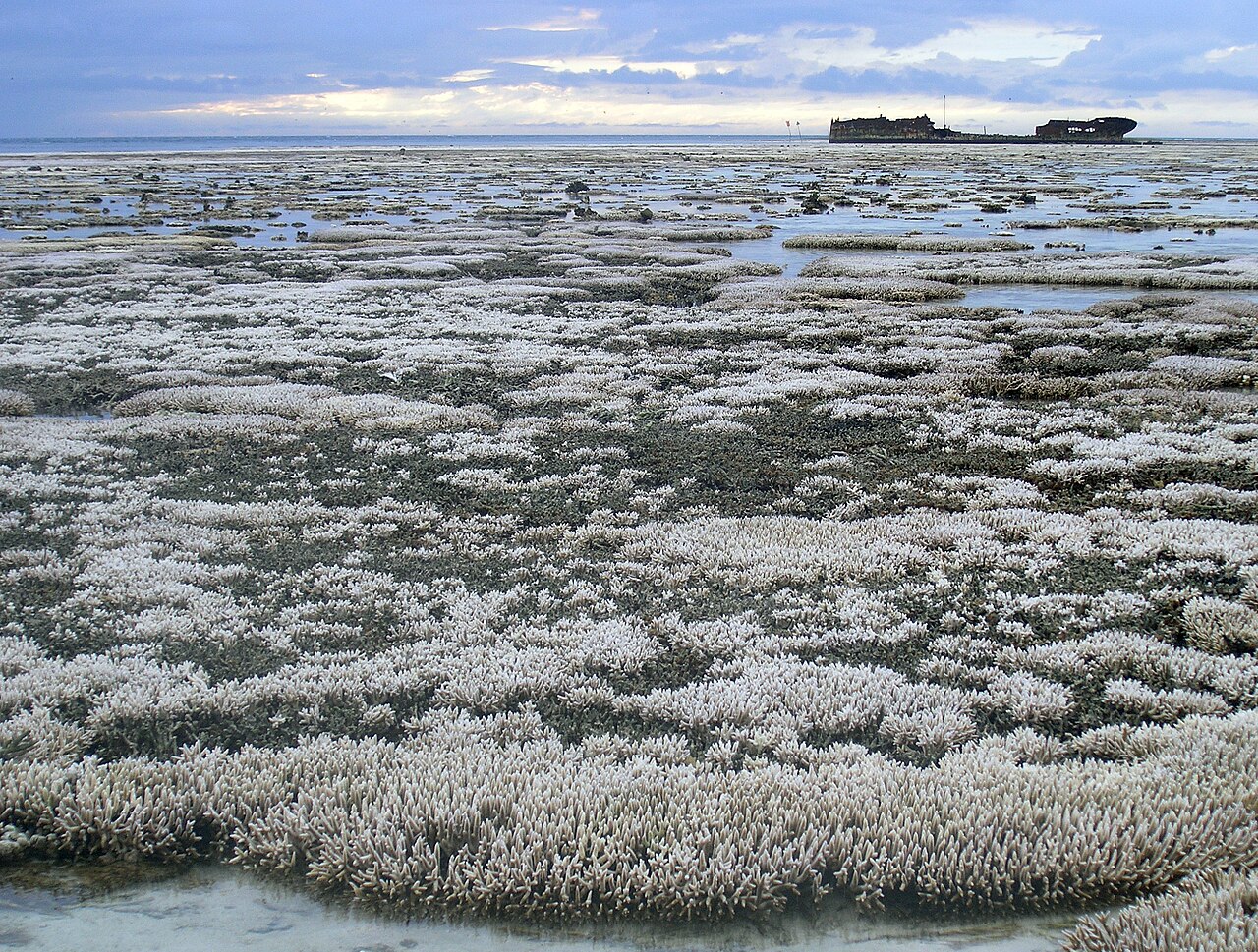
Almost all of the world's shallow-water coral reefs are at very high risk of collapse within the next 50 years, the International Union for Conservation of Nature (IUCN) has warned. Its assessment, published on Thursday, lists 96 percent of the planet's reef systems as critically endangered, the highest risk category, and says they could disappear entirely by 2075.
Mishal Gudka, scientific lead of the IUCN Red List of Coral Reef Ecosystems assessment, said the threat from climate change is imminent and severe. Corals are sensitive to heat, and human-caused climate change is warming the seas and increasing the number and intensity of damaging bleaching events. Speaking at the UN biodiversity conference COP17 in Yerevan, Armenia, he said this year's super El Nino also poses a risk to corals.
When a reef collapses, hard coral gives way to algae, rubble and sponges, and the rich ecosystem, from tiny invertebrates to reef fish such as grouper, can no longer survive there. Known as the rainforests of the sea, reefs shelter a quarter of marine species, supply seafood and tourism and protect coasts from erosion and storms.
The assessment lists most famous reef systems as critically endangered, including Australia's Great Barrier Reef, the Coral Triangle of the western Pacific and South-East Asia, the Mesoamerican Barrier Reef and the reefs of the Red Sea. It used the UN climate panel's middle scenario, with warming of 2.7 degrees Celsius above pre-industrial levels by 2100, and analysed 127 tropical and subtropical reef systems covering 188,362 square kilometres.
Another IUCN study published in Nature a week earlier found that about 44 percent of reef-building coral species face a higher risk of extinction because of climate change. A survey a year ago found harmful bleaching on 84 percent of the ocean's reefs, the most severe event on record.
Even so, the IUCN says most of the world's reefs are not yet lost. Gudka said reefs have shown a remarkable ability to recover from devastating bleaching, and small patches of resilient reef may survive, so everything within reach must be done to help them succeed.
Photo: Bleached coral on the Great Barrier Reef, Oregon State University / Wikimedia Commons (CC BY-SA 2.0)
Source: Bangla Tribune

Comments
(0)