
Pilots across nine Colombian departments have mapped 60,000 hectares under a new national protocol for showing that farm goods are free of deforestation, CGIAR reports, and six partner companies have built it into their traceability systems.
Colombia had voluntary zero-deforestation agreements covering cocoa, coffee, beef, dairy and oil palm, but no single system for monitoring, reporting and verification (MRV), which made progress hard to show and international sustainability requirements harder to meet. The CGIAR Initiative on Low-Emission Food Systems, led by the Alliance of Bioversity International and CIAT, brought together government agencies, producer groups, companies and technical experts to refine what became MRV Protocol 2.0.
The work included digital tools. A beta version of the GANABOSQUES platform combines forest monitoring, protected-area boundaries, agricultural frontier limits and livestock mobility data to assess deforestation risk farm by farm, while GeoFarmer and Open Data Kit dashboards tracked mapping, surveys and training.
Fifty-two technicians in the cocoa, beef and dairy chains were trained in digital data collection, farm mapping and MRV. Materials were adapted for low literacy and poor connectivity, and activities involved women, youth, Indigenous peoples and Afro-descendant communities. Wider capacity-building reached 1,000 stakeholders, half of them women and rural youth.
Additional cocoa companies began using the protocol voluntarily for origin checks. Work with PROCOLOMBIA and the Green Business Office supported a market strategy and a traceability annex for the Green Business Seal, and a roundtable with FINAGRO began exploring whether MRV results could inform green credit.
According to the project's reporting, the protocol is included as a means of implementation in Colombia's updated Nationally Determined Contribution 3.0. An interministerial resolution for formal adoption is still being worked on, and links to green finance remain in development. CGIAR says continued attention to producer workloads and digital access will be essential if smallholders are to take part.
The account was compiled by the CGIAR Scaling for Impact program.
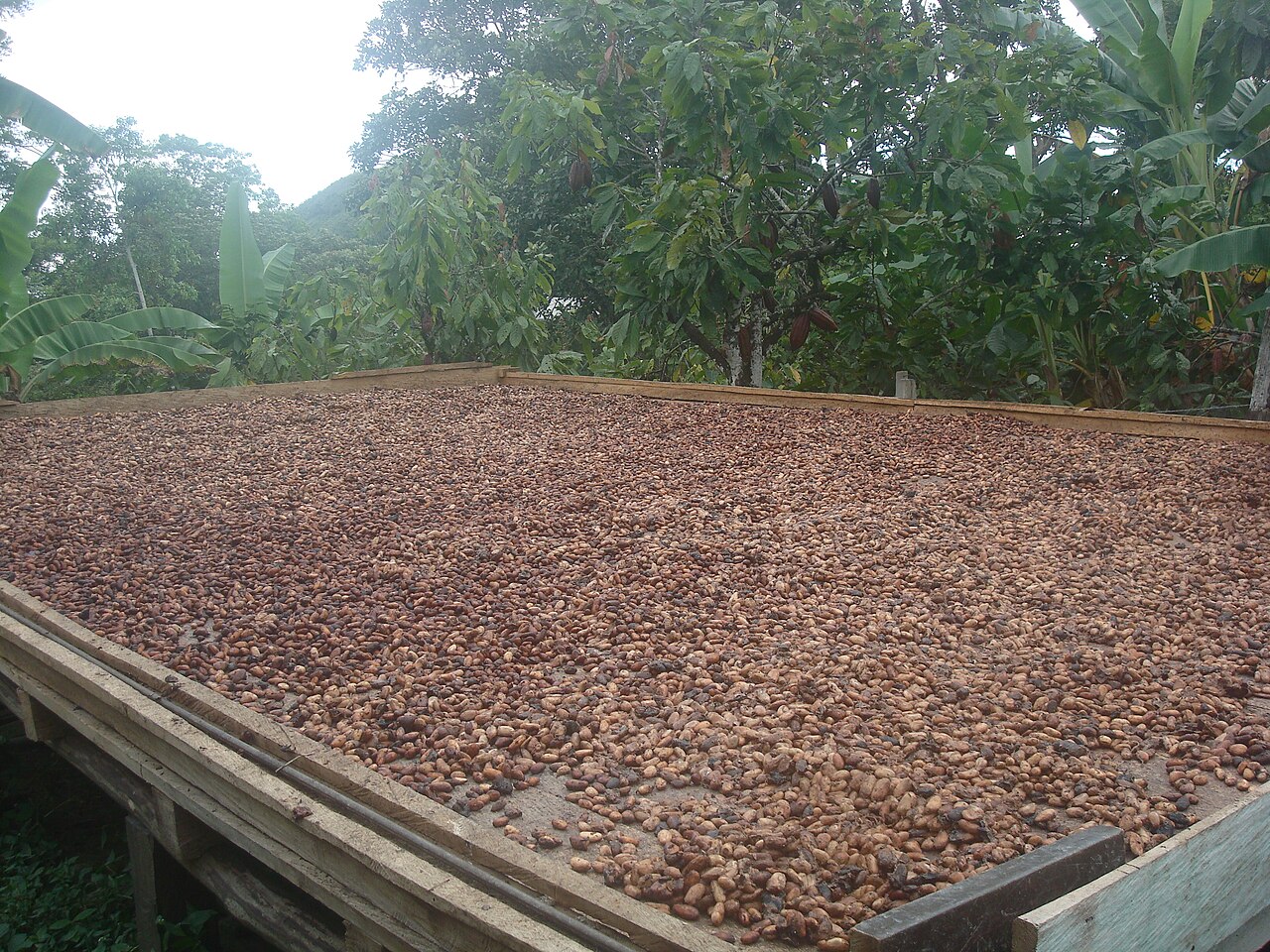
Photo: pipeafcr / Wikimedia Commons (CC BY-SA 3.0)
Source: CGIAR



Comments
(0)