
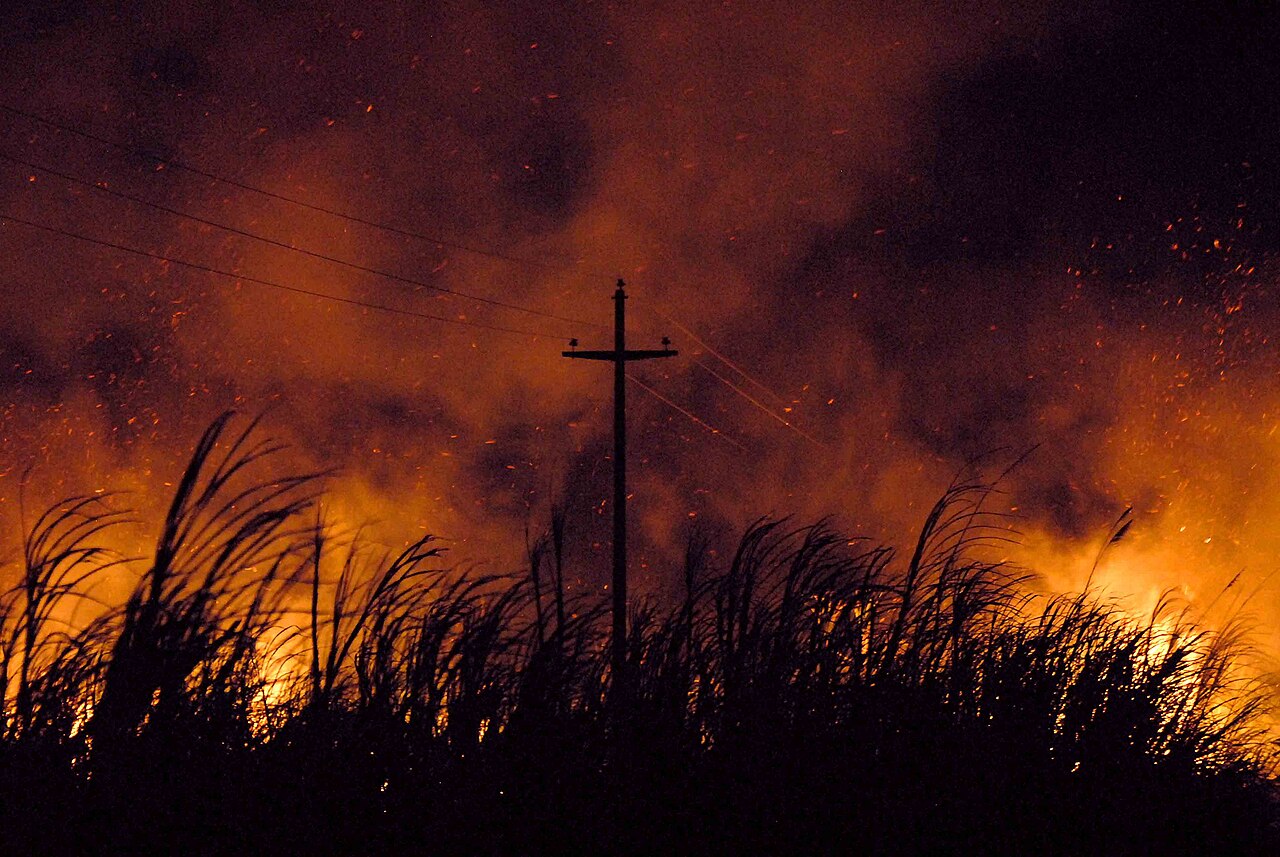
The Colombian Agricultural Institute (ICA), the sugarcane research centre Cenicaña and the panela sugar sector have begun a biological control programme against Diatraea stem borers in sugarcane fields at Versalles, in Valle del Cauca, the first such programme in the municipality. It targets smallholder growers of panela cane, where the pest's incidence has been high, and forms part of ICA's Phytosanitary Extension Strategy for rural communities with specific plant-health problems.
The strategy pairs two parasitoids with complementary action: Cotesia flavipes, which parasitises Diatraea larvae, and Trichogramma wasps, which attack the pest's eggs before larvae can bore into the stalks. The insects were donated to participating farmers by ICA, the sugar mill Ingenio Providencia and Cenicaña, and the aim is to suppress the borer while cutting reliance on chemical control and keeping the crop's ecological balance.
Three releases are planned, each followed by technical field visits to monitor pest numbers and judge the control achieved on every treated plot. The second release is complete; the third and a final assessment are to come. "We have really seen a lower population of the Diatraea pest. We expect that after three releases we will achieve at least 50% control or more," said Marta Yazmín Sánchez Roncancio, the agronomist responsible for the sugarcane project in Valle del Cauca.
Liceth Valencia of the Versalles secretariat for agricultural, economic and environmental development said the initiative was reaching small producers in the municipality's rural areas, and José Mauricio Rodríguez Castaño, panela-cane coordinator at La Aldea farm, said the second release was already reducing damage: "This is a product that has helped us considerably to reduce the pest." He credited ICA's technical assistance with introducing practices and tools farmers had not used before.
ICA treats the project as a long-term phytosanitary strategy rather than a one-off. Sánchez warned that parasitoid populations will only persist with continued releases: farmers should commit to releasing in 2027 and keeping the crop's sanitary condition, "because it depends on the continuous introduction of these parasitoids into the field". Diatraea larvae bore into cane stalks and disrupt plant development, so holding them below economic thresholds matters for both mills and panela producers, whose crop underpins a long-established rural economy. Editing by Leonardo Gottems, AgroPages.
Photo: Neil Palmer, CIAT / Wikimedia Commons (CC BY-SA 2.0)
Source: AgroPages
Comments
(0)