
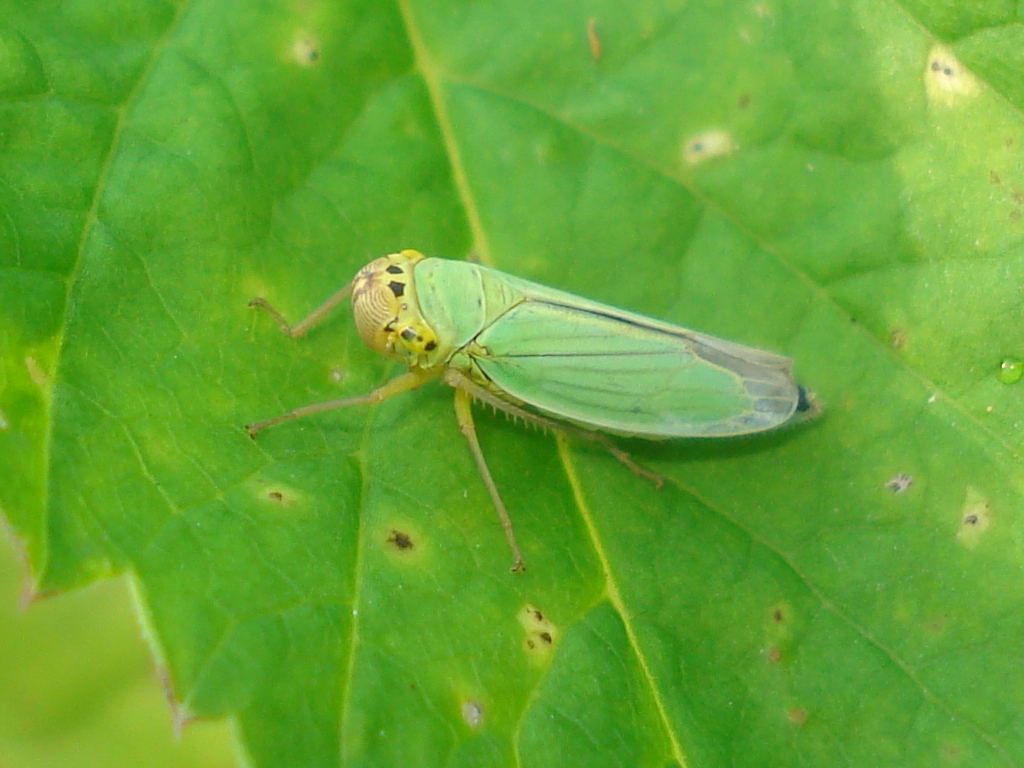
Switch on a light in the evening at this time of year and small green insects gather on window panes, walls and around the bulb, sometimes landing on people and even giving them a prick. Many Bangladeshis call them shyama poka; in English they are green leafhoppers. They become common in the Bengali month of Kartik.
The name covers several closely related species rather than one. Leafhoppers feed by piercing leaves and stems with needle-like mouthparts and sucking the sap. A study of insects in Bangladeshi rice fields from November 2023 to October 2024 found 10 species of leafhopper and five of planthopper. Green leafhoppers are known rice pests, and some species spread tungro virus, which can stunt plants and cut yields.
Their numbers at this season may be tied to the change of season and the state of the fields: aman rice ripens in Kartik, and rice plants are a main source of food for them. A six-year study in Gazipur found green leafhoppers most abundant in October, followed by November. Temperature, rainfall and humidity also play a part, and more leafhoppers in the fields do not always mean more in homes.
Why do they circle lamps? A study published in Nature Communications in 2024 used high-speed cameras to track insects around artificial light. Many insects try to keep their backs turned towards the brightest direction, because in nature that is the sky. At night a house or street light confuses that cue: the insect tilts towards the lamp as if it were "up" and ends up circling it instead of flying on.
Green leafhoppers do not drink human blood and are not generally considered dangerous. A 2013 review did, however, collect records of at least 39 leafhopper species probing human skin by mistake, which can feel like a needle prick. If one lands on you, brush it off gently rather than slapping it. If it feels like a bite, wash the spot with soap and water and use a cold compress if it is uncomfortable. Severe swelling, breathing difficulty or any unusual reaction needs a doctor.
The most effective way to keep them out is to close doors and windows when lights are on in the evening, or fit fine mesh on windows, and not to place bright lamps right beside outside doors and windows. If they are already inside, switch off the room light, put a light on outside and open the window so they can leave; insects resting on a wall can be caught with paper or a small cup and released outdoors.
There is no need to spray insecticide indoors. Online tips about lemon, chilli, camphor or oil mixtures have no evidence behind them, and camphor or other chemicals used wrongly can themselves be a health risk.
Reported by Ahmad Muddasser for Prothom Alo.
Photo: Sanja565658 / Wikimedia Commons (CC BY-SA 3.0)
Source: Prothom Alo



Comments
(0)