
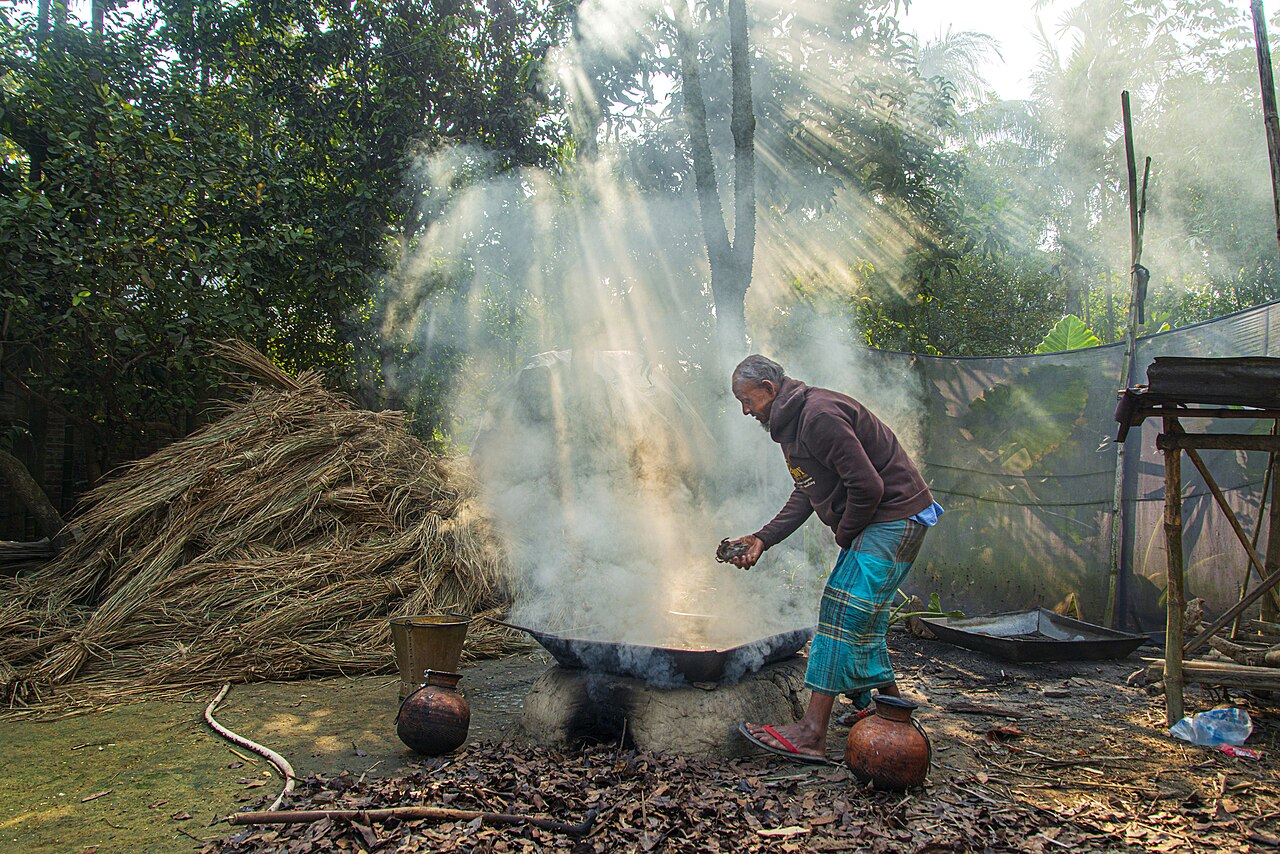
With warm days, cool nights and morning fog signalling winter, sap tappers in Chuadanga's villages have started preparing date palms. Climbing with sharp knives, they trim the dry parts so the trees can be tapped; in a few weeks clay pots tied to the trunks will fill overnight with sap, to be boiled into nolen gur and patali. Some 14,000-15,000 tappers work in the trade in the district.
According to the Department of Agricultural Extension in Chuadanga, the district's four upazilas have 272,000 date palms along fields and roads, most of them around Jibannagar, Damurhuda, Darshana and Alamdanga. About 20 per cent have already been cut, and each tree yields 10-11 kilos of jaggery.
The target this season is 2,700 tonnes of date palm jaggery, up from a target of 2,500 tonnes last season, when sap and jaggery sales brought in Tk 75 crore.
A worker prepares 25 to 30 trees a day for a daily wage of Tk 800 to 1,000. Tappers in Darshana say they started early to avoid a labour shortage. About 15 days after the first trimming a tap is fitted, after one more shaving of the trunk, and a week later the pots go up; they plan to hang them from the last week of the Bengali month of Kartik. Each tree is tapped for three days and then rested for four or five.
Sap collected drop by drop overnight is boiled for about an hour in the morning to make liquid jhola gur, granular gur and patali cakes.
Nurul Islam, deputy director of the extension department in Chuadanga, said the district's jaggery is in demand across the country for its quality and is sent to other districts after local needs are met. With favourable weather and a proper cold spell, he expects the target to be met; the colder it gets, the more sap the trees give.
The report is by BSS, published by Banglavision.
Photo: NIslamPhoto / Wikimedia Commons (CC BY-SA 4.0)
Source: Banglavision

Comments
(0)