
The India-New Zealand Free Trade Agreement came into force on 20 October 2026, giving Indian exporters duty-free access to New Zealand across all tariff lines and pairing market access with farm cooperation on apples, kiwifruit and honey. It was announced by India's commerce minister Piyush Goyal and New Zealand's trade minister Todd McClay.
At the heart of the farm chapter is an Agricultural Productivity Partnership, which goes beyond tariff cuts to bring technology, training and practices to Indian growers, with action plans for apples, kiwifruit and honey and wider cooperation on horticulture, forestry, livestock and fisheries. New Zealand will give technical help to set up Centres of Excellence.
Sites already identified for kiwifruit in the first phase are Pfutsero in Nagaland and Magra in Uttarakhand. Two apple centres are proposed in Himachal Pradesh and Uttarakhand, and the honey plan envisages centres in Uttar Pradesh and West Bengal. The aim is better orchard management, lower post-harvest losses and higher productivity; Rural Voice notes that the effect on farm incomes will depend on implementation and on how many farmers can reach the technology and training.
The deal links tariff-rate quotas for New Zealand apples, kiwifruit and Manuka honey to progress on those action plans, overseen by a Joint Agriculture Productivity Council. The government presents this as tying market access to farmer welfare rather than liberalising trade for its own sake.
To protect domestic producers, dairy, sugar, edible oils and key farm commodities are excluded from tariff concessions, a safeguard aimed at dairy farmers, fisherfolk and rural communities. The agreement also carries rules of origin, a bilateral safeguard mechanism and anti-circumvention provisions. New Zealand has removed duties of up to 10% on Indian goods.
For Indian fruit growers, the report says, gaining from export openings will also need better storage, packaging and supply chains.
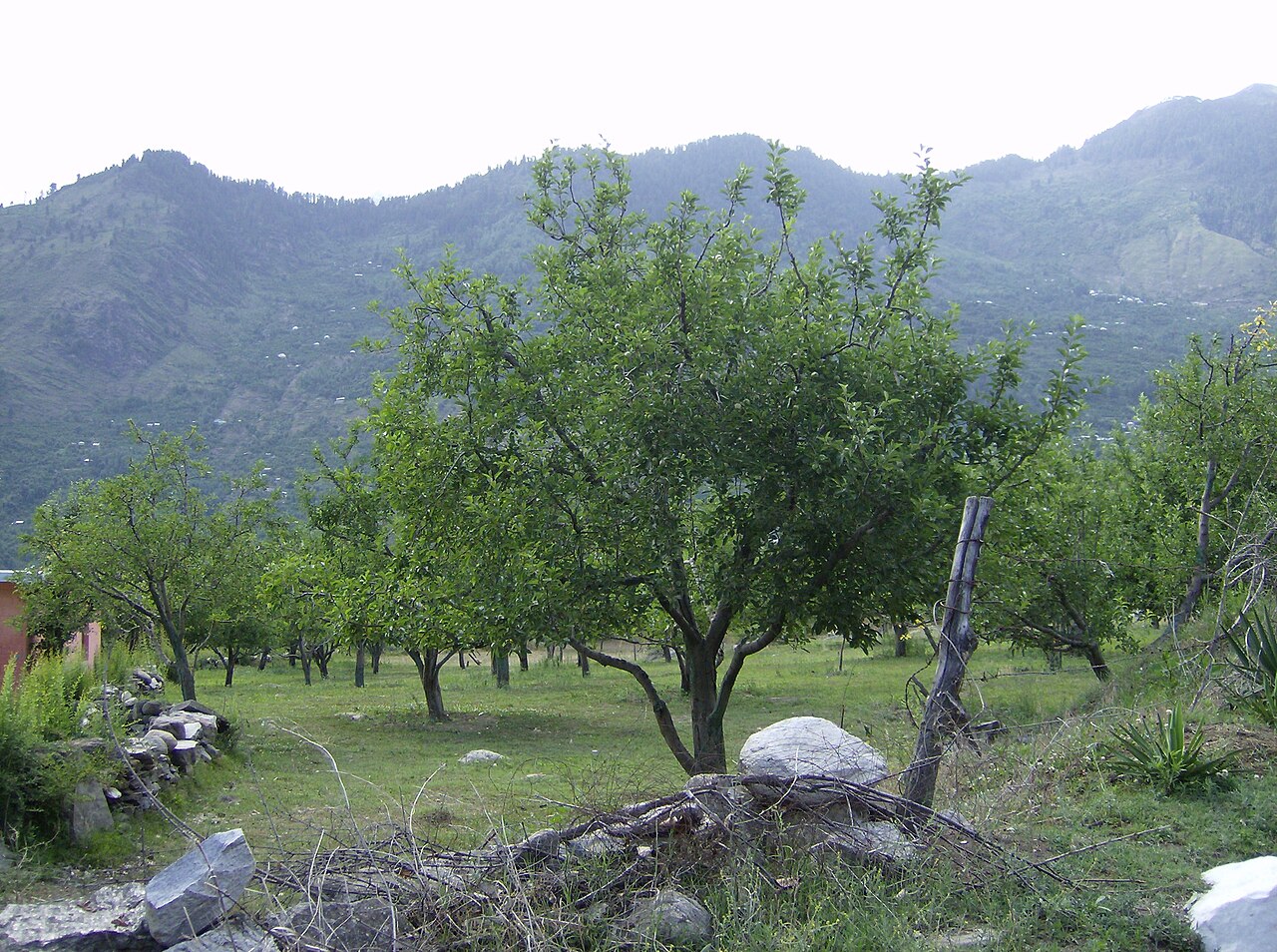
Photo: వేదపండిత (apple orchard at Naggar near Manali) / Wikimedia Commons (Public domain)
Source: Rural Voice
Comments
(0)