
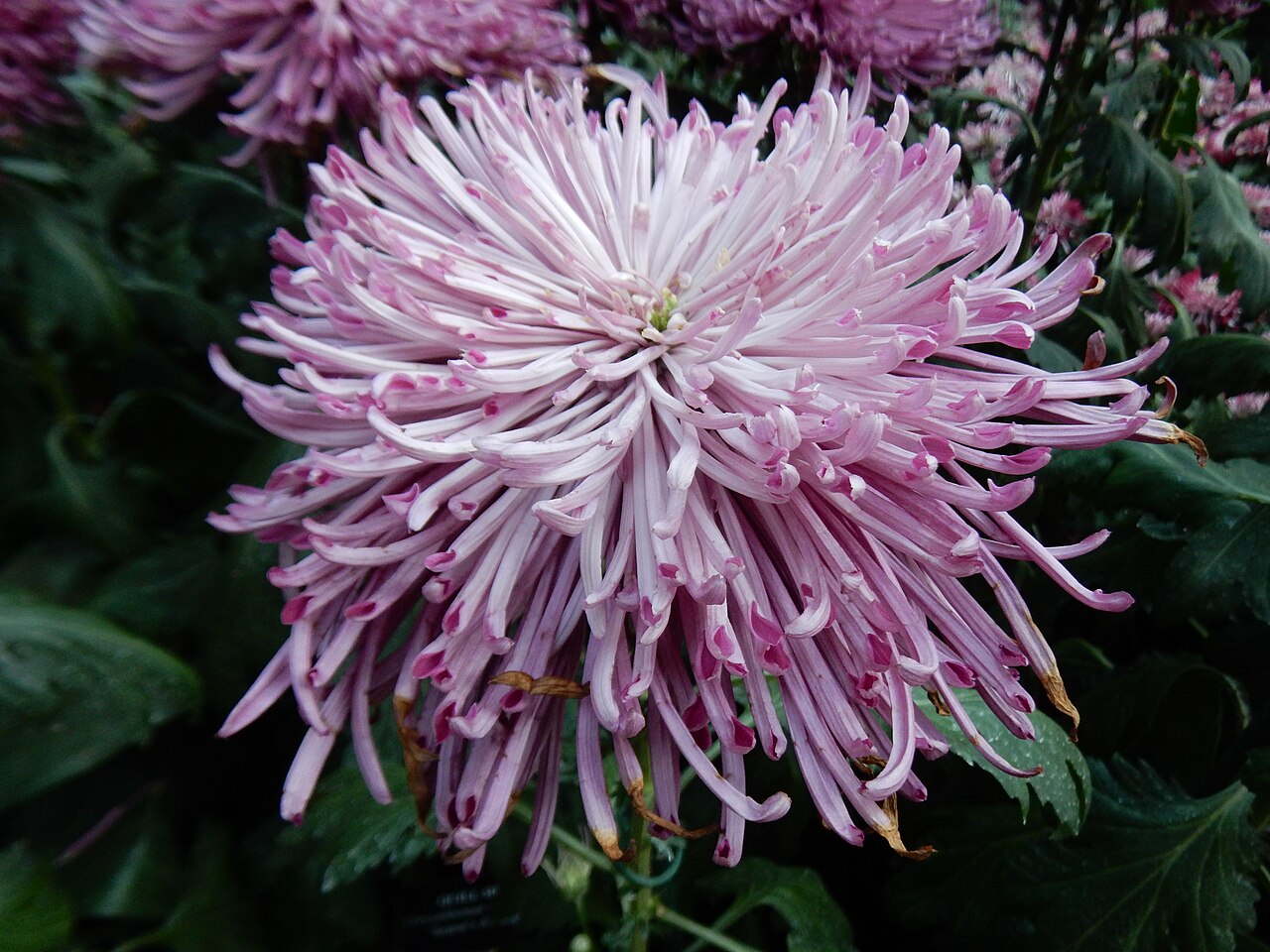
On a winter morning, when yellow, golden and purple chrysanthemums open together in pots on a rooftop or in a courtyard, it looks like a fair of colour. In popularity the flower is second only to the rose, prized by weekend gardeners and commercial growers alike. Yet that display can fade within a week if white powder settles on the leaves, yellow spots spread across the lower foliage or aphids move into the young buds. The chrysanthemum does not suffer many diseases, but missing the early signs can cost the whole crop. This feature sets out how to recognise each problem and what to do about it, step by step.
A flower of many colours, and a market to match
Chrysanthemums come in a wide range of colours and forms. Varieties differ greatly in the size, colour and shape of their flowers: some are small as buttons, others as broad as a plate and packed with petals. Among the favourites are copper, gold, yellow, purple, red and maroon types, along with a green chrysanthemum known as Green Goddess. Green flowers are rare, which is why Green Goddess stands out.
The flower has a special place in Japan, where it is regarded as the national flower and appears on the emblem of the imperial family. In Bangladesh it is above all a winter flower. Because there is steady demand for it in the market, there is real potential for growing it commercially. It is used more and more at weddings and other ceremonies, for stage decoration and in bouquets.
Why the chrysanthemum flowers in winter comes down to day length. Botanists call it a short-day plant: buds form once the days shorten and the nights grow long. In Bangladesh the nights lengthen from late autumn, so the winter months fill gardens with these flowers. Winter is also aphid season, and foggy, overcast days give fungi their chance. Flowering time and the time of pests and disease largely overlap, which is why watchfulness matters so much with this crop.
Research on the crop is also under way at home. The Bangladesh Agricultural Research Institute (BARI) has released two varieties, BARI Chandramollika-1 and BARI Chandramollika-2. Growers can ask about them at the local agriculture office or at BARI's regional centres.
Soil and site: the foundation of disease control
Chrysanthemums need fertile, light loam. The land should be high and dry, so that surplus rain or irrigation water drains away quickly, and a south-facing plot is especially suitable because it catches the soft winter sun for most of the day. On waterlogged ground the roots weaken, the base of the plant stays damp and fungal disease takes hold readily, so such land is best avoided.
Extension workers advise mixing well-rotted leaf compost, rotted cow dung and bone meal into the soil when it is dug or ploughed. Organic matter keeps the soil crumbly, helps it hold moisture and still lets surplus water drain. Pots need a drainage hole, and a few pieces of broken brick or crockery over the hole stop water from pooling. Chemical fertiliser doses depend on the soil, so it is safest to take advice from the upazila agriculture office.
A good start is half the protection
Disease control begins on the day the seedlings go in. According to the Agriculture Information Service, the best time to plant chrysanthemums in beds or pots is October to November. Plants can be raised from seed, from suckers (new shoots that grow from the base of the mother plant) and from stem cuttings. Suckers are usually planted in February and March and cuttings in June and July to have plants ready for the next season.
The first precaution is to take planting material from healthy mother plants. Suckers or cuttings from a plant that was diseased last season can carry the disease with them. Healthy plants, clean beds and clean tools: with those three in place, most problems stop before they start.
Chrysanthemums prefer relatively cool weather and a sunny position. Beds and pots should be placed where they get sun for most of the day and where air moves freely. The Agriculture Information Service recommends spacing of 30 by 25 centimetres, depending on the variety. About a month after planting the growing tip is pinched out, a practice known as pinching; the plant becomes bushier and more branches mean more flowers. If buds appear early on young plants they are removed, so that the plant builds its strength first.
Large-flowered varieties need tying to thin bamboo canes or stakes as they grow. If the weight of the blooms bends a stem down to the ground, leaves and petals touch damp soil, and that is where fungal attack can begin. Upright plants also let in more light and air, and the flowers stay straight and handsome.
Powdery mildew: a white dust on the leaves
One of the best-known chrysanthemum diseases is powdery mildew, caused by a fungus. Infected leaves are covered with a white to grey powdery coating; from a distance it looks as if someone has dusted them with flour. Gradually the leaves curl up and die. In a heavy attack the leaves dry out and the plant dies.
The disease spreads fast in warm, humid weather. It is worst where plants are crowded together and light and air cannot get between the leaves. Spacing is therefore the first line of defence.
The fungus spreads by spores that drift on the air from plant to plant, so a single infected plant in one corner can pass the disease to its neighbours within days. As soon as the first affected leaves are seen, they should be picked off carefully, sealed in a plastic bag and destroyed away from the garden. Shaking them only scatters the powder.
The control measures come in stages:
- Keep proper spacing in the field so that the plants get enough light and air.
- In the early stages, spray sodium bicarbonate, the ordinary baking soda from the kitchen, at 5 grams per litre of water every 7 to 10 days, three to five times.
- In a severe attack, spray a sulphur fungicide (such as Thiovit 80 WG or Cumulus DF) at 2 grams per litre, or propiconazole (such as Tilt 250 EC) at 0.5 millilitres per litre, every 7 to 10 days, two or three times.
The baking-soda spray may be new to many gardeners, but its advantage is that it is already in the house and costs almost nothing. Caught early, the disease often needs nothing more. Once the whole plant has turned white, though, it is time to move to a fungicide without delay. Both sides of the leaf should be sprayed, since the fungus lives on the underside too.
Leaf spot and blight
The second major problem is leaf spot, or blight. It starts with yellow spots on the lower leaves. Depending on how severe the attack is, the spots turn brown and then black. As they grow, the whole leaf scorches, and the damage climbs from the bottom of the plant upwards.
Understanding why the disease starts low down explains how to prevent it. Irrigation water and raindrops hit the soil and splash back up, carrying soil-borne germs onto the lowest leaves. So the control measures aim to put a barrier between soil and leaf.
- Spread a straw mulch, a layer of dry straw or leaves, around the base of the plants; the lower leaves are then much less likely to be infected.
- Water in moderation, and take care not to wet the lower leaves while irrigating.
- In a severe attack, spray carbendazim (such as Autostin, Noin, Emcozim or Benlate) at 1 gram per litre, or tribasic copper sulphate (such as Cuproxat 345 SC) at 0.5 millilitres per litre, every 7 days, two or three times.
Mulching brings other benefits too. The straw keeps moisture in the soil, fewer weeds come up, and on winter nights the soil around the roots stays a little warmer. In pots, a layer of dry leaves or coconut fibre on the surface does the same job. Picking off infected lower leaves and destroying them away from the garden also cuts the source of the disease.
Grey mould: the enemy of cloudy days
When the weather stays overcast and damp for several days at the start or end of winter, grey mould can appear. It is caused by a fungus called Botrytis. It shows as brown, water-soaked patches on the petals, the leaves and even the stems. Later a grey to brown powdery coating forms on the infected parts. It is the most painful of the diseases because it often strikes the petals just as the flowers open, ruining exactly the blooms that were meant for sale.
Long spells of humid, cloudy weather help it spread. Where plants form a dense clump and air cannot move, moisture sits on the leaves for hours, and that is where the fungus takes hold.
- Keep proper spacing so that the plants get enough light and air.
- In a severe attack, Rovanon or Rovral can be sprayed at 0.2 per cent, that is 2 grams per litre of water.
Botrytis is not confined to chrysanthemums. It attacks tomatoes, strawberries, roses and many other fruits, vegetables and flowers, so infection in a nearby vegetable plot or flower bed can reach the chrysanthemums too. Any rotting fruit or flower with a grey coating, anywhere in the garden, should be removed as well.
Fallen petals and rotting flowers should not be left lying under the plants. The fungus survives in them and they become the source of the next attack. Cutting off spent or infected blooms and taking them out of the garden, and watering in the morning rather than late afternoon so that leaves dry before nightfall, are small habits that make a big difference.
Aphids: the small sap-suckers of winter
Alongside disease there are pests, and on chrysanthemums the commonest by far is the aphid. It is tiny, soft-bodied and blackish green. Its numbers rise sharply in winter, which is exactly when chrysanthemums are in season.
Aphids suck sap from the leaves, shoots and flowers. Infested new buds and leaves curl up, buds fail to open properly, and the flowers that do open are misshapen. Aphids cluster under the tender shoots and on the undersides of the leaves, where they can be seen with the naked eye, so a daily walk round the garden catches them early.
The aphid’s great strength is the speed at which it multiplies. In favourable weather females can give birth to live young without mating, so within days a single shoot can carry hundreds of insects. After feeding they excrete a sticky, sweet liquid called honeydew. A black, soot-like mould grows on the honeydew, darkening the leaves and reducing their ability to make food from sunlight. Ants come for the honeydew and in return guard the aphids from their enemies, so a line of ants running up and down a plant is a signal to look for aphids.
Control takes two steps:
- In the early stages, pick off infested leaves or flowers and destroy them along with the insects.
- Spray soap powder mixed at 5 grams per litre of water every 7 to 10 days, two or three times.
Soapy water works on the aphid's soft body. It is far milder than a chemical insecticide and so carries less risk for beneficial insects, children and pets. Ladybird beetles and other useful insects eat aphids; spraying harsh insecticides without need kills these natural predators as well, and aphid numbers can bounce back even higher afterwards.
A few rules before spraying
Whether the spray is homemade or a fungicide, some rules apply. The most important is the dose. More than the rates given here can scorch the leaves, and less will not control the disease. Read the instructions on every pesticide pack, and ask the upazila agriculture officer when in doubt.
The products named in this feature work in two ways. Sulphur and copper fungicides form a protective film on the leaf surface; the fungus is stopped where it lands. These are contact fungicides, so they must cover every part of the leaf evenly. Carbendazim and propiconazole, by contrast, are absorbed into the plant and move within it to some extent; these are called systemic fungicides. Used the same way again and again, a systemic product can lose its effect as the fungus adapts, which is why the advice is to rotate between groups.
For a commercial grower the arithmetic is plain. In the flower market, price is set by appearance. A single brown mark on the petals or a dusting of white on the leaves is enough to cut the price, and sometimes the flower does not sell at all. Spending on control is better seen as an investment in protecting the crop, and the cheapest investment of all is keeping a close eye on the plants.
- Wear gloves and a mask while spraying, and wash hands and face with soap afterwards.
- Spray in the morning before the sun is strong or in the late afternoon, and not when it is windy.
- Do not spray just before rain, which washes the product off.
- Do not use the same fungicide over and over; switch to a product from a different group when needed, so that the fungus does not become resistant.
- Bury empty bottles and packets in the ground rather than throwing them into ponds or canals.
A season of care, month by month
Breaking the season into stages makes the work easier to organise. At planting time in October and November, the main tasks are choosing healthy plants, spacing them properly and giving them a sunny spot. About a month later comes pinching, and from then on a regular eye on the colour of the leaves and on the lowest foliage.
When winter sets in, it is aphid time. Tender shoots and buds should be turned over and checked at least twice a week. During spells of fog and cloud the risk of grey mould rises, so clearing fallen petals and watering in the morning matter most. At the start or end of winter, when days are warm and the air is humid, powdery mildew needs watching.
When the flowering season ends, next year's plants are raised from the suckers that grow at the base. It is a good idea to mark the healthy plants at the end of the season and to clear the remains of diseased plants out of the garden. That clean-up is the first protection for the next season.
Cutting the flowers at the right time
Once healthy plants have flowered, the last step is to cut the blooms at the right moment. A chrysanthemum cut in bud will not open, so flowers are cut when the outer petals have fully opened. They are cut with a sharp knife, early in the morning or in the afternoon, with long stems; cut in the midday heat, they wilt quickly. A blunt knife or tearing by hand crushes the stem, and germs can enter through the wound.
Cleaning the knife or scissors before moving from one plant to the next is a good habit, especially after touching a diseased plant. Commercial growers stand the cut stems in clean water in the shade so the flowers stay fresh until they reach market. Blooms from healthy plants look brighter, last longer and fetch a better price.
A clean garden grows healthy flowers
After all this detail, the main lesson is a single one: prevention beats cure. Clean tools, clean beds and healthy planting material stop most problems before they start. Leaving space between plants, mulching with straw, watering without wetting the leaves and walking round the garden once a day cost almost nothing, yet they pay back many times over.
For the hobby gardener and the commercial grower alike, these habits are the best investment in keeping chrysanthemums beautiful. Home remedies first when a problem appears, and only then, if needed, a fungicide or insecticide at the right dose: follow that order and the winter garden will stay full of copper, gold, purple and the green of Green Goddess.
Photo: Chrysanthemum × morifolium, Shuvaev / Wikimedia Commons (CC BY-SA 4.0)


Comments
(0)