
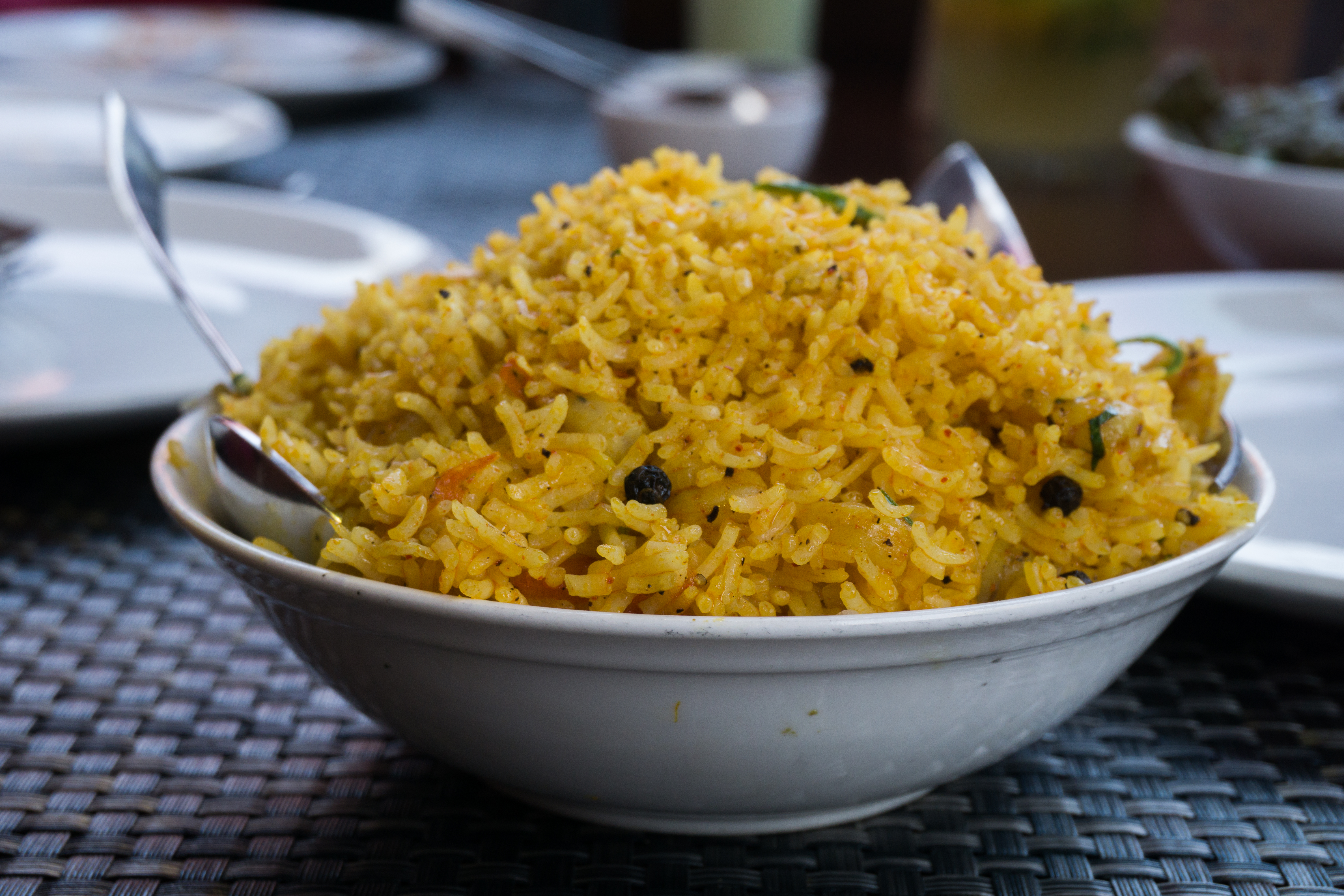
On Friday, 30 January 2026, the lifestyle desk of the Bangladeshi news site Jagonews24 published a recipe for chingri polao, fragrant rice cooked with spiced prawns, in its run of Friday recipes for the weekly day off. The dish, the desk wrote, turns a family meal on a holiday into something more memorable: spices worked into aromatic basmati or polao rice, together with tender fresh prawns. The recipe uses half a kilogram of prawns and half a kilogram of rice, marinates the prawns in salt, turmeric and chilli, fries them, builds a masala of onion, tomato, ginger, garlic and sour yoghurt, cooks the soaked rice in that masala and finishes it with kewra water and rose water.
This report sets out the recipe as Jagonews24 gave it, with its steps in order, and adds background from the authorities on each part of the dish: what polao is and where the word comes from, what basmati and Bangladesh's own aromatic rice are, what the two big prawns of Bangladeshi kitchens, golda and bagda, are and where they are farmed, how much shrimp and prawn the country produced according to the Department of Fisheries, and what United States and British health authorities advise on handling seafood safely and on shellfish allergy.
The ingredients Jagonews24 listed
The recipe's ingredient list, as published, is below. Quantities are the desk's own.
- Prawns (chingri): half a kilogram
- Chopped onion: 1 cup
- Chopped tomato: 1 cup
- Green chillies: 4 to 5
- Salt: to taste
- Basmati or polao rice: half a kilogram
- Ginger paste: 1 tablespoon
- Garlic paste: 2 tablespoons
- Whole garam masala: 5 grams
- Bay leaves: 2
- Dried chilli powder: 1 tablespoon
- Turmeric powder: half a tablespoon
- Coriander powder: 1 tablespoon
- Sour yoghurt (tok doi): half a cup
- Rose water: 1 teaspoon
- Kewra water: half a teaspoon
Two points in the published text are worth noting before cooking. The method calls for cooking oil and a little sugar, but the ingredient list gives no quantity for either, so the cook uses them by judgement. And while the list asks for half a cup of sour yoghurt, the method adds 2 tablespoons of it to the masala; the recipe does not say what the rest is for. The amount of water for the rice is likewise left to the cook: the desk says only to add as much hot water as needed.
How the dish is made, step by step
The method below follows the order of the Jagonews24 recipe.
- Wash the basmati or polao rice and soak it for one hour. Drain off the water and set the rice aside.
- Clean and wash the prawns, then marinate them with salt, turmeric and chilli powder.
- Heat oil in a pan, fry the prawns lightly and lift them out.
- In the same pan, fry the bay leaves, the whole garam masala and the chopped onion.
- When the onion turns light golden, add the chopped tomato, stir well and press it down.
- Add the ginger and garlic pastes and cook them for a few minutes.
- Add 2 tablespoons of sour yoghurt and cook the masala further, adding a little water so that it cooks through well.
- Add the coriander powder, chilli powder, salt and some green chillies, stir and cook for 5 minutes.
- When the oil rises to the top, add a little sugar and the fried prawns, cover and cook for 5 minutes.
- Lift the prawns out into a separate bowl.
- Add the soaked rice to the same masala and mix well, then pour in as much hot water as needed. A few more green chillies can be added at this stage.
- Cover and cook until the rice is done.
- When the rice is nearly cooked, sprinkle over kewra water to taste and a few drops of rose water, and keep it covered a little longer.
- Stir the polao, turn off the heat and leave it covered for 5 minutes before serving.
The recipe does not say when the prawns that were lifted out go back into the pot. Read as a whole, the method cooks the prawns in the masala, keeps them aside while the rice cooks in the same masala, and serves them with the finished polao.
What polao is
Banglapedia, the national encyclopedia of Bangladesh, describes polao, morog-polao (chicken polao), biriani and tehari as special dishes of aromatic small-grained rice, cooked with chicken, beef or mutton, butter oil (ghee) and spices. In the encyclopedia's account of rice, husked paddy is chal, cooked chal is bhat, and these dishes sit apart from everyday rice as food for special meals. Chingri polao belongs to the same family, with prawns taking the place of meat.
Polao is the Bengali form of a dish known across much of Asia and beyond as pilaf, pilau or pulao. Encyclopedic accounts describe pilaf as a rice dish, in some regions a wheat dish, usually cooked in stock or broth with spices and other ingredients such as vegetables and meat, using a technique that keeps the cooked grains from sticking together. The Oxford English Dictionary, as summarised in those accounts, traces the English word pilau, first used in 1609, to Persian pulaw by way of Turkish, and further back to Hindi pulav, a dish of rice and meat, and Sanskrit pulaka, a ball of rice.
The same accounts say that methods of cooking rice that approximate modern pilaf spread during the Abbasid Caliphate across a vast territory, and that the Spanish paella and the South Asian pilau or pulao and biryani evolved from such dishes. The food historian Charles Perry is cited as describing pilaf as an eastern Arabic innovation after the 10th century; a 13th-century cookbook from Aleppo, Kitab al-Wusla, gives the first recipe for a dish resembling modern pilaf, and the Encyclopaedia Iranica places the earliest attestation of the word in a 14th-century Persian satirical poem by Ubayd Zakani.
The steps in the Jagonews24 recipe follow that pilaf method: the rice is washed and soaked, whole spices are fried first so that their scent goes into the oil, and the grains are then cooked covered with the spices in the same masala with hot water.
Basmati and Bangladesh's own aromatic rice
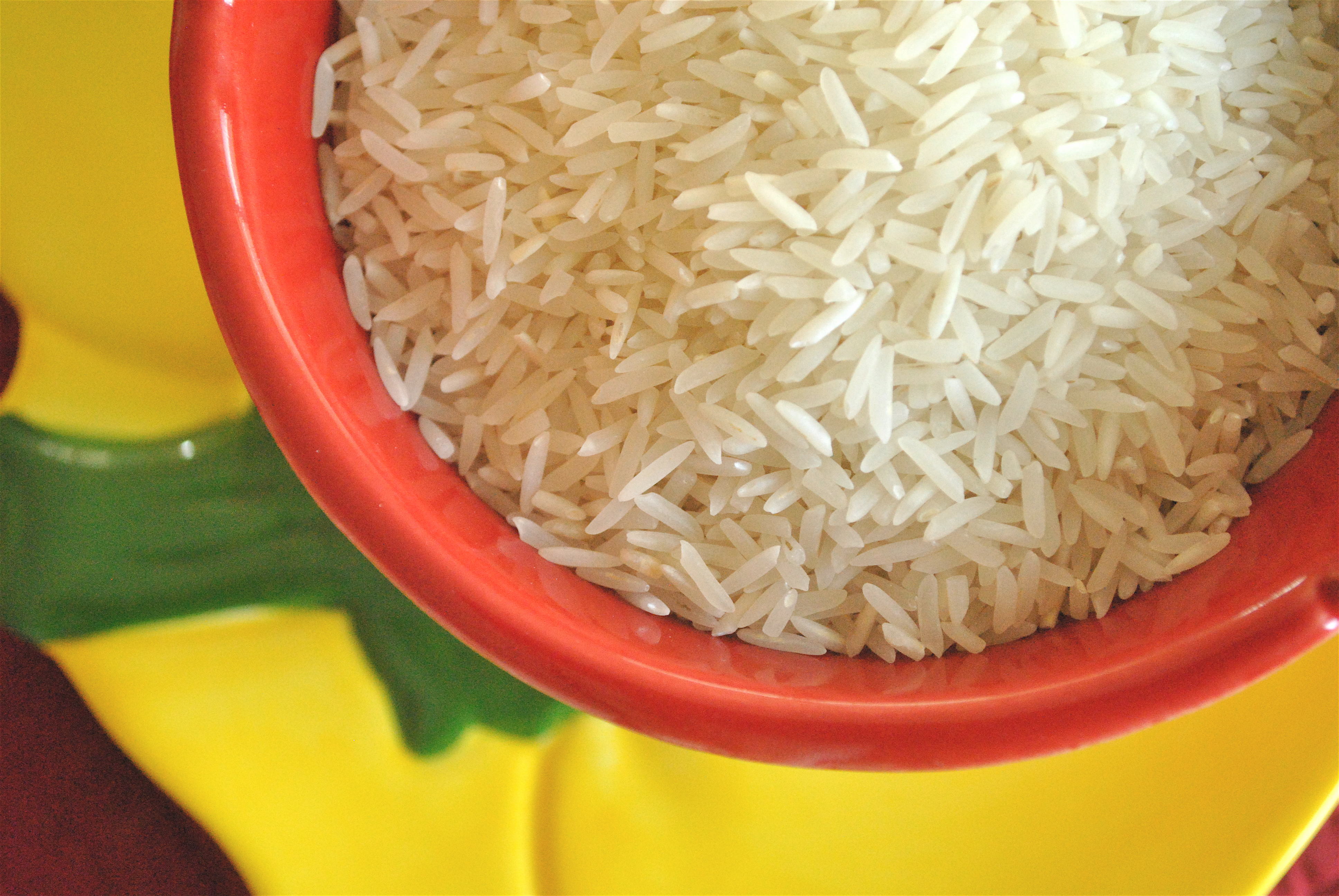
The recipe allows either basmati or polao rice. Basmati is a variety of long, slender-grained aromatic rice that originates from the Indian subcontinent, mainly from Haryana, Punjab, Sindh and other states and provinces of India, Pakistan and Nepal. Under the rules of India's Agricultural and Processed Food Products Export Development Authority (APEDA), a rice qualifies as basmati if, among other parameters, its milled grain before cooking has a minimum average length of 6.61 mm and an average breadth of up to 2 mm. As of 2019, India accounted for 65 per cent of the international trade in basmati and Pakistan for the remaining 35 per cent. The name is traced to Sanskrit roots meaning fragrance, and its earliest known mention is in the epic Heer Ranjha, composed by the Punjabi poet Waris Shah in 1766.
Polao rice in Bangladesh usually means the country's own small-grained aromatic rice rather than long-grained basmati. A Daily Star report from North Bengal of April 2018 named Chinigura, Kalijira, Kataribhog and Nenia among the aromatic varieties grown there, alongside basmati, and called the high-yielding BRRI dhan34, developed by the Bangladesh Rice Research Institute, the most popular aromatic variety of all. The report noted that BRRI dhan34 can be transplanted as late as mid-September, so the monsoon is less likely to damage it than aman paddy, and gave 13,779 hectares across the northern region under aromatic rice that season, 762 hectares more than the season before.
In the same report a farmer told the paper that aromatic rice could produce 2.7 tonnes per hectare and sell for around Tk 1.22 lakh, against 3.6 tonnes of aman selling for about Tk 86,000. Shah Alam of the Department of Agricultural Extension was quoted as saying: "We can hardly think of having a festival or celebratory meal without such types of rice." That link between aromatic rice and special meals is the same one the Jagonews24 desk drew in calling chingri polao a holiday dish.
Golda and bagda: the two big prawns
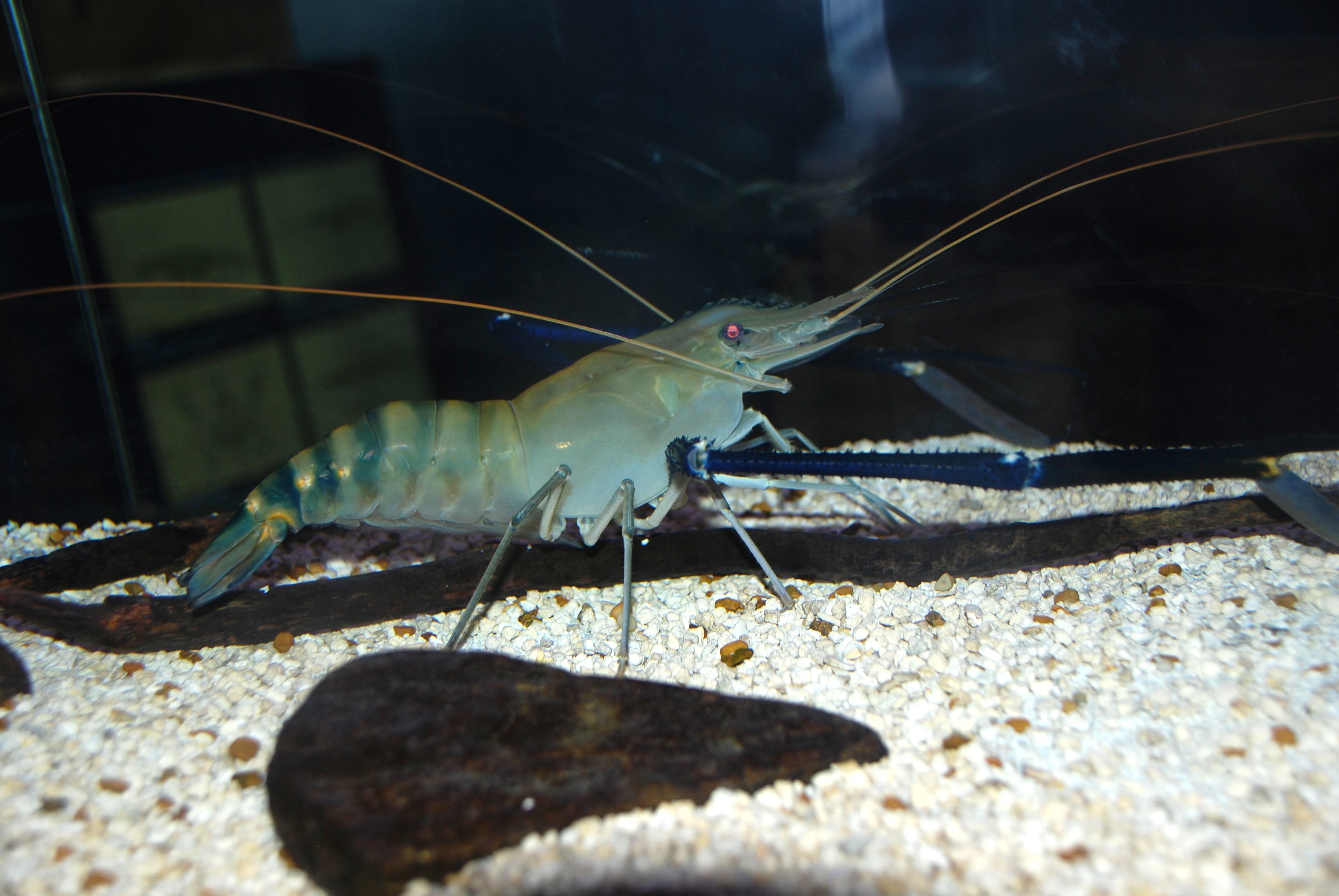
Chingri covers many animals. Banglapedia records 56 species of prawn and shrimp in Bangladesh: 37 in salt water, 12 in brackish water and 7 in fresh water, in six families. The freshwater species belong to the family Palaemonidae. Two species dominate both farming and the kitchen: golda, the giant river prawn Macrobrachium rosenbergii, and bagda, the giant tiger prawn Penaeus monodon. The Department of Fisheries also lists harina (Metapenaeus monoceros) and chaka (Fenneropenaeus indicus) among the farmed species.
Golda is one of the biggest freshwater prawns in the world. The Food and Agriculture Organization of the United Nations (FAO), in its cultured aquatic species fact sheet, gives a total length of up to 320 mm for males and 250 mm for females, with a body usually greenish to brownish grey, often blue antennae and blue or orange claws. Its second pair of walking legs carries the large claws, which can be very long in mature males. Although it lives in fresh water, its larvae need brackish water: gravid females migrate downstream into estuaries, where the eggs hatch, and the young prawns migrate back upstream towards fresh water after metamorphosis. Banglapedia records an average size of 34 cm for males and 26.7 cm for females in Bangladesh, in rivers, tributaries, canals and river mouths, with breeding from January to July.
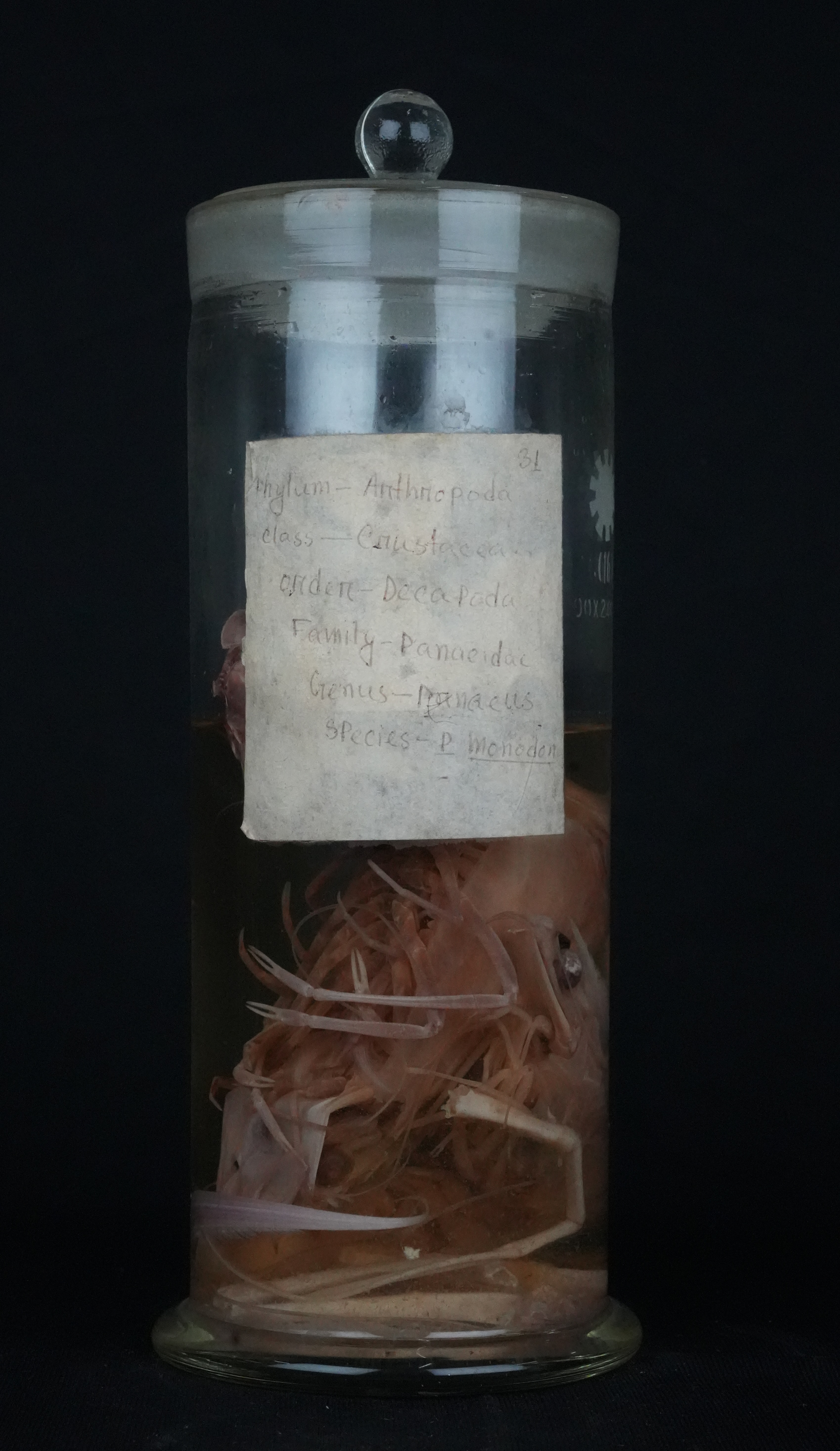
Bagda is a marine animal. FAO describes adults that may reach 33 cm, with females commonly larger than males, and body colours that vary with the bottom, feed and water, the abdomen and carapace crossed by alternating bands of blue or black and yellow. It matures and breeds only in tropical marine habitats and spends its larval, juvenile and sub-adult stages in coastal estuaries, lagoons and mangrove areas. Banglapedia places it in the Bay of Bengal and estuaries, breeding from November to March.
FAO makes a point that matters in the kitchen: freshwater prawns are a distinct product from marine shrimp, which have their own culinary characteristics. It also warns that freshwater prawns tend to go mushy if not handled and processed correctly, and that prawns sold fresh should not be kept on ice for more than three days. The Jagonews24 recipe does not name a species and can be made with either.
Where Bangladesh's shrimp and prawns come from
The Department of Fisheries' Yearbook of Fisheries Statistics of Bangladesh 2023-24, published in December 2024, puts the country's total shrimp and prawn production in the 2023-24 fiscal year at 260,486 tonnes, down 3.99 per cent from 271,302 tonnes the year before. Shrimp and prawn made up 5.19 per cent of the country's total fish production of 50.18 lakh tonnes. Farms produced 147,824 tonnes, other inland waters 86,393 tonnes and the sea 26,269 tonnes; the marine catch was 43.83 per cent lower than in 2022-23.
Counting every source, the yearbook records 77,624 tonnes of bagda, 67,716 tonnes of golda, 12,482 tonnes of harina and 5,422 tonnes of chaka in 2023-24, with the rest made up of other species. On farms alone, bagda was grown on 190,075.43 hectares and yielded 75,990 tonnes, at 400 kg per hectare, while golda was grown on 72,141.72 hectares and yielded 57,583 tonnes, at 798 kg per hectare.
Shrimp farming is concentrated in the south-west and on the Cox's Bazar coast. The yearbook's district table for 2023-24 shows Satkhira with 58,294 hectares of bagda farms producing 26,485 tonnes, Bagerhat with 52,551 hectares of bagda producing 20,940.30 tonnes, Cox's Bazar with 42,125 hectares of bagda producing 14,398.80 tonnes, and Khulna with 32,998.33 hectares of bagda producing 12,675.45 tonnes. For golda, Bagerhat led with 19,773.30 hectares and 19,716.74 tonnes, followed by Khulna with 19,016.44 hectares and 13,415.20 tonnes, Jashore with 16,634.16 hectares and 9,847.80 tonnes, and Satkhira with 9,389 hectares and 9,185 tonnes. Across Khulna Division, farms produced 60,565.75 tonnes of bagda and 54,215.29 tonnes of golda.
Banglapedia describes how this farming works. Bagda is raised in ghers and ponds on coastal and tidal land, sometimes alternating with paddy in the Khulna area and with salt in Chakaria. Golda is raised in ponds and paddy fields in a low-density, long cycle of five to eight months, often alongside fin fish. Both need saline water for their eggs to hatch in hatcheries, and the encyclopedia names white spot syndrome virus and vibriosis among the diseases that cause mass deaths on farms.
Shrimp is also among Bangladesh's main export items. The yearbook names galda, bagda and harina among the species exported and records exports of 77,407.94 tonnes of fish and fishery products in 2023-24, earning Tk 4,531.86 crore, to more than 50 countries including the European Union, the United States, Japan, Russia and China, with EU countries the main buyers. It also notes that Bangladesh's tiger shrimp has received Geographical Indication registration as Bangladesh Tiger Shrimp.
Kewra water and rose water
The recipe's last step perfumes the rice with kewra water and a few drops of rose water. Kewra is distilled from the male flower of the fragrant screwpine, Pandanus odorifer, a plant native to tropical Asia, South-East Asia and Australasia. Its flower has a sweet, perfumed odour similar to rose but fruitier, and encyclopedic accounts note its use in special-occasion dishes in South Asia, particularly those associated with Muslim communities. The water sold for cooking is a diluted aqueous distillate. In Bangladesh, the fragrant screwpine grows widely on St Martin's Island, where many plants have been destroyed by tourism development.
Rose water is made by steeping rose petals in water and is typically a by-product of distilling rose petals for rose oil. It likely originated in Persia, where it is called golab, from the words for rose and water, and Iran remains a major producer. In South Asian cooking it is common in sweets and in milk and rice-pudding dishes. Both waters are strong, which is why the Jagonews24 recipe measures the rose water in drops and adds the kewra water only at the end, when the rice is nearly done.
Buying, storing and cooking prawns safely
The United States Food and Drug Administration (FDA), in guidance current as of March 2024, advises buying fish only if it is refrigerated or displayed on a thick bed of fresh ice. It says fish should smell fresh and mild, not fishy, sour or ammonia-like, and that shrimp flesh should be clear with a pearl-like colour and little or no odour.
If seafood will be used within two days of purchase, the FDA advises storing it in a clean refrigerator at 40 degrees Fahrenheit or below; otherwise it should be wrapped tightly and frozen. Frozen seafood is best thawed gradually in the refrigerator overnight, or more quickly in a sealed plastic bag immersed in cold water. Hands should be washed for at least 20 seconds with soap and warm water after handling raw food, and cutting boards, dishes, utensils and counter tops washed with soap and hot water.
Most seafood, the FDA says, should be cooked to an internal temperature of 145 degrees Fahrenheit. Without a thermometer, shrimp is done when the flesh becomes firm, pearly and opaque. Cooked seafood and other perishable food should not be left out of the refrigerator for more than two hours, or for more than one hour when the temperature is above 90 degrees Fahrenheit. In this recipe the prawns are fried and then cooked in the masala for five minutes before the rice goes in; the cook should check that they have turned firm and opaque, and leftover polao should go into the refrigerator within those limits.
Shellfish allergy
The FDA lists crustacean shellfish, such as crab, lobster and shrimp, among the nine major food allergens in the United States. Symptoms it lists include hives, flushed skin or rash, a tingling or itchy sensation in the mouth, swelling of the face, tongue or lips, vomiting or diarrhoea, abdominal cramps, coughing or wheezing, dizziness, swelling of the throat and vocal cords, difficulty breathing and loss of consciousness. A severe reaction, anaphylaxis, can constrict the airways, cause a severe fall in blood pressure and shock, or cause suffocation through swelling of the throat. The FDA advises a person with a known food allergy who starts having symptoms to stop eating the food at once, evaluate the need for emergency treatment such as epinephrine, and seek medical attention.
The National Health Service (NHS) in England lists shellfish such as prawns, crab and lobster among the most common allergy-causing foods, and says symptoms may appear straight after eating or days later. It tells people to call emergency services at once if the lips, mouth, throat or tongue suddenly swell, if breathing becomes very fast or difficult, if the throat feels tight, or if the skin, tongue or lips turn blue, grey or pale; anyone who carries an adrenaline auto-injector should use it immediately and still call for an ambulance. Anyone who thinks they or their child may have a food allergy should see a doctor. A guest with a known prawn allergy should not eat chingri polao, and the rice cooked in the same masala carries the same risk.
Photo: Sumit Surai / Wikimedia Commons (CC BY-SA 4.0)
Sources: Jagonews24, Department of Fisheries (Yearbook of Fisheries Statistics of Bangladesh 2023-24), Food and Agriculture Organization of the United Nations (cultured aquatic species fact sheets), Banglapedia (Prawn, Rice), The Daily Star, US Food and Drug Administration, National Health Service (NHS), Wikipedia (Pilaf, Basmati, Kewra, Pandanus odorifer, Rose water, Macrobrachium rosenbergii, Penaeus monodon)

Comments
(0)