
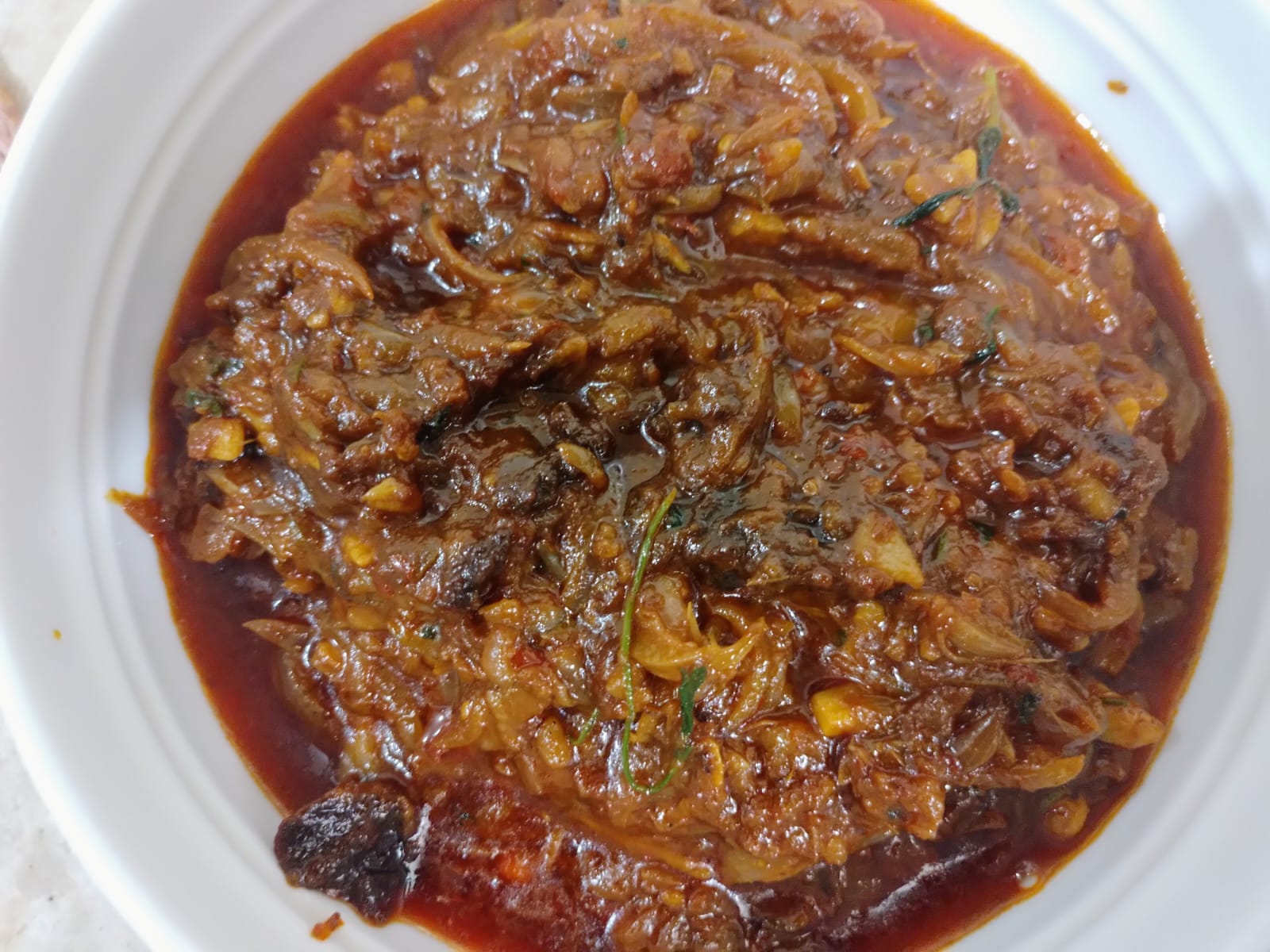
On 20 June 2026 the lifestyle desk of the Bengali news site Jagonews24 published a home recipe for chepa shutki vegetable bhuna: a dry, spicy curry in which a paste of chepa shutki, the fermented small fish of the greater Mymensingh region, is fried with onion, ginger, garlic and turmeric and then cooked down with mixed vegetables. The recipe calls for 50 grams of chepa shutki to a pot of pumpkin, aubergine, carrot, beans, tomato and potato, and finishes the dish with a tempering of cumin, dried chilli and mustard oil. Jagonews24 presented it as a dish full of heat, gravy and aroma that recalls the taste of rural Bengal, and suggested serving it hot with rice.
Chepa shutki is known for its intense smell and its distinctive taste. The sections below give the recipe as Jagonews24 published it, then explain what chepa shutki is, where and how it is made, what it costs, how else it is eaten, and what the country's food safety authority had said about dried fish before the recipe appeared.
The ingredients
Jagonews24 listed the following ingredients. The vegetables can be varied with the season, but these are the quantities the recipe gave:
- Chepa shutki: 50 grams
- Pumpkin (listed in the original as chhanchi mishti kumra): 1 cup
- Aubergine (brinjal): 1 cup
- Carrot: half a cup
- Flat beans (shim): half a cup
- Tomato: half a cup
- Potatoes: 2
- Chopped onion: 1 cup
- Chopped garlic: 2 teaspoons
- Ginger paste: 1 teaspoon
- Bay leaves: 2
- Dried chillies: 2
- Green chillies: 4 to 5
- Turmeric paste: 1 teaspoon
- Whole cumin: 1 teaspoon
- Coconut paste: 1 tablespoon
- Salt to taste
- A little oil
The list includes a tablespoon of coconut paste, but the method that follows does not say when to add it. Of the cup of chopped onion, half a cup goes into the base and a little more into the final tempering; the garlic, dried chillies and cumin are likewise split between the base and the tempering.
How the dish is cooked
The method has three stages: preparing the fish and the vegetables, frying the spice base with the fish paste, and cooking the vegetables down before a final tempering. In Jagonews24's steps:
- Lightly toast the chepa shutki on a griddle (tawa), clean it and wash it well, then grind it into a paste.
- Wash all the vegetables well, cut them into small pieces and fry them lightly in oil. Set them aside.
- Heat oil in a karahi and add half a cup of the chopped onion. Add the ginger, garlic, bay leaves, salt, turmeric and the ground chepa shutki, and fry the mixture thoroughly (the Bengali word is koshano) until the spices are cooked.
- When the spices are well fried, add the fried vegetables and half a cup of water.
- For more heat, slit the green chillies before adding them; for less, add them whole.
- When the vegetables are soft and coated in the spice mixture, temper the dish with a little more chopped onion, chopped garlic, dried chilli, whole cumin and mustard oil.
- Take the pot off the heat and serve hot with rice.
Bhuna, the second word of the dish's name, describes the cooking style rather than an ingredient. Encyclopedic references describe bhuna as a slow-roasted, dry style of curry that originated in Bengal: a base of onion, garlic and ginger is fried in oil in a heavy round karahi, the main ingredient is added, and the sauce is reduced and thickened for a long time until the flavour is rich and the curry is fairly dry. The step of frying the spices with the fish paste until the oil separates is what gives this dish its bhuna character.
The last step is a tempering, which Bengali cooks call phoron. In this technique whole spices, and sometimes dried chillies or chopped garlic, are cooked briefly in hot oil or ghee to release their essential oils and then added to the dish. Tempering can be done at the start of cooking, before the other ingredients go in, or at the end, just before serving; this recipe uses it at the end, with mustard oil.
What chepa shutki is
Chepa shutki, also spelt chapa or chyapa, is not ordinary sun-dried fish. A study of its production published in the journal Heliyon in January 2025 by Jasmin Ara Farhana and colleagues from Patuakhali Science and Technology University and Wageningen University & Research describes it as a sticky, solid, fermented, salt-free product that local producers in Bangladesh make from small fish. It is eaten as a chutney or sauce-like preparation, or as a shutki curry with vegetables served as a side dish with rice or bread; the Jagonews24 recipe belongs to that last group.
Banglapedia, the national encyclopedia of Bangladesh, calls it pressed dried fish and explains that it is prepared by fermenting small punti fish. Elsewhere in Bangladesh it goes by other names: The Financial Express, in a January 2022 feature on regional foods, wrote that people who know shutki will know sidol, or chapa shutki, which tastes a lot like sun-dried fish although the two are preserved quite differently. The Mymensingh producer profiled by The Business Standard in 2022 called his product hiddal.
Across the border the same food is widely known. A 2012 paper in the Indian Journal of Traditional Knowledge by Armaan Ullah Muzaddadi and S Basu describes shidal as a pasty, solid, semi-fermented fishery product in which the shape of the Puntius fish stays almost intact. It is called shidal, sepaa or hidal in Assam, Tripura, Mizoram, Arunachal Pradesh and Nagaland and ngari in Manipur, and it is eaten in all seven north-eastern Indian states, especially in tribal areas and among Bengali-speaking communities. The Heliyon authors list shidal, seedal, ngari, hentak and tungtap among the fermented fish products of Bangladesh and north-east India.
Where it is made
Banglapedia names Kishoreganj, Mymensingh, Narsingdi, Sylhet, Comilla and Narayanganj as the districts where chapa shutki is prepared, with large-scale production at Kuliarchar in Kishoreganj and at Madhabdi in Narsingdi.
The Heliyon study surveyed 120 producers in eleven upazilas of four districts, Mymensingh, Netrokona, Brahmanbaria and Kishoreganj, between December 2022 and January 2023. The authors explain that the fish is preserved so that it can be eaten during the dry season, and that fermentation helps food security by turning a seasonal catch into food that lasts.
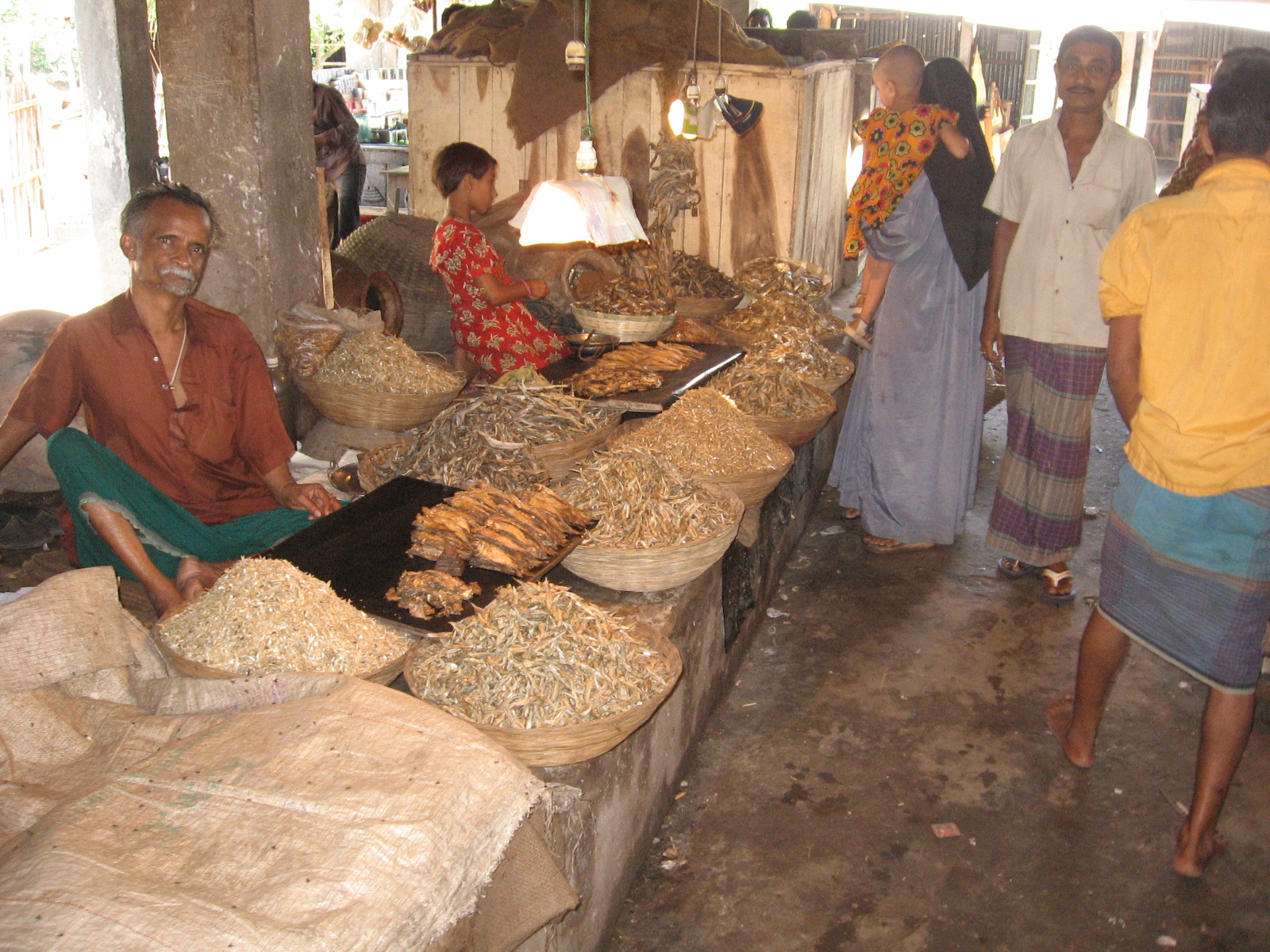
One of the best-known producing villages is Lalpur, on the bank of the Meghna in Ashuganj upazila of Brahmanbaria. Prothom Alo reported in March 2023 that the village had been in the dried fish trade for about a hundred years, with 26 drying platforms (known locally as dangi) on the Meghna bank alone and more than 50 in the whole village, 400 to 500 workers, about 150 traders and 20 wholesale agents (aratdars). Lalpur makes both kinds of product: dry shutki, salted and unsalted, and wet shidol, which the paper identified as chepa.
In Nandail upazila of Mymensingh, The Business Standard profiled a producer from Savar village in September 2022. He said he chose good-quality punti, cleaned it thoroughly, dried it in mild sunshine and stored the semi-dried fish in earthenware vessels kept underground, where it matured for six to seven months. He told the paper he used no salt and applied some other steps of his own that he would not disclose.
Fermentation in the motka
The defining tool of chepa making is the motka (also matka or mutka), a large round-bellied, narrow-necked earthen pot. The Heliyon survey recorded motkas with a neck of about 20 cm, a middle about 60 cm across and a height of about 90 cm, weighing 50 to 60 kg when filled, each yielding 36 to 42 kg of chepa shutki. In Assam and Tripura the 2012 survey recorded pots with a capacity of 8 to 40 kg.
Before a pot is used, its inner surface is made airtight with oil. Producers in the Heliyon survey used fish oil extracted from the entrails of the fish, smearing 0.2 to 0.5 litres on an old pot and about 1.5 litres on a new one. Muzaddadi and Basu describe the same process in more detail: the oil is smeared inside, the pot is dried in the sun, and the smearing and drying are repeated for seven to ten days until the clay can absorb no more. The oil closes the tiny pores of the clay, reduces drying out and seepage, and adds flavour. Mustard oil is used when fish oil is short, but pots treated with fish oil give the best quality.
The fish itself goes through several steps. In the Heliyon study the producers washed the fish, dried it in the sun for 12 to 15 days, soaked it briefly in water (about 15 minutes for punti, 5 minutes for phaisha and 10 minutes for puma), and spread it overnight on bamboo mats in the shade. The fish was then packed tightly into the oiled motka, and the mouth was sealed with a paste of ground fish, clay and polythene. Fermentation took place at an ambient temperature of about 28 degrees Celsius without air, for three to twelve months. Banglapedia's shorter account gives 12 to 14 days of sun drying after the scales and organs are removed, and three to four months in the pot, and says the product keeps its quality for about a year.
In the traditional village method documented in north-east India, the fish is semi-dried, keeping about half of its moisture, then packed in layers and pressed by hand. The neck of the pot is filled with a cover paste made from crushed dried fish, covered for a few days with leaves of yam, banana or bottle gourd to keep flies away, and finally sealed with thick clay. Whenever cracks appear in the clay, another layer is applied, because a cracked seal lets insects in and spoils the product. No salt is added during fermentation; salt is added only at retail, after the product comes out of the pot. A good shidal, the authors write, has a sticky surface, keeps the shape of the fish, is dark brown and moderately soft, and has the typical smell, which they compare to ripe palm fruit.
Muzaddadi and Basu also warn about shortcuts. Commercial producers who use fully dried, bought-in Puntius, mustard oil instead of fish oil and a fermentation of only two to three months make a product they found highly inferior in colour, texture, flavour, smell and taste.
Punti and the other fish used
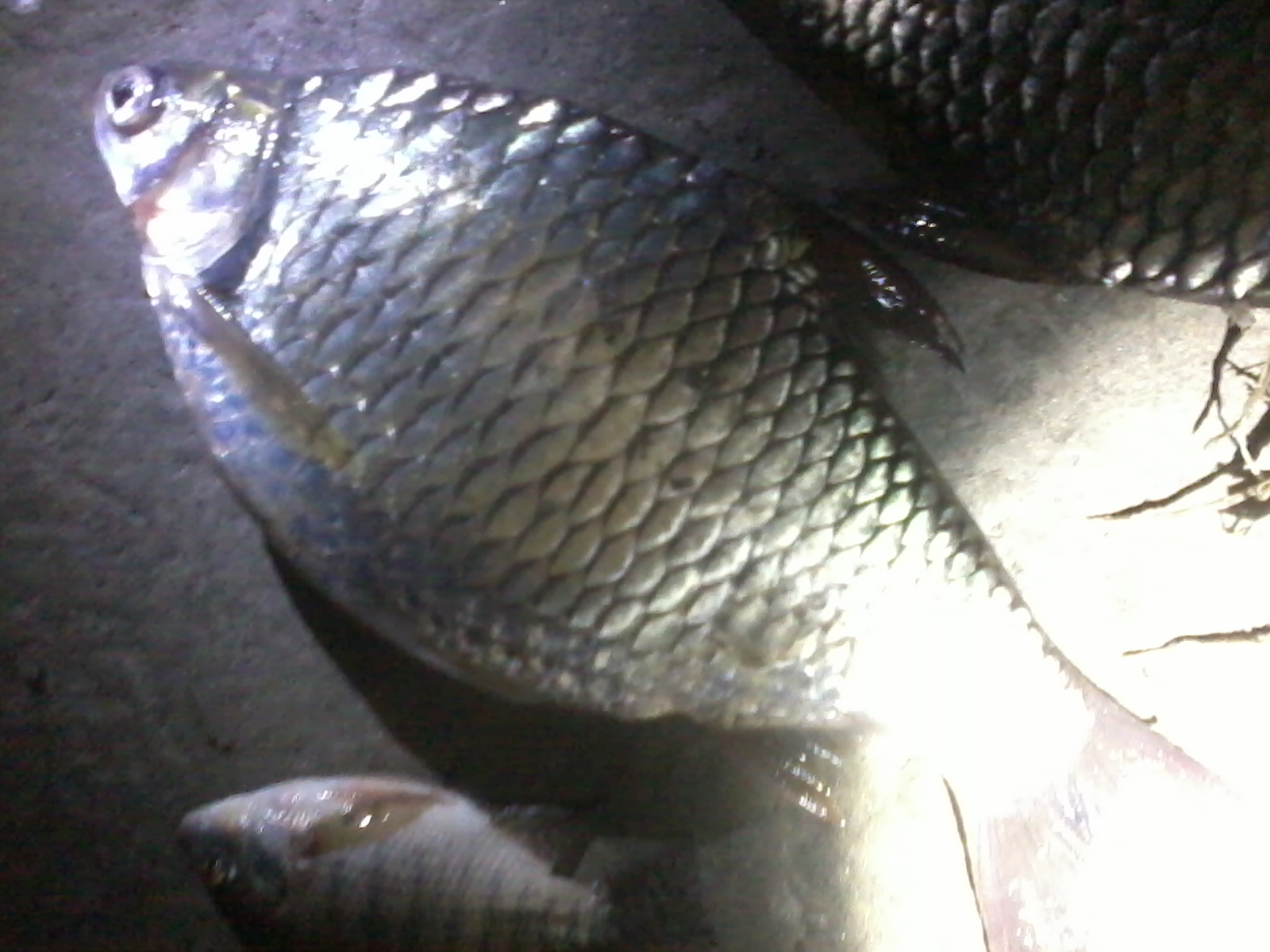
The Heliyon study found three kinds of chepa shutki in Bangladesh, named after the fish they are made from: punti (the freshwater genus Puntius), phaisha (Setipinna, an estuarine fish) and puma (Otolithoides, a marine fish). Punti made up 50 percent of production, phaisha 41 percent and puma 9 percent, and puma chepa was found only in Brahmanbaria district. More than 90 percent of the phaisha and puma producers fermented their product for at least nine months, while 24 percent of the punti chepa was fermented for only three months.
Punti are small freshwater barbs. One widespread species, the pool barb (Puntius sophore), lives in rivers, streams and ponds of the plains and submontane areas of India, Nepal, Bangladesh, Myanmar, Bhutan, Afghanistan, Pakistan and Yunnan in China. It is a plentiful shoaling fish that grows to about 18 cm, and the IUCN Red List classes it as Least Concern.
The reason for fermenting such fish lies in the seasons. According to Muzaddadi and Basu, the peak fishing season in the region, May to September, is also a time of high humidity and frequent rain, when plain sun drying is slow and unreliable. Fishers needed a way to keep large catches of low-value small fish such as Puntius for eating and selling in the dry season, November to April, when fresh fish is scarce. They suggest the method came into use before the British era, when salt was scarce and costly in north-east India, which would explain why the product is made without it. In Bangladesh the Heliyon survey found that chepa is produced from October to February and sold from January onwards, all year round.
Prices and trade
The Jagonews24 recipe uses only 50 grams of chepa shutki for a whole pot of vegetables; the published prices show what that small amount is worth. In the Heliyon survey of 2022 to 2023, punti chepa sold for 1,300 taka a kilogram, phaisha chepa for 700 taka and puma chepa for 1,000 taka.
The Nandail producer told The Business Standard that he sold his chepa for Tk 1,200 a kilogram on three days a week, Saturday, Monday and Wednesday, at the Nandail municipality market, and that his business earned Tk 35 to 40 lakh a year with the help of two assistants. His buyers came from across greater Mymensingh, online sellers took his product to other parts of the country, and it also reached Bangladeshi expatriates in Middle Eastern countries.
In Lalpur, Prothom Alo reported in March 2023 that the village's dried fish trade usually turned over 150 to 200 crore taka a year, though traders expected about 100 crore taka that year. Unsalted punti sold wholesale at 800 taka a kilogram and salted punti at 600 taka, and punti shutki sold retail at 1,200 taka. It took about three and a half kilograms of fish to make one kilogram of unsalted shutki, against three kilograms for salted. Traders told the paper that the lack of modern storage and of government support held the trade back.
Other ways chepa is eaten
The vegetable bhuna in the Jagonews24 recipe is only one of several chepa dishes. The best known is the bhorta, a mash eaten with rice. The Financial Express described the method in 2022: the sidol is washed well and fried in hot oil with green chilli, garlic and onion, and everything is then ground together with salt. The same feature noted that roadside stalls usually serve chitoi pitha, a steamed rice cake, with a sidol dip.
In the Sylhet Division the fermented fish goes into hutki shira, a broth-like fermented fish curry cooked with seasonal vegetables, leafy greens and fish or prawns, and, unusually, without oil or fat. Encyclopedic references list hidol fish, garlic, onion, potato, spinach, aubergine, chilli, turmeric and salt among its ingredients, with gourd leaves, radish or eddoe added depending on the season; the fermented fish is soaked in cold water before cooking.
In Tripura, Muzaddadi and Basu recorded shidal chutney as the most common preparation, eaten with daily rice, along with shidal-godak, shidal-vegetable-jhol and shidal curry. They also note the product's one drawback: its smell, which spreads during cooking and can bother neighbours who do not eat it. Cooks in the region, they write, add hot spices and oil and fry or boil the fish to tame the smell, which is the purpose of the toasting and the long frying in the Jagonews24 method too.
Food safety: what researchers and the authority reported
Chepa is made in sealed pots rather than on open drying racks, but it shares some of the risks of dried fish in general. Banglapedia records that dried fish loses weight every year to blow flies and their larvae during drying, especially on cloudy and rainy days, and to beetles and mites in storage. The Heliyon authors note that undesirable microorganisms sometimes interfere with fermentation and cause the loss of this valued food, and that the production methods and hygiene have not been standardised; their study was part of the work towards that standard.
On pesticides, the most recent official word before the recipe was published came on 14 May 2025, when a study was presented at the Bangladesh Food Safety Authority (BFSA). Dhaka Tribune and UNB reported that the research, carried out by the Shrimp Research Centre of the Bangladesh Fisheries Research Institute (BFRI) as one of seven studies in the 2022-23 financial year, analysed 405 samples from five major dried fish producing areas: Chattogram, Cox's Bazar, Dublar Char, Chalan Beel in Natore, and Sunamganj. Of 260 core samples, 13 percent contained detectable pesticide residues and the remaining 87 percent were considered safe. Endosulfan sulfate was found in higher concentrations in all regions, with smaller amounts of dieldrin, heptachlor epoxide and beta-endosulfan.
The study found that residue levels dropped significantly after cooking, and that pesticide use was linked mostly to sun drying in the months without enough sunshine, October to March. Speakers at the presentation said soaking dried fish in water or salt water for a few hours could reduce the harmful effects, and the BFSA chairman said that if preliminary studies found higher levels of concern, the authority would propose broader research. The study covered dried fish from those five areas; it did not single out chepa.
The Jagonews24 method itself includes cleaning: the chepa is toasted, then cleaned and washed well before it is ground. Readers unsure about the quality of a product can seek advice from their upazila fisheries officer or the local food safety office.
Photo: Nawshin Saiyara / Wikimedia Commons (CC BY-SA 4.0)
Sources: Jagonews24 (20 June 2026), Heliyon (Farhana and others, January 2025), Indian Journal of Traditional Knowledge (Muzaddadi and Basu, April 2012), Banglapedia, The Business Standard (10 September 2022), Prothom Alo (18 March 2023), Dhaka Tribune and UNB (14 May 2025), The Financial Express (24 January 2022), Wikipedia (bhuna, tempering, pool barb, hutki shira)


Comments
(0)