
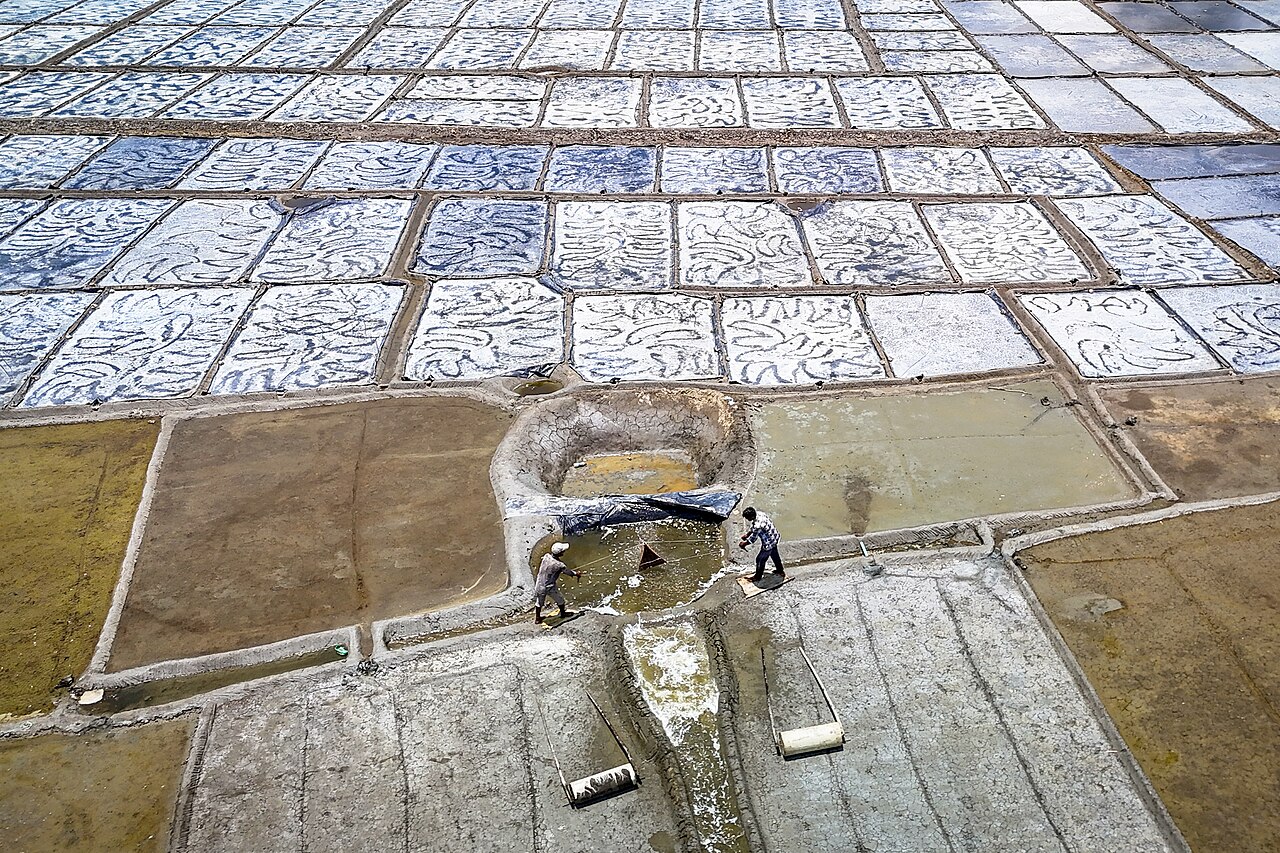
About 8,000 salt farmers in Banshkhali, Anwara and Patiya in Chattogram, and neighbouring Pekua, are preparing some 10,000 acres for salt production and expect to be in the fields next week if the weather is favourable, Amar Desh reports. Salt making in these areas begins at the start of winter.
Puichhari, Chhanua, Shekherkhil, Gandamara, Chambal, Shilkup, Saral, Kathariya and part of Khankhanabad in Banshkhali, along with Anwara and Patiya, are known for salt. Production here is commercial and meets a large share of national demand, with training and technical support from BSCIC (the Bangladesh Small and Cottage Industries Corporation). Using the polythene-sheet method alongside the traditional one has raised output about two and a half times.
Jafar Iqbal Bhuiyan, deputy general manager of BSCIC's salt industry development office in Cox's Bazar, said salt was grown on 9,965 acres in Banshkhali, Anwara and Patiya in the 2025-26 season by 7,740 farmers, and both figures may rise this year. Salt currently sells for Tk 340 a maund.
About 400,000 tonnes of salt are in stock in the fields, he said, against national demand of about 200,000 tonnes a month, enough for roughly two and a half months. Because little salt is produced in November and December, the government has decided to import salt to avoid a possible shortfall.
Farmers are worried by those imports. Fazal Ahmed, a salt farmer in Gandamara union, said they farmed more land last year and their costs have gone up; if foreign salt comes in, getting a fair price will be hard. Shahab Uddin, president of the Salt Farmers' Welfare Association, said that although a shortfall is shown on paper there is none in reality: farmers' salt is still lying in the fields.
The report is by Muhibbullah Chhanubi, Amar Desh's correspondent in Banshkhali, Chattogram.
Photo: Ayman Nakib Badhan / Wikimedia Commons (CC BY-SA 4.0); an illustrative picture of salt farming in Cox's Bazar
Source: Amar Desh

Comments
(0)