
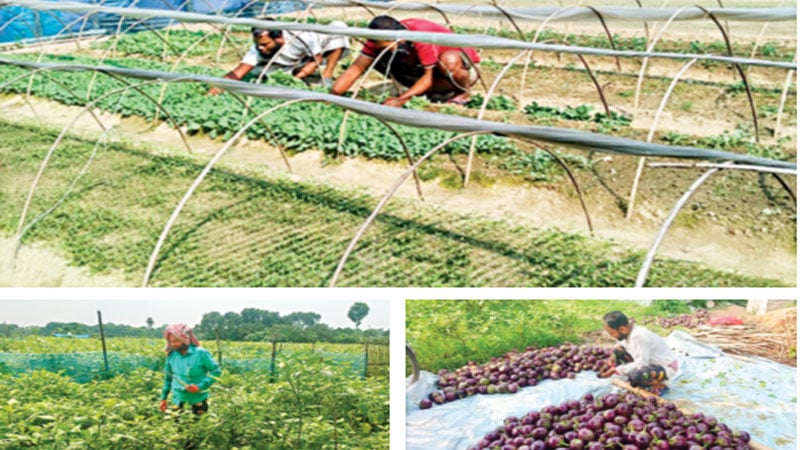
Md. Ashraful Islam's 10 katha of land in Charghat, Rajshahi, is covered in brinjal. In three months he has sold Tk 60,000 worth from this small plot, picking every few days and sending the crop to market. In the next field, Wasiur Rahman has earned about Tk 5 lakh from five and a half bighas of brinjal over the same three months and expects to sell roughly Tk 10 lakh more from the same land.
Ashraful says he used to farm on his own experience alone; now he knows what to do and when, how to care for the plants and how to handle pests and disease. He says he is seeing in his own life that a small plot can earn well.
Charghat's farmers are not stopping at brinjal. Ashraful and Sumon have planted cabbage on six bighas and expect about Tk 9 lakh from it over the next three months. They have also put radish on one and a half bighas, which could bring about Tk 1.5 lakh within 40 to 60 days. More farmers in the area are moving into early winter vegetables.
Behind the change is the Farmer School, a sustainability initiative of Syngenta Bangladesh Limited that serves as an integrated learning and training centre for farmers. More than 1,500 farmers from 14 villages of Charghat have joined its programmes. It offers hands-on learning in crop production and care, soil health, pest management and the responsible use of farm inputs, among other subjects farmers ask for.
Mohammad Shahidul Islam, Director of Corporate Affairs and Sustainability at Syngenta Bangladesh, says the school, run jointly with local government, has drawn a wide response; farmers get solutions from specialists and learn modern, science-based cultivation, which is reflected in the area's rising yields.
Al Mamun Hasan, the Charghat upazila agriculture officer, says making farming profitable takes not only production but the right choice of crop, cost management and an understanding of the market; what matters most, he says, is that farmers are applying what they learn and getting better yields and income.
Women are part of the change too. Women farmers linked to the school are becoming more active in vegetable production and in their families' farming and financial decisions. Roksana Khatun, a woman farmer, says that when a woman earns her own income her confidence grows and her opinion carries more weight at home.
Based on a report by Jahidur Rahman in Samakal.
Source: Samakal


Comments
(0)