
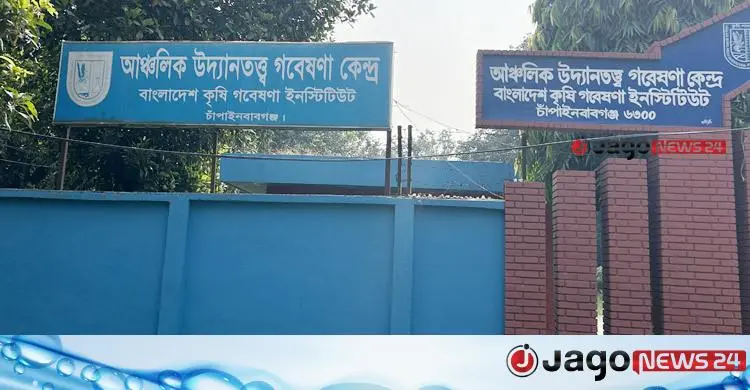
The Regional Horticulture Research Station in Chapainawabganj is one of the country's main mango research institutions. Founded in 1985, it began work under its present name in 1990. Over 36 years it has developed 16 new mango varieties, and people involved in the sector are questioning its research and achievements.
Old equipment, few scientists
The station still works with old and limited equipment and has been run by an acting chief rather than a permanent head since it was founded. Of 10 sanctioned scientist posts, only four scientific officers have long been in place, so much research cannot move ahead as prioritised. Farmers say the station often has to rely on the Bangladesh Agricultural Research Institute (BARI) to test samples of crop diseases, delaying diagnosis and solutions.
The varieties
Several of the 16 varieties, including BARI Mango-4, BARI Mango-11, BARI Mango-12 and BARI Mango-13, have become popular with growers for their taste, colour, size, disease resistance and high yield. Most are late varieties, so mangoes can be supplied at the end of the season when other varieties are finished, bringing better prices.
Md Abdul Halim, additional deputy director (crops) of the Department of Agricultural Extension (DAE), said BARI Mango-4 is the most popular BARI mango. It resembles a sweet-when-green variety: tasty while green and very sweet and juicy when ripe, and it could play an important role in exports. Demand for other BARI varieties is comparatively low, he said.
Growers' criticism
Some growers claim that, apart from BARI-4, the varieties were not bred at the station but brought in from other countries and named locally. Ismail Khan Shamim, general secretary of the Shibganj Mango Producer Cooperative Society, said research has not developed in line with Chapainawabganj's contribution to mango production; apart from BARI Mango-4, no variety has become widely popular in the field. Acceptance and commercial success, not the number of varieties, are the real measure of research, he said, calling for a full mango research institute with enough scientists, modern equipment and laboratories.
The station's view
Acting chief scientific officer Dr Md Sharaf Uddin said the station also collects and conserves germplasm of pomegranate, jujube, custard apple and other fruits, but lacks land and infrastructure for wider research, as most of its land is under mango orchards. A new building is under construction. A modern laboratory for mango storage and post-harvest research has been requested repeatedly for more than three decades but has not been set up; with it, he said, the station could extend storage life, improve quality and raise export potential.
Source: Jagonews24. First published in Bengali on The Agro News.
Comments
(0)