
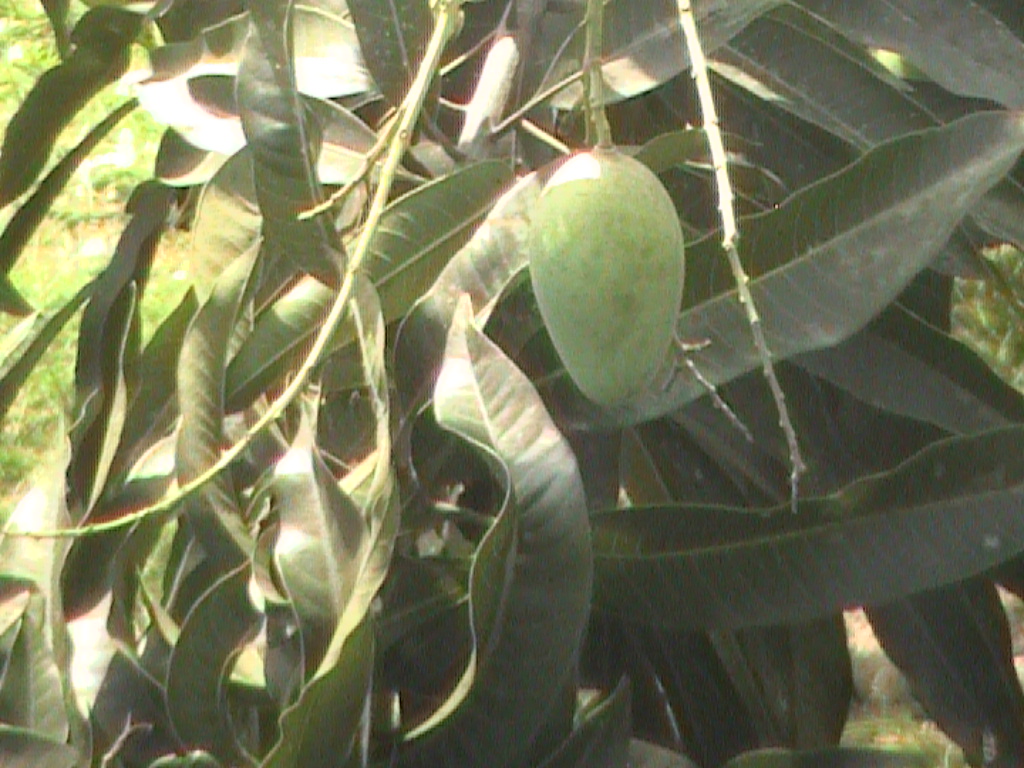
The mango season ended long ago, but at Khoirabad in the Rohanpur municipality of Gomastapur, Chapainawabganj, bunches of fruit still hang from the trees in November. Some trees carry Katimon, others Kalyanbhog, and owner Rabiul Islam Rabi does not yet know the names of a few of his varieties.
After nearly three decades working with trees, saplings, scions and mango varieties, he has built up a 12-bigha orchard. It holds Katimon, Khirsapati, Gourmati, Ilamati, Sandy, Chiang Mai, Red Palmer, King of Chapati, Honey Dew, BARI-7, Amrapali, BARI-4 and Kalyanbhog. About 15 workers are employed there.
A scion is the branch of a good variety that is joined to a rootstock. Selling Kalyanbhog scions earned Rabi Tk 34,500 in 2024 and about Tk 2 lakh in 2025. This year he had earned about Tk 5 lakh by September.
Rabi started a nursery business while still a student, after passing his SSC exam in 1997. In 2018 he leased one and a half bighas, grafted Kalyanbhog scions there and then moved on to other varieties. When a variety yielded well he planted more of it. When he doubted one, he planted a few trees and waited to see the crop.
He says he is bringing in scions of new varieties from home and abroad and testing them, and that work on several is still under way. His aim is to find out which varieties do well in the soil and climate of Chapainawabganj, so that people can eat mangoes cheaply all year round.
Reported by Abdul Bashir, Chapainawabganj, for Ajker Patrika.
Photo: Mahmudul Karim Farsad / Wikimedia Commons (CC BY-SA 3.0)
Source: Ajker Patrika

Comments
(0)