
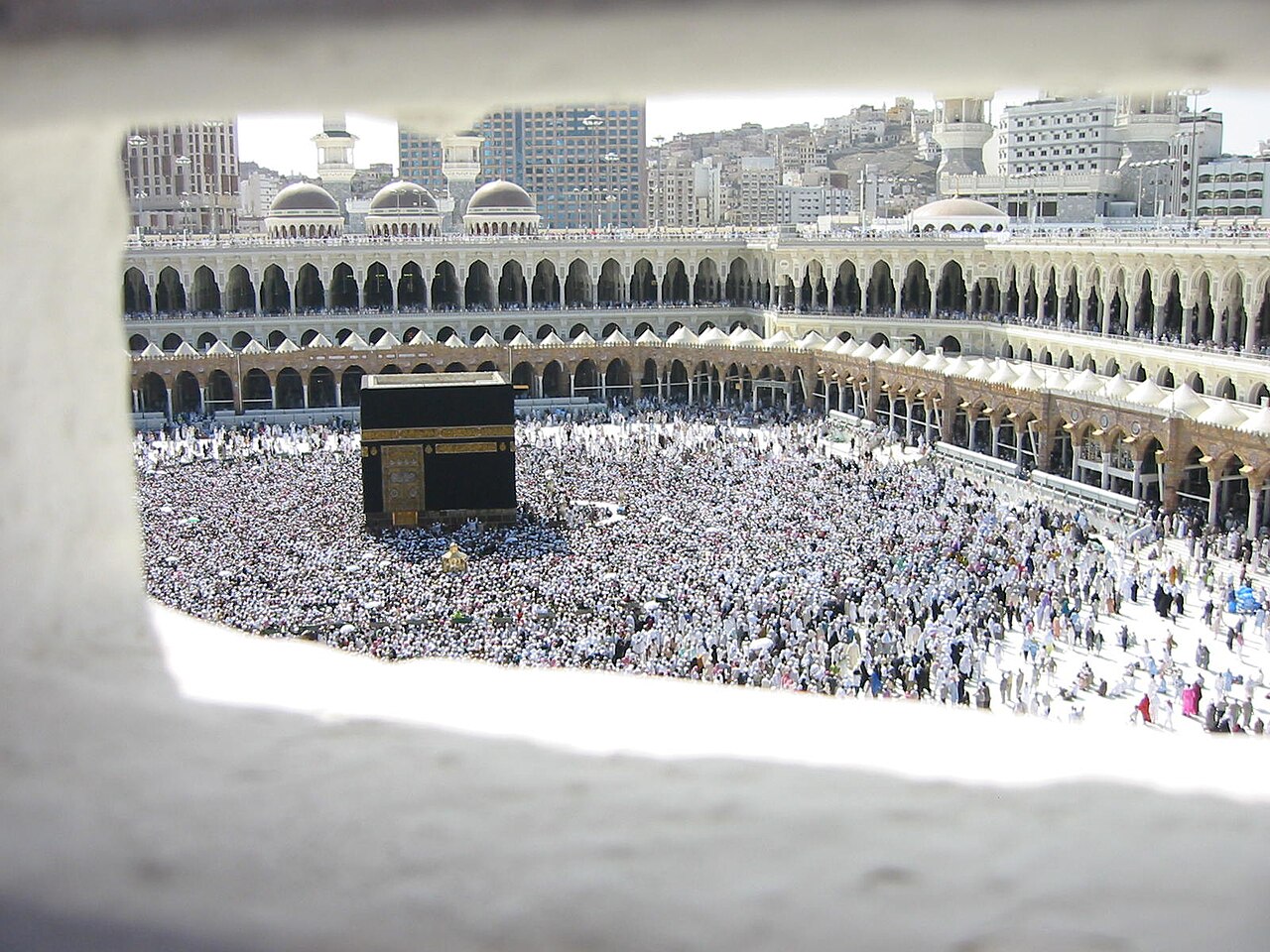
A hundred years have passed since prayers at Masjid al-Haram in Makkah began to be led by a single imam in a single congregation. On 27 October 1926 King Abdulaziz ordered an end to separate congregations by madhhab, and the Bengali Islamic portal Our Islam has marked the centenary with the history of that decision.
For centuries the mosque had four separate places of prayer. Followers of each madhhab prayed in turn behind their own imam, usually the Shafi'is first, then the Hanafis, Malikis and Hanbalis, so the same prayer was held several times over in separate congregations.
According to the report, the practice began in the fifth and sixth centuries of the Hijri calendar and continued under various rulers until the early twentieth century. Travellers and historians of the time described the followers of each school gathering at their own appointed place to pray separately.
After a meeting with scholars of the Hijaz and Najd in 1926, it was decided that all would pray together behind one imam. The separate prayer places were removed and the custom of several congregations for one prayer came to an end.
Since then every prayer at Masjid al-Haram has been held in one congregation. Several qualified imams lead in turn, but never more than one congregation for the same prayer; worshippers stand in the same rows behind one imam. The report says this matches the congregational practice of the Prophet Muhammad (peace be upon him) and his companions.
The single congregation that Bangladeshi pilgrims see on Hajj and Umrah today goes back to this decision of a century ago, which is also seen as a symbol of the unity of the Muslim ummah.
Photo: Ali Mansuri / Wikimedia Commons (CC BY-SA 2.5)
Source: Our Islam


Comments
(0)